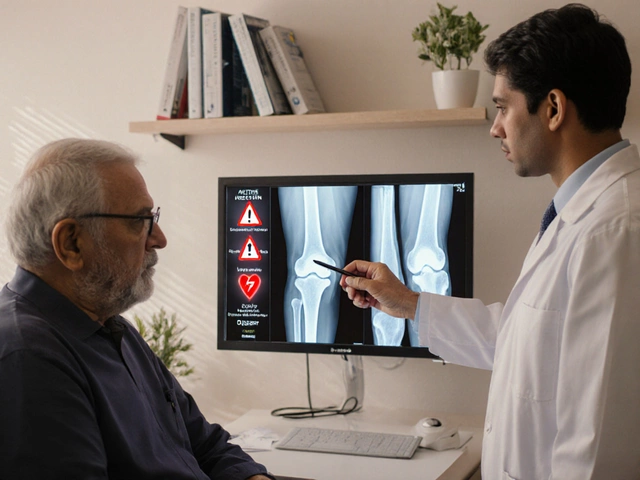
If you’ve been told you need a knee replacement, you’re not alone. Millions of people around the world live with knee arthritis, and many of them are told the same thing: knee replacement is the solution. But here’s the truth most doctors don’t say out loud-what you do before and after surgery can make your knee pain worse, not better. And the #1 mistake? Keeping your knee still.
Why Moving Less Makes Your Knee Worse
When your knee starts hurting, the first instinct is to rest. No walking. No stairs. No squatting. You buy a cane, skip the gym, and avoid anything that makes your knee creak. It feels smart. It feels safe. But it’s the biggest mistake you can make.
Your knee isn’t just a hinge. It’s a living joint filled with cartilage, ligaments, and fluid that need movement to stay healthy. When you stop moving, the synovial fluid-the stuff that lubricates your knee-stops circulating. Without that fluid, your cartilage starves. It thins. It cracks. And your pain gets worse.
Studies show that people who avoid movement after knee pain starts lose muscle strength up to 40% faster than those who stay active. That’s not just weakness. That’s instability. And when your muscles can’t support your knee, your bones grind harder. More pain. More damage. More reason to avoid movement. It’s a spiral.
What Happens After Knee Replacement
Even after a successful knee replacement, many people keep making the same mistake. They think, “Now that the joint is new, I can finally rest.” They sit for hours. They avoid walking more than 10 minutes a day. They skip physical therapy.
That’s a recipe for failure. A replaced knee isn’t magic. It’s a mechanical implant that needs motion to stay flexible. Without regular movement, scar tissue builds up. The implant stiffens. You lose range of motion. Some patients end up with a knee that bends only 90 degrees-enough to sit, but not enough to climb stairs, get out of a low chair, or tie your shoes.
One 2024 study from the Journal of Bone and Joint Surgery followed 1,200 patients after knee replacement. Those who did daily range-of-motion exercises for at least 6 weeks were 73% more likely to regain full knee bend (135 degrees) within 3 months. Those who didn’t? Half of them never got past 110 degrees-even after a year.
The Myth of “Low-Impact” Exercise
You’ve heard it a hundred times: “Try swimming,” “Use the elliptical,” “Just walk.” These are all good ideas-but only if you do them right. The problem? Most people treat these activities like gentle chores, not real exercise.
Walking for 10 minutes around the house isn’t enough. Swimming without proper leg kicks is just floating. Cycling with low resistance? That’s not building strength. You need to challenge your muscles.
What actually helps? Three things:
- Walking uphill or on uneven ground-this forces your knee to control movement, not just roll forward.
- Standing leg lifts with light ankle weights-this rebuilds your quadriceps, the muscle that holds your knee steady.
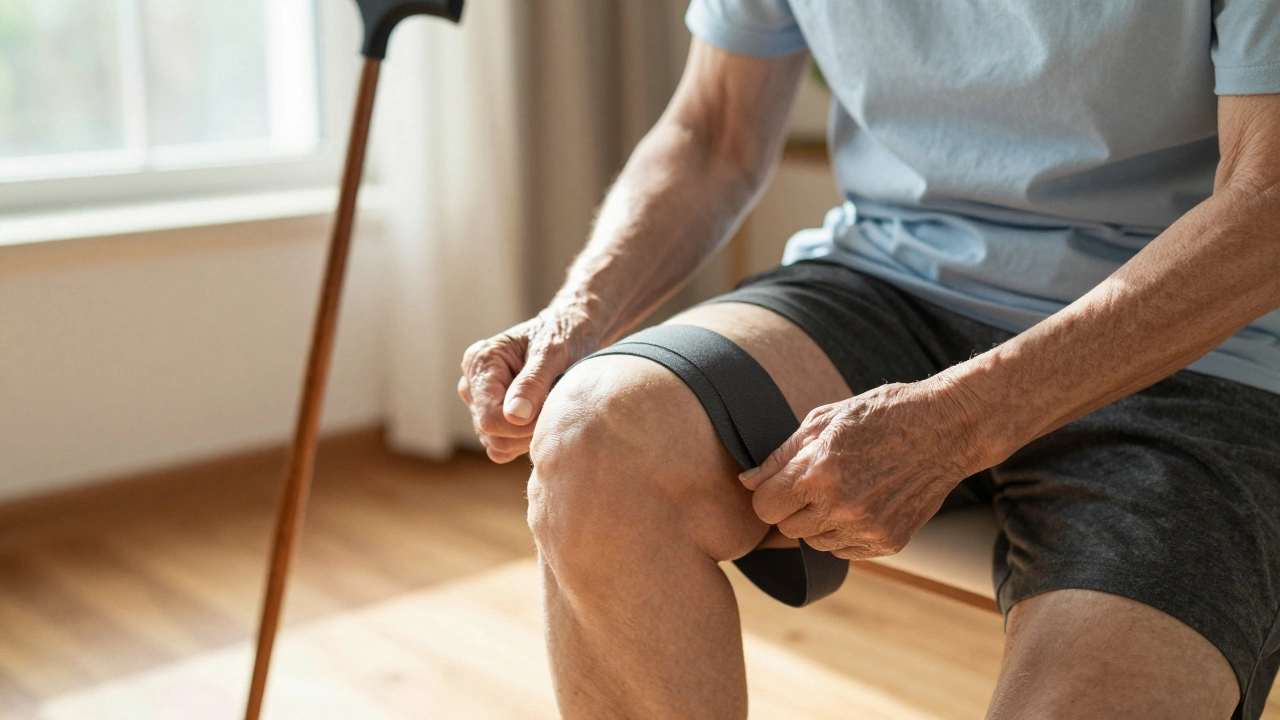
- Seated knee extensions with resistance bands-this restores the full motion your joint lost.
These aren’t fancy gym moves. They’re simple, safe, and proven. But they only work if you do them every day-even when your knee aches.

Why Pain Doesn’t Mean Damage
Here’s something hard to accept: some pain during movement doesn’t mean you’re hurting your knee. It means your joint is waking up.
After years of inactivity, your knee’s nerves become hypersensitive. They scream “pain!” at the slightest pressure-even when there’s no tissue damage. That’s called central sensitization. It’s not in your head. It’s in your nervous system.
Think of it like a smoke alarm that goes off every time you burn toast. The alarm isn’t broken. But it’s too sensitive. The fix isn’t to silence the alarm. It’s to slowly retrain it by exposing it to small amounts of smoke.
Same with your knee. Gentle, consistent movement helps your brain understand: “This isn’t dangerous.” Over time, the pain fades-not because the joint magically healed, but because your body learned it could move safely again.
What to Do Instead
If you’re avoiding movement because of knee pain, here’s your new plan:
- Start with 5 minutes of seated knee bends-slowly straightening and bending your knee while sitting. Do this 3 times a day.
- Walk for 10 minutes around your home or neighborhood. Use a cane only if you need balance, not to avoid weight on the knee.
- Do 2 sets of 10 straight-leg raises. Lie on your back, tighten your thigh muscle, lift your leg 6 inches off the floor, hold for 3 seconds, lower slowly.
- At least once a week, try standing on one foot for 20 seconds. This rebuilds your knee’s stability.
Don’t wait for pain to disappear. Move through it. Gradually. Consistently.

The Real Reason People Regret Knee Replacement
Most people who regret their knee replacement didn’t have a bad surgery. They had a bad recovery.
They expected the surgeon to fix everything. They didn’t realize their job was just beginning. They thought rest would heal them. It didn’t. It made things worse.
The best outcomes come from people who treat their knee like a car that needs regular oil changes-not a broken appliance to be replaced and forgotten.
Final Thought
Your knee doesn’t need to be perfect. It just needs to move. The #1 thing that makes bad knees worse isn’t aging. It isn’t weight. It isn’t even arthritis. It’s stillness.
Move today. Not tomorrow. Not when the pain is gone. Move now-gently, safely, and every day. That’s how you stop your knee from getting worse. And that’s how you make sure, if you ever need a replacement, you’re ready to get the most out of it.
Is it safe to walk with knee pain before knee replacement?
Yes, if you walk at a slow, steady pace and avoid high-impact surfaces like stairs or uneven ground. Walking helps keep the joint lubricated and prevents muscle loss. Use a cane or walker only for balance, not to take weight off the knee. Pain during walking should be mild and go away after resting. If it spikes or swells, reduce the distance, don’t stop completely.
Can I skip physical therapy after knee replacement?
Skipping physical therapy after knee replacement is one of the most common reasons patients end up with a stiff, painful knee. Physical therapy isn’t optional-it’s essential. Without it, scar tissue forms, muscles weaken, and your new joint loses its range of motion. Most surgeons require at least 6-8 weeks of therapy. Even if you feel fine, keep going. Full recovery takes months, not days.
Does losing weight help knee pain more than surgery?
For many people, yes. Losing just 10 pounds reduces pressure on the knee by 40 pounds with every step. A 2023 study in Arthritis Care & Research found that overweight patients who lost 5-10% of their body weight before surgery had 60% less pain and better mobility after replacement than those who didn’t. Weight loss doesn’t cure arthritis, but it gives your knee a fighting chance-whether you’re planning surgery or not.
Are knee braces helpful for bad knees?
Knee braces can help with stability if you have ligament damage or severe arthritis, but they’re not a long-term fix. Wearing one too often can make your muscles weaker because your body stops engaging them. Use braces only for specific activities like walking long distances or climbing stairs. Don’t wear them all day. Focus on strengthening your muscles instead-that’s what gives your knee real support.
What exercises should I avoid with bad knees?
Avoid deep squats, lunges with heavy weights, jumping, running on concrete, and high-impact aerobics. These put too much sudden stress on the joint. Also skip machines that force your knee into extreme angles, like the leg press with full extension. Stick to controlled, low-resistance movements: walking, cycling with light resistance, seated leg extensions, and water-based exercises. Quality matters more than intensity.