
European Travel Medical Cost Estimator
Trip Details
Simulate an Emergency
Select a scenario to see how different insurance types handle the costs.
You pack your bags for a trip to Paris or Rome, excited for the adventure. But then a nagging thought hits you: if you get sick or hurt, will your US health insurance actually cover it? The short answer is almost always no. If you rely on a standard domestic plan from an employer or the marketplace, you are likely walking into a financial blind spot.
Understanding how US health insurance works outside its borders is critical for any American traveler. Most people assume their policy follows them globally because they pay premiums every month. In reality, the system is designed strictly for domestic use. Without proper preparation, a minor injury in Europe could lead to thousands of dollars in out-of-pocket expenses. This guide breaks down exactly what your current plan covers, where the gaps lie, and what steps you need to take to stay protected while traveling abroad.
The Reality of Domestic Plans Abroad
Most Americans carry plans that fall under the Affordable Care Act (ACA). These plans are regulated by state laws and federal guidelines that apply only within the United States. When you step onto a plane bound for London, Berlin, or Barcelona, those protections vanish. Your insurer has no contracts with hospitals or doctors in Europe. They have no network to negotiate rates. Consequently, they have no mechanism to pay bills directly.
If you visit a doctor in Europe using only your domestic card, two things usually happen. First, the provider will ask for payment upfront. Second, when you submit the bill to your US insurer later, they will likely deny the claim entirely. Even if they accept it as an "out-of-network" expense, you might face massive deductibles and coinsurance rates that leave you paying the bulk of the cost. For example, an emergency room visit in Germany can easily exceed $1,000. Without coverage, that bill comes straight out of your pocket.
There are rare exceptions. Some high-end corporate plans offered by multinational companies include limited international benefits. However, these are not the norm. Unless your HR department explicitly confirmed global coverage before you booked your ticket, assume you have zero protection. Checking your Summary of Benefits and Coverage document is the first step, but don't expect good news there.
Medicare and Medicaid Do Not Cover You
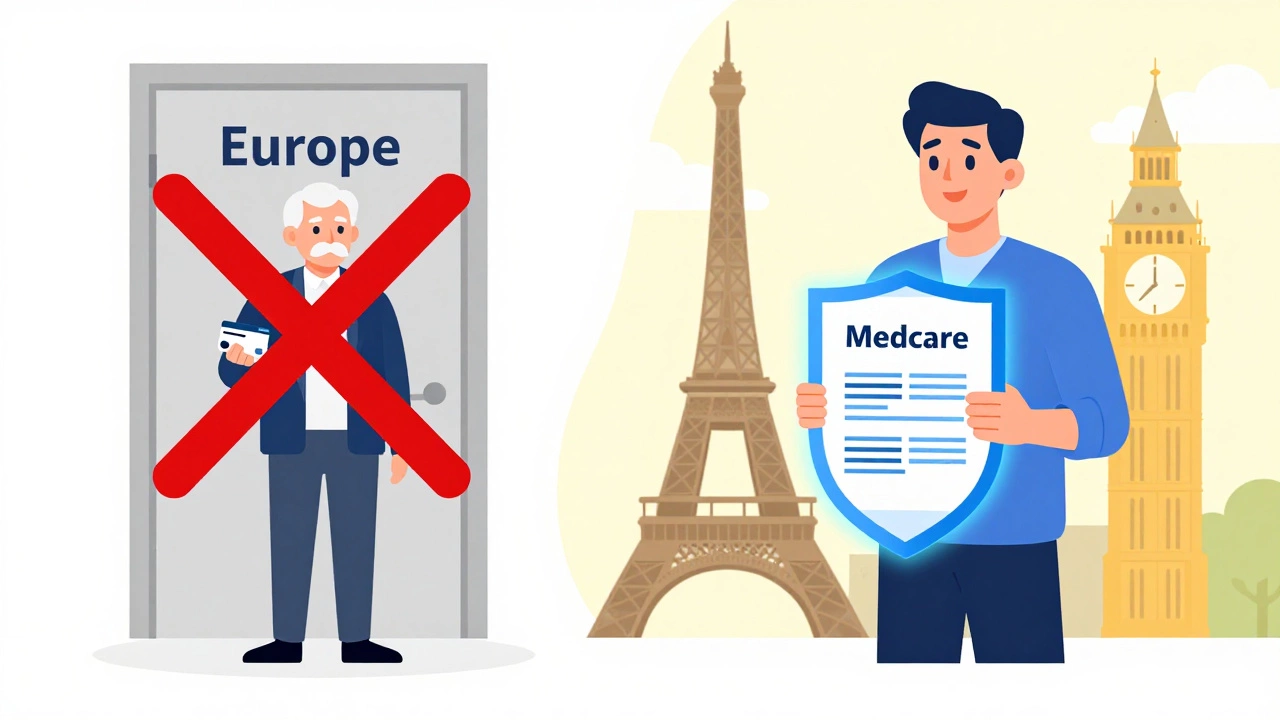
A common misconception among older travelers is that Medicare provides worldwide healthcare access. It does not. Medicare Part A and Part B generally do not cover medical services received outside the US, its territories, or possessions. There are tiny loopholes-such as if you live in the US but a Canadian hospital is closer during an emergency-but these rules rarely apply to European trips. If you are relying on Medicare, you are uninsured in Europe.
Similarly, Medicaid, which is funded by state and federal governments, is strictly for residents of specific states. It offers no portability across international borders. If you receive Medicaid through expansion programs, your coverage ends the moment you cross the Atlantic. Both groups need alternative solutions to avoid catastrophic medical debt.
Travel Insurance vs. Health Insurance
This is where confusion often sets in. Many people think buying a cheap add-on at the airport counts as health insurance. It doesn't. Travel insurance is distinct from long-term health coverage. Standard travel policies focus on trip cancellation, lost luggage, and flight delays. While many include a small medical component, it is often insufficient for serious emergencies.
To get real protection, you need a standalone International travel medical insurance policy. These plans are designed specifically for short-term visitors. They cover emergency room visits, hospital stays, surgeries, and sometimes even medical evacuation back to the US. Medical evacuation alone can cost upwards of $50,000. A typical domestic plan won't touch that bill. A dedicated travel medical policy will.
When shopping for these policies, look for high limits. Aim for at least $100,000 in medical coverage and $250,000 in evacuation coverage. Check the deductible-you want something low enough that you aren't discouraged from seeking care. Also, verify if pre-existing conditions are covered. Many standard policies exclude them, but some insurers offer waivers if you buy the plan soon after booking your trip.
| Feature | Domestic US Plan | Basic Travel Insurance | International Medical Policy |
|---|---|---|---|
| Coverage in Europe | No | Limited/None | Yes |
| Emergency Room Visits | Denied | Low Limits | High Limits |
| Medical Evacuation | No | Sometimes | Yes (Standard) |
| Pre-existing Conditions | N/A | Rarely | Varies/Waivers Available |
| Direct Billing | No | No | Often via Assistance Line |
How Healthcare Works in Europe
Europe is not a monolith. Healthcare systems vary significantly from country to country. Understanding this landscape helps you navigate emergencies more effectively. In countries like the UK, Spain, and Italy, healthcare is largely public. Residents pay taxes, and citizens get free or low-cost care. As a tourist, you are not a resident. You will be treated as a private patient, meaning you pay out-of-pocket unless you have insurance.
In contrast, countries like France and Germany have strong social security models that still require tourists to pay upfront. However, they also have robust networks of private providers who are accustomed to dealing with insured foreigners. This is why having an assistance line is crucial. Policies from reputable insurers provide a 24/7 hotline. When you call them, they can direct you to approved clinics, guarantee payment directly to the hospital, and arrange translations. This removes the stress of negotiating bills in a foreign language.
The European Health Insurance Card (EHIC) is another entity to understand. If you are an EU citizen, this card gives you access to state-provided healthcare at reduced or no cost. Americans cannot get an EHIC. Do not confuse it with private insurance. It is not a substitute for coverage. It is a benefit for residents of the European Economic Area. For Americans, it is irrelevant.
Steps to Protect Yourself Before You Go
Don't wait until you are on the beach in Greece to think about this. Preparation takes just a few hours but saves you from disaster. Here is a checklist to ensure you are covered:
- Review your current policy: Call your insurer. Ask specifically: "Do I have any coverage for medical emergencies in [Country]?" Write down the representative's name and reference number.
- Purchase a dedicated travel medical policy: Buy this immediately after booking your flights. This ensures eligibility for pre-existing condition waivers if available.
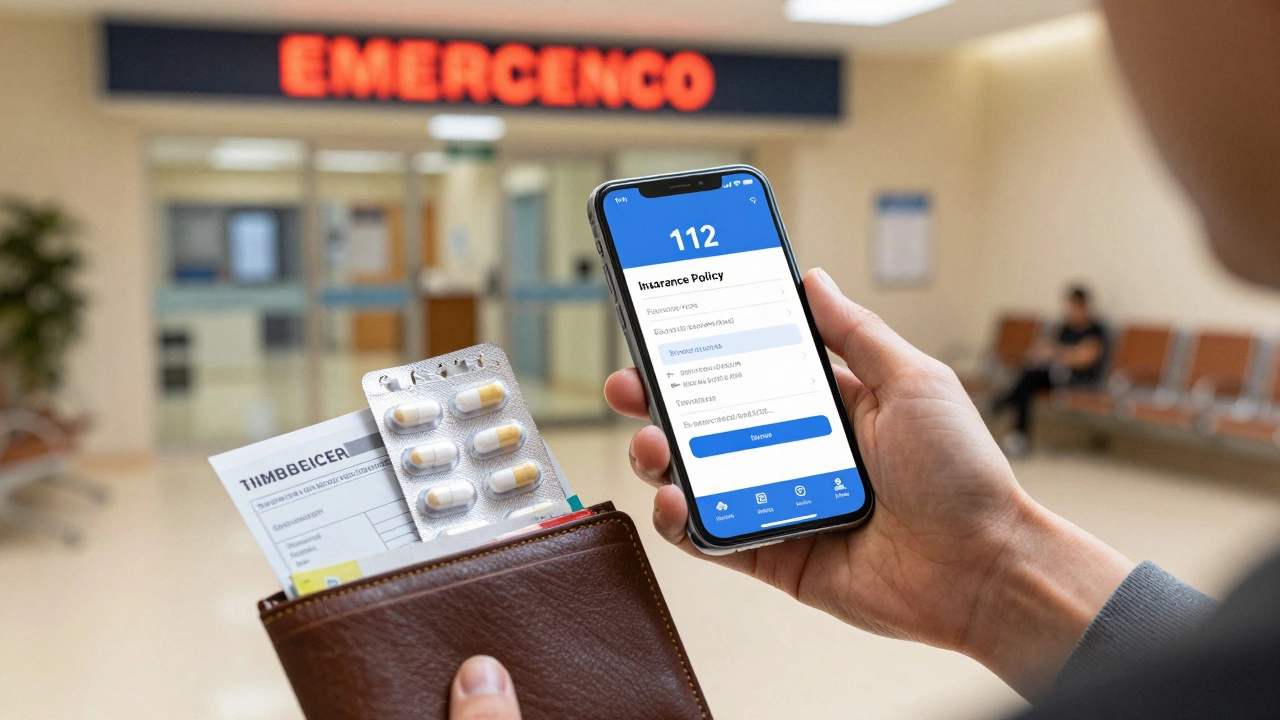
- Download digital copies: Save your policy documents, ID cards, and emergency contact numbers to your phone cloud storage. Carry a physical copy in your wallet.
- Identify nearby hospitals: Research major hospitals near your accommodation. Know the address and phone number. In Europe, dialing 112 connects you to emergency services in all EU countries.
- Carry necessary medications: Bring enough prescription drugs for your entire trip plus a few extra days. Keep them in original packaging with labels showing your name and the doctor's name. Some countries restrict certain medications, so check local regulations.
What Happens in an Emergency?
If you end up needing care, stay calm. Go to the nearest hospital or call 112. Inform the staff that you have international travel insurance. Provide them with your policy details. Do not worry about paying the full bill upfront if your insurer has a guarantee of payment agreement with the facility. If they demand cash, keep every receipt. Itemized bills are essential for reimbursement claims later.
Contact your insurance assistance line immediately. They can intervene on your behalf, ensuring you get appropriate care and that billing issues are resolved quickly. They may also arrange for a family member to be notified or help coordinate your return home if you are unable to travel.
Remember, time matters. Delays in seeking care due to fear of cost can worsen outcomes. With the right insurance, you can focus on recovery rather than finances.
Long-Term Stays and Expat Life
If your trip extends beyond a few weeks, or if you are moving to Europe for work or retirement, short-term travel insurance becomes inadequate. These policies typically cap coverage at 180 days. For longer stays, you need Expat health insurance or international health plans. These are comprehensive policies that mimic domestic US plans but operate globally. They cover routine checkups, chronic disease management, and maternity care, in addition to emergencies.
These plans are more expensive, often costing several hundred dollars per month. However, they provide peace of mind for those living abroad long-term. Employers sponsoring expats often provide these as part of relocation packages. If you are self-employed or retired, you must purchase them privately. Companies like Cigna Global, Allianz Care, and Bupa Global offer robust options tailored to different budgets and needs.
Will my US health insurance cover me in Europe?
Almost certainly not. Standard US health insurance plans, including those from employers and the ACA marketplace, do not provide coverage outside the United States. You will need to purchase separate international travel medical insurance to be protected against medical costs in Europe.
Does Medicare work in Europe?
No, Medicare does not cover medical services received outside the US, except in very rare emergency situations near the border with Canada or Mexico. It offers no protection for travelers in Europe. Seniors must buy private travel medical insurance before departing.
Is travel insurance the same as health insurance?
No. Basic travel insurance primarily covers trip cancellations, delays, and lost baggage. While it may include small medical benefits, it is not a substitute for comprehensive health coverage. For adequate protection in Europe, you need a specific international travel medical insurance policy with high limits for emergency care and evacuation.
Can I use my European Health Insurance Card (EHIC) as an American?
No. The EHIC is only available to citizens of European Union countries and other participating nations. It grants access to state-funded healthcare at reduced costs for residents. Americans are ineligible for this card and must rely on private insurance for medical coverage in Europe.
What should I do if I have a medical emergency in Europe?
Call 112, the universal emergency number in Europe, or go to the nearest hospital. Inform the staff that you have international travel insurance and provide your policy details. Contact your insurance provider's 24/7 assistance line immediately to arrange payment guarantees and coordinate care. Keep all receipts and documentation for potential reimbursement.
How much does international travel medical insurance cost?
Costs vary based on age, trip duration, and coverage limits. For a healthy adult on a two-week trip to Europe, a comprehensive policy might cost between $50 and $150. Prices increase with age and longer durations. Always compare policies to ensure you have sufficient limits for emergency room visits and medical evacuation.