
IVF Coverage Calculator
When you’re trying to have a baby and IVF comes up as an option, the first question isn’t just about success rates-it’s about money. IVF isn’t cheap. In India, a single cycle can cost anywhere from ₹2 lakh to ₹4 lakh, and many couples need more than one. So the real question isn’t whether IVF works-it’s whether your insurance will pay for it.
Most Health Insurance Plans in India Still Don’t Cover IVF
As of 2026, the vast majority of standard health insurance policies in India still treat IVF as an elective procedure-not a medical necessity. Even if you have a comprehensive plan that covers hospitalization, surgeries, and chronic illnesses, IVF is often listed under the exclusions section. You’ll find it buried in fine print: "Assisted Reproductive Technologies (ART) including IVF, IUI, ICSI are not covered."
This isn’t because insurers think infertility isn’t real. It’s because they see IVF as a high-cost, low-frequency service with unpredictable outcomes. Unlike a heart surgery with a clear success metric, IVF success depends on age, egg quality, sperm health, and even luck. Insurers don’t like uncertainty when it comes to payouts.
There Are Exceptions-But They’re Rare
Some insurers have started offering IVF coverage as an add-on rider, usually for an extra premium. Companies like Star Health, HDFC Ergo, and ICICI Lombard have experimented with fertility riders in select plans. These are not standard. You won’t find them unless you specifically ask for them during policy purchase.
There’s also a small group of corporate health plans-mostly in tech companies, startups, and multinational firms-that include IVF as part of their employee benefits. These are usually targeted at younger workforces and are more progressive in their approach to reproductive health. If you’re employed by a company that offers this, check your HR portal or ask your benefits manager directly.
What About Government Schemes?
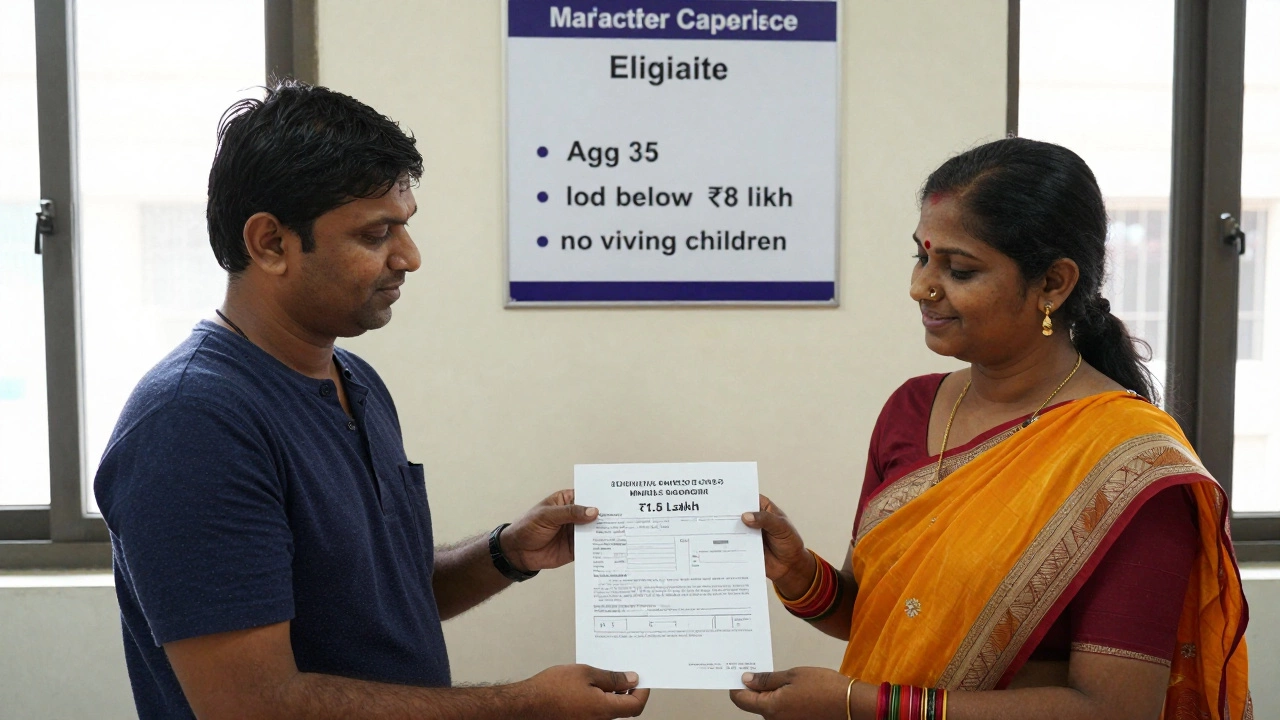
India’s National Health Mission doesn’t cover IVF for the general public. But in 2023, the government launched the Pradhan Mantri Matru Vandana Yojana (PMMVY) with a pilot program in select states to subsidize IVF for low-income couples. As of 2026, only three states-Tamil Nadu, Gujarat, and Maharashtra-have active IVF subsidy programs under this scheme. In Maharashtra, eligible couples can get up to ₹1.5 lakh coverage for one cycle through government empaneled hospitals in Pune, Mumbai, and Nagpur.
Eligibility is strict: both partners must be under 35, have a combined annual income below ₹8 lakh, and have no living children. You need a doctor’s certificate confirming infertility and proof of residence. It’s not easy to get, but it’s the only public funding available right now.
What If Your Insurance Denies Coverage?
If you’ve been told your plan doesn’t cover IVF, don’t assume it’s the end. Some people have successfully appealed denials by arguing that infertility is a medical condition, not a lifestyle choice. The Indian Medical Association (IMA) has started advocating for IVF to be reclassified as a treatment for a diagnosed disease-primary infertility-rather than an elective procedure.
If you’re in a position to fight it, get your doctor to write a detailed letter explaining how infertility is affecting your physical and mental health. Include any prior failed treatments like ovulation induction or IUI. Some insurers have reversed decisions when presented with strong clinical evidence and a formal appeal.
Alternatives to Insurance Coverage
If insurance won’t help, here are other ways to make IVF more affordable:
- Payment plans: Many clinics in Pune, Delhi, and Bangalore offer 6-12 month zero-interest EMIs. Ask if they partner with financing companies like Bajaj Finserv or Tata Capital.
- Shared risk programs: Some clinics offer money-back guarantees-if you don’t have a baby after 3 cycles, you get a partial refund. These are expensive upfront but reduce long-term financial risk.
- Group discounts: Organizations like the Indian Society for Assisted Reproduction (ISAR) sometimes negotiate group rates with clinics for their members.
- Donor egg or sperm programs: Using donor gametes can reduce costs by 20-30% because it skips expensive genetic testing and ovarian stimulation.
- Medical tourism: Countries like Georgia, Mexico, and Thailand offer IVF at 50-70% lower costs than India. Some Indian couples travel for this, but factor in travel, accommodation, and legal risks.
What Costs Are Usually Covered-Even If IVF Isn’t
Even if your plan excludes IVF, it might still cover related procedures:
- Diagnostic tests like hormone panels, semen analysis, or hysterosalpingography (HSG)
- Ultrasounds and blood work done during monitoring
- Medications for ovarian stimulation-some plans cover these under pharmacy benefits
- Complications from IVF, like ovarian hyperstimulation syndrome (OHSS)
Always ask your insurer for a detailed breakdown of what’s covered before starting treatment. You might be surprised what’s already in your plan.

How to Check Your Policy Right Now
Don’t guess. Here’s how to find out for sure:
- Log in to your insurer’s website or app.
- Go to your policy document or summary of benefits.
- Search for keywords: "assisted reproduction," "fertility treatment," "IVF," "ART," "infertility."
- Look under "Exclusions" or "Not Covered."
- If it’s unclear, call customer service and ask: "Does my policy cover IVF under any rider or add-on?" Record the name and ID of the agent.
Many people assume they’re covered because their plan says "comprehensive" or "full health coverage." That’s not enough. IVF is one of the most commonly excluded treatments-even in premium plans.
What’s Changing in 2026?
Pressure is building. More couples are speaking up. The Supreme Court of India has heard petitions calling for IVF to be recognized as a basic reproductive right. A draft bill proposed in 2025 suggests mandatory IVF coverage for all group health policies with more than 1,000 employees.
Some insurers are quietly testing pilot programs. A few are now covering IVF for couples who’ve tried IUI at least twice without success. Others are offering discounts on IVF if you complete pre-treatment counseling or genetic screening.
Change is slow, but it’s happening. The conversation is shifting from "Is IVF a luxury?" to "Is infertility a medical condition that deserves treatment?"
Bottom Line: Plan Ahead, Don’t Hope
Don’t wait until you’re ready for IVF to check your insurance. By then, it might be too late. If you’re thinking about starting fertility treatment in the next year, review your policy now. Ask your employer if they offer fertility benefits. Talk to your doctor about financial options. Look into government subsidies if you qualify.
IVF is one of the most emotionally and financially demanding treatments you’ll ever face. You don’t need to carry the whole burden alone. There are paths to make it affordable-if you know where to look.
Does any insurance in India cover IVF?
Most standard health insurance policies in India do not cover IVF. A few insurers offer it as an optional rider for an extra premium, and some corporate plans include it as an employee benefit. Government subsidies are available in select states like Maharashtra, Gujarat, and Tamil Nadu for low-income couples.
How much does IVF cost in India in 2026?
A single IVF cycle in India typically costs between ₹2 lakh and ₹4 lakh. Costs vary based on the clinic, location, medications used, and whether you need additional procedures like ICSI, genetic testing, or donor eggs. Premium clinics in Mumbai or Delhi may charge up to ₹5.5 lakh.
Can I get IVF covered if I have a pre-existing infertility diagnosis?
Having a diagnosis doesn’t automatically make IVF eligible for coverage. Most insurers still classify it as an excluded procedure, even with a confirmed diagnosis. You may have better luck appealing the decision with strong medical documentation or if your employer offers fertility benefits.
Are IVF medications covered by insurance?
Some insurance plans cover fertility medications under their pharmacy benefit, especially if they’re prescribed for conditions like PCOS or low ovarian reserve. Check your policy’s drug list. Many medications like Gonal-F or Menopur are expensive and often not covered unless you have a special rider.
What should I do if my insurance denies IVF coverage?
Request a written denial letter and ask for a formal appeal. Get your doctor to write a letter explaining how infertility is a medical condition affecting your health. Include records of previous treatments. Some insurers have reversed decisions after a strong appeal. You can also contact your state’s insurance ombudsman for help.
Is there a government subsidy for IVF in Pune?
Yes. Under Maharashtra’s pilot program, eligible couples in Pune can receive up to ₹1.5 lakh for one IVF cycle through empaneled hospitals. Eligibility requires proof of income below ₹8 lakh per year, age under 35, no living children, and a doctor-certified diagnosis of infertility. Contact the Maharashtra Health Department or visit their website for application details.
Can I use my health insurance for IUI instead of IVF?
IUI is more likely to be covered than IVF, but it’s still not guaranteed. Some insurers cover IUI if it’s part of a stepwise treatment plan for diagnosed infertility. Check your policy’s exclusions. Even if IUI is covered, you may need pre-authorization or proof that you’ve tried natural conception for at least a year.
Do private hospitals offer payment plans for IVF?
Yes. Most major fertility clinics in Pune, Mumbai, and Bangalore offer 6-12 month zero-interest EMIs through partnerships with finance companies like Bajaj Finserv, Tata Capital, or FlexiLoans. Ask the clinic’s finance desk before starting treatment-they often have pre-approved plans to help couples manage costs.