
Pharmacy Choice Advisor
Answer a few questions to find the best pharmacy setup for your current needs.
1. What is the nature of your medication?
2. How quickly do you need the medication?
3. Which is more important to you?
Our Recommendation:
You're probably used to getting your household supplies or electronics delivered in a brown box within 48 hours. But can you actually get your heart medication or antibiotics from the same place? The short answer is yes, but it isn't as simple as adding a bottle of vitamins to your cart. Amazon has moved into the healthcare space in a big way, shifting from just selling over-the-counter goods to becoming a full-fledged licensed pharmacy.
Quick Facts: Amazon Pharmacy at a Glance
- What it is: A fully licensed pharmacy service integrated into the Amazon ecosystem.
- How it works: You link your doctor's office or transfer existing scripts from another pharmacy.
- Delivery: Options range from standard shipping to two-day delivery in some regions.
- Payment: Accepts most major insurance plans and offers a cash-pay option via Prime.
What exactly is Amazon Pharmacy?
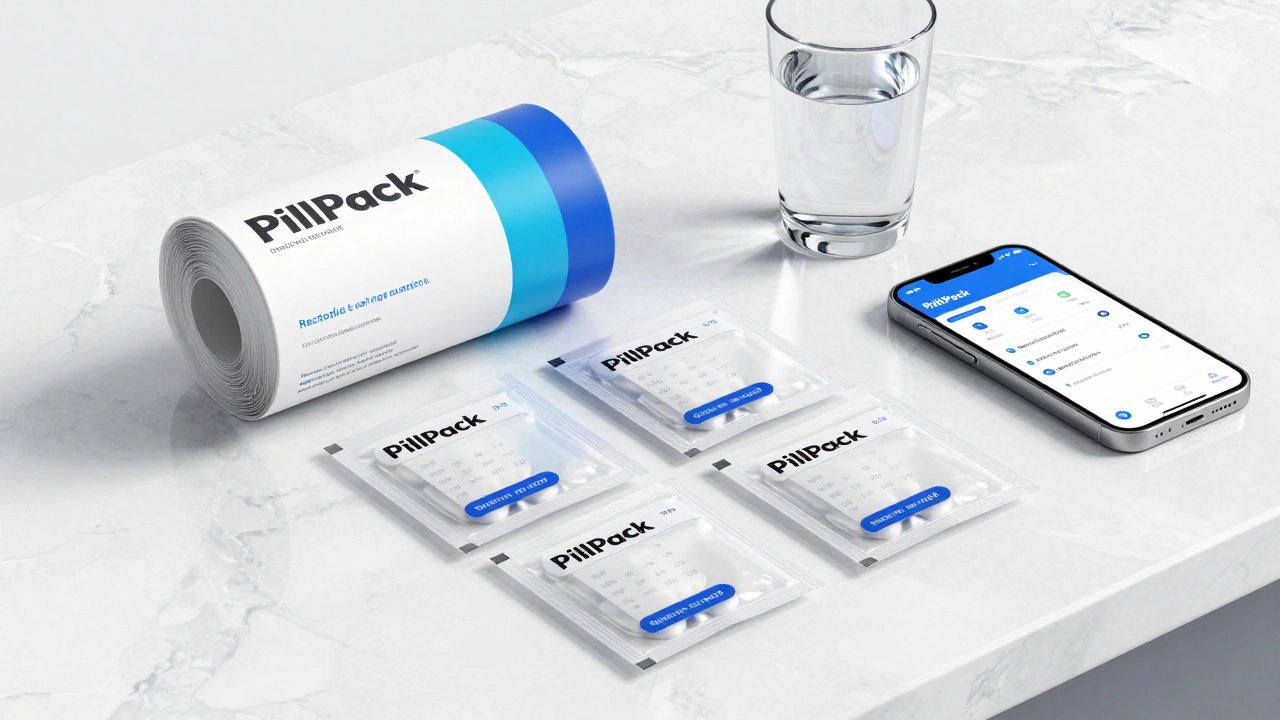
For a long time, Amazon only sold things you didn't need a doctor's note for. Now, Amazon Pharmacy is a digital pharmacy service that allows patients to manage prescriptions, communicate with pharmacists, and receive medications via mail. It isn't just one website; it's a network of licensed pharmacies. In many cases, they use the infrastructure from PillPack, a company Amazon bought back in 2018 that specializes in pre-sorting medications into date-and-time-stamped packets.
Think of it as a bridge between your doctor's office and your front door. You don't just "buy" a drug; you establish a patient profile, provide your insurance details, and the pharmacy handles the clinical verification before shipping the medicine. This removes the need to spend twenty minutes in a waiting room at a retail chain.
How the process actually works
Getting your meds through Amazon follows a specific workflow to ensure safety and legality. You can't just checkout with a credit card and hope for the best. Here is the actual path most people take:
- Account Setup: You log into your Amazon account and navigate to the Pharmacy section. You'll provide your legal name, date of birth, and address.
- Insurance Integration: You enter your insurance provider and member ID. The system checks your coverage in real-time to tell you if a drug is covered or if you need a "prior authorization" from your doctor.
- Connecting Your Doctor: You can either search for your provider in their database or invite them to send a new prescription directly to Amazon Pharmacy.
- Transferring Scripts: If you already have a prescription at a place like CVS or Walgreens, you can request a transfer. Amazon handles the paperwork and calls the other pharmacy to move the script over.
- Review and Delivery: A licensed pharmacist reviews the order for drug interactions. Once approved, the medication is shipped.
Comparison: Amazon Pharmacy vs. Traditional Retail Pharmacies
| Feature | Amazon Pharmacy | Traditional Retail (CVS/Walgreens) |
|---|---|---|
| Wait Times | None (Home Delivery) | Variable (In-person pickup) |
| Medication Organization | PillPack options available | Standard bottles/vials |
| Insurance Setup | Digital/Instant | In-person or phone |
| Urgency | Best for chronic/maintenance meds | Best for acute/immediate needs |
| Consultation | Chat/Phone | Face-to-face |
Who is this service actually for?
If you're taking a one-time course of antibiotics for a sinus infection, Amazon might be too slow. You probably want that medicine today, not in two days. However, if you are managing a chronic condition, the value proposition changes.
Imagine someone dealing with diabetes or hypertension. They take the same five pills every morning. Instead of driving to a store every 30 days and hoping the pharmacy hasn't run out of stock, they get a pre-sorted roll of packets. Each packet is labeled with the date and time. It's a game-changer for people who struggle with medication adherence or for caregivers managing a senior parent's health.
It's also a massive win for people in "pharmacy deserts"-areas where the nearest drugstore is a 30-minute drive. Having a reliable mail-order system means healthcare is no longer tied to your proximity to a commercial shopping center.
The cost factor: Insurance vs. Cash Pay
One of the biggest questions is whether it's cheaper. For most, the cost is determined by their Insurance Provider. Amazon Pharmacy works with a vast array of pharmacy benefit managers (PBMs). If your insurance covers mail-order, your copay will likely be the same as it would be at a local store.
But what if you don't have insurance? This is where the Prime Member benefits come in. Amazon often offers discounted pricing for certain generic medications for Prime subscribers. They also integrate with discount programs like GoodRx, allowing you to compare the "cash price" against your insurance copay to see which one is actually cheaper.
Potential pitfalls and things to watch out for
It isn't perfect. There are a few scenarios where you might run into trouble. First, some medications are "controlled substances" (like certain strong painkillers or ADHD meds). Due to strict federal regulations, not all of these can be shipped via mail, or they may require extra verification steps that slow down the process.
Second, there's the "last-mile" issue. While Amazon is great at logistics, a package can still be stolen from a porch or delayed by a storm. If you are completely out of a life-critical medication, relying solely on a delivery service is risky. It's always a good idea to have a local backup pharmacy where you can get an emergency 3-day supply if a shipment goes missing.
Lastly, the lack of a face-to-face relationship with a pharmacist can be a downside. A local pharmacist who knows your history can often spot a problem or suggest a generic alternative more intuitively than a digital interface, though Amazon does provide phone and chat access to professionals.
Managing your health in the digital age
The shift toward Telehealth and digital pharmacies is part of a larger trend. We are seeing a move away from the "brick-and-mortar" model of healthcare toward a more integrated, data-driven approach. By combining your medical records, your doctor's prescriptions, and your delivery service into one ecosystem, the friction of staying healthy is reduced.
If you're considering making the switch, start with your maintenance medications-the ones you take every day. Keep your local pharmacy for the "urgent" stuff. This hybrid approach gives you the convenience of Amazon Pharmacy without the risk of being without medicine during a delivery glitch.
Can I use my insurance with Amazon Pharmacy?
Yes, Amazon Pharmacy accepts most major insurance plans. During the setup process, you enter your insurance information, and they verify your coverage. If a medication requires a prior authorization, Amazon will notify you and can coordinate with your doctor to get the necessary approval.
Is Amazon Pharmacy a real pharmacy?
Yes, it is a fully licensed pharmacy. They employ licensed pharmacists who review every prescription for safety, dosage accuracy, and potential drug interactions before any medication is shipped to a patient.
How do I move my prescriptions from CVS or Walgreens to Amazon?
You can request a transfer directly through the Amazon Pharmacy portal. You'll provide the name of your current pharmacy and the medication you want to move. Amazon then contacts that pharmacy to transfer the prescription electronically.
Are there any medications Amazon cannot ship?
Yes. Some medications, particularly certain controlled substances or those requiring extreme refrigeration (cold chain) that cannot be guaranteed during shipping, may not be available for delivery. Always check the specific drug listing on their site.
Do I need a Prime membership to use Amazon Pharmacy?
No, you do not need to be a Prime member to use the pharmacy. However, Prime members often get special benefits, such as discounted pricing on select generic medications and potentially faster shipping options.
What happens if my medication arrives damaged?
Amazon provides customer support specifically for pharmacy orders. If a medication is damaged or the wrong item is sent, you can report it through your account, and they will typically arrange for a replacement or a refund.
Next Steps for New Users
If you're ready to try it, here is a quick checklist to make the transition smooth:
- Audit your meds: List everything you take and check if it's a maintenance drug (long-term) or acute (short-term).
- Check your insurance: Look at your pharmacy benefit manager's list to see if mail-order has a lower copay.
- Update your doctor: Let your physician know you're switching to a digital pharmacy so they know where to send future scripts.
- Keep a buffer: Don't wait until you have one pill left to order your first shipment; give Amazon a few days to verify your insurance and process the first order.