Ayurvedic Dosha Food Guide
Select your dominant body constitution (Dosha) to see personalized dietary advice.
Vata
Air & Space
Light, Dry, Cold
Pitta
Fire & Water
Hot, Sharp, Intense
Kapha
Earth & Water
Heavy, Slow, Oily
Foods to Avoid
Better Alternatives
Universal Rules for You
Have you ever eaten a meal that felt heavy, sluggish, or just wrong? In Ayurveda, an ancient Indian system of medicine focused on balancing the body's energies, this feeling is often a sign of Ama, toxic buildup caused by poor digestion. It’s not just about calories; it’s about how your specific body type processes what you eat. If you are trying to follow an Ayurvedic lifestyle but still feel bloated or tired, you might be eating foods that clash with your constitution.
We often hear that Ayurveda is all about what you *should* eat-turmeric milk, warm soups, fresh fruits. But understanding what to *avoid* is equally critical. The wrong foods can aggravate your dominant energy, leading to inflammation, weight gain, or chronic fatigue. This guide breaks down the universal no-nos and the specific restrictions based on whether you are Vata, Pitta, or Kapha.
The Universal Rules: What Everyone Should Limit
Before we get into your personal dosha, there are certain dietary habits that Ayurveda flags as problematic for almost everyone. These rules focus on protecting your digestive fire, known as Agni, the metabolic force responsible for breaking down food.
- Cold Drinks with Meals: Imagine pouring ice water onto a campfire. That is exactly what happens when you drink cold beverages while eating. It extinguishes Agni, leaving food partially digested and creating Ama. Stick to room temperature or warm water during meals.
- Leftovers Reheated Poorly: Food that has been sitting out and then reheated loses its prana (life force) and becomes harder to digest. While leftovers aren't strictly forbidden, they should be consumed within 24 hours and reheated thoroughly until piping hot.
- Processed Sugars: Refined white sugar creates heat and instability in the body. Ayurveda prefers natural sweeteners like jaggery, raw honey (never cooked), or maple syrup, which have mineral content and different thermal properties.
- Eating When Stressed: Digestion requires blood flow to the gut. If you are angry, anxious, or rushing, your body diverts energy elsewhere. Eating in this state guarantees poor digestion regardless of how "healthy" the food is.
Dosha-Specific Restrictions: Know Your Type
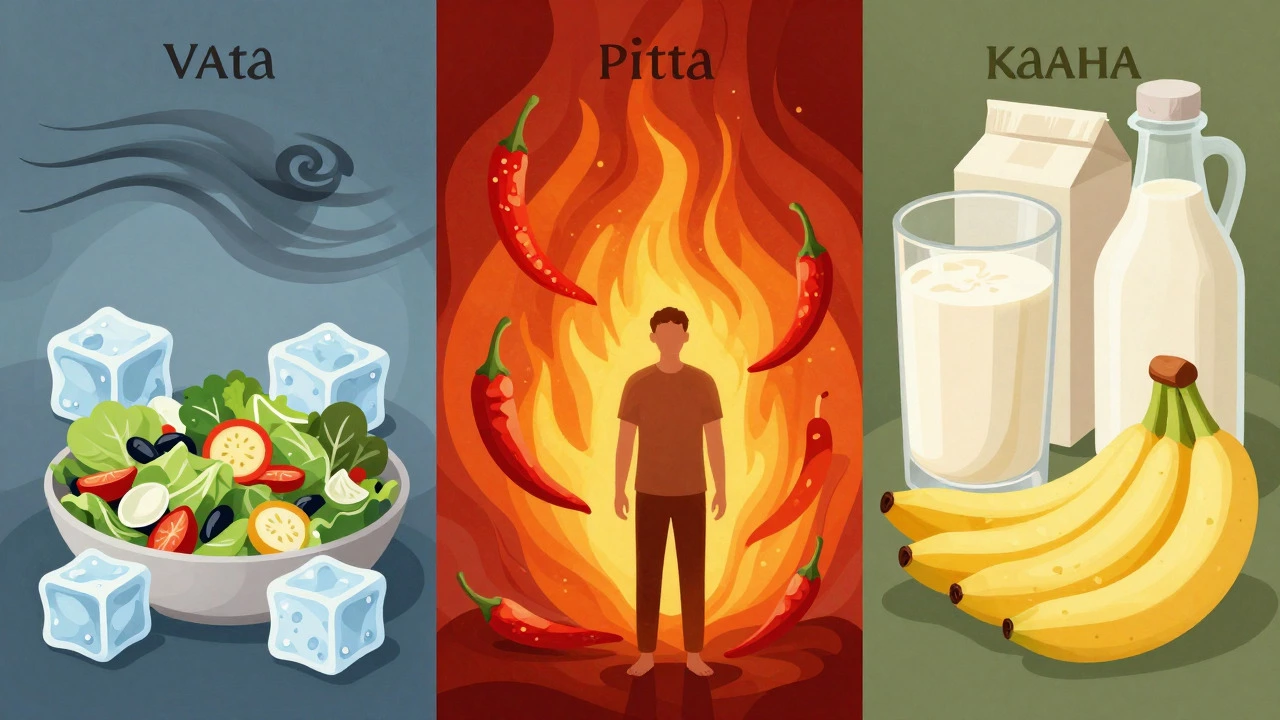
Your diet depends heavily on your Dosha, the biological principle governing your body and mind. There are three types: Vata (air/space), Pitta (fire/water), and Kapha (earth/water). Most people are a combination, but one usually dominates. Here is what each type needs to avoid.
If You Are Vata-Dominant
Vata is light, dry, cold, and mobile. To balance it, you need warmth, moisture, and grounding. Therefore, you must avoid foods that increase these negative qualities.
- Raw Vegetables: Raw salads are very hard for Vata to digest because they are cold and dry. Opt for steamed or sautéed vegetables instead.
- Cold Foods: Ice cream, frozen yogurt, and chilled juices will spike your Vata, leading to gas and anxiety.
- Light/Dry Grains: Buckwheat, millet, and quinoa can be too drying. Stick to heavier grains like rice, oats, and wheat.
- Bitter Greens: Large amounts of kale, spinach, or bitter melon can dehydrate Vata. Use them sparingly and cook them well with oil.
If You Are Pitta-Dominant
Pitta is hot, sharp, and intense. Your goal is cooling and calming. Avoid anything that adds fuel to the fire.
- Spicy Foods: Chili peppers, black pepper, and cayenne are major triggers for Pitta. They can cause acid reflux, skin rashes, and irritability.
- Sour Foods: Vinegar, fermented foods (like kimchi or sauerkraut), and overripe citrus fruits increase acidity. Lemon water is okay in moderation, but don't overdo it.
- Fried/Greasy Foods: Deep-fried items create internal heat and inflammation. Bake, steam, or poach instead.
- Red Meat: Beef and lamb are considered heating and heavy for Pitta. Chicken or fish in moderation is better, but plant-based proteins are ideal.
If You Are Kapha-Dominant
Kapha is heavy, slow, cool, and oily. You need stimulation and lightness. Avoid foods that make you sluggish or congested.
- Dairy Products: Milk, cheese, and yogurt are mucus-forming and heavy. Limit these, especially at night. Goat milk is lighter than cow milk if you must consume dairy.
- Sweet Foods: Sugar, chocolate, and sweet fruits like bananas and dates can lead to weight gain and lethargy in Kapha types.
- Heavy Oils: Butter and ghee are great for Vata and Pitta, but Kapha should use lighter oils like mustard or sesame oil in small amounts.
- Wheat and Corn: These grains are heavy and can cause congestion. Rice, barley, and millets are better choices.
Incompatible Food Combinations (Viruddha Ahara)
This is perhaps the most misunderstood aspect of Ayurveda. Certain foods, individually healthy, become toxic when combined. This concept is called Viruddha Ahara, incompatible food combinations that disrupt digestion.
| Food Combination | Why It’s Problematic | Symptoms |
|---|---|---|
| Milk + Sour Fruits (Bananas, Berries) | Sour fruit curdles milk in the stomach, creating Ama. | Bloating, rashes, sinus congestion |
| Fish + Dairy | Traditional texts say this combination creates toxins due to opposing energies. | Skin disorders, digestive upset |
| Honey + Ghee (in equal parts) | When heated or mixed equally, they become sticky and hard to digest. | Toxin buildup, lethargy |
| Hot + Cold Foods Together | Confuses the digestive fire (e.g., hot soup with ice cream). | Indigestion, irregular bowel movements |
For example, many people enjoy banana smoothies with milk. In Ayurveda, bananas are considered slightly sour and heavy, while milk is cooling. Mixing them can lead to mucus production and skin issues for sensitive individuals. Try having your fruit separately from your dairy.
Timing Matters: When to Eat
It’s not just *what* you eat, but *when*. Ayurveda emphasizes circadian rhythms. Your digestive fire is strongest around midday, between 12 PM and 2 PM. This is when you should eat your largest meal.
- Breakfast: Keep it light. A large breakfast can overwhelm the weaker morning digestion.
- Lunch: Make this your main meal. Include all six tastes (sweet, sour, salty, pungent, bitter, astringent) for balance.
- Dinner: Eat early, ideally before 7 PM. The food should be easily digestible-think soups, stews, or khichdi. Avoid heavy carbs or proteins late at night, as they turn into fat and toxins rather than energy.
Snacking throughout the day weakens Agni. Try to allow at least 4-6 hours between meals so your body can complete the digestive cycle.
Practical Tips for Transitioning
Changing your diet overnight is stressful, and stress itself hurts digestion. Start small. Identify one habit to change, such as stopping cold drinks with lunch. Notice how your energy levels shift after a week. Then, look at your dosha-specific list and remove one aggravating food.
Listen to your body. If you feel light and clear after a meal, you made the right choice. If you feel heavy, sleepy, or bloated, take note of what you ate. Over time, you will develop an intuitive sense of what nourishes you and what drains you. This self-awareness is the heart of Ayurvedic living.
Can I eat meat in Ayurveda?
Yes, but it depends on your dosha and health goals. Vata and Kapha types may benefit from moderate meat consumption for strength and grounding, while Pitta types should minimize it due to its heating nature. Always choose ethically sourced, fresh meat and avoid processed meats.
Is coffee bad in Ayurveda?
Coffee is considered Vata-aggravating because it is drying, stimulating, and acidic. It can deplete your energy reserves over time. If you drink it, limit yourself to one cup in the morning, add milk or cream to balance the dryness, and avoid it on an empty stomach. Herbal teas are a better alternative.
What is Ama and how do I know if I have it?
Ama is undigested food residue that turns into toxins. Signs include a coated tongue (especially in the morning), bad breath, fatigue after eating, bloating, and unclear thinking. Reducing Ama involves eating warm, cooked foods, drinking ginger tea, and improving sleep hygiene.
How do I determine my Dosha?
You can take a detailed questionnaire online or consult an Ayurvedic practitioner. Generally, Vata types are thin and creative, Pitta types are medium-built and intense, and Kapha types are sturdy and calm. Most people are a mix of two doshas.
Are nuts okay to eat in Ayurveda?
Raw nuts are hard to digest and can aggravate Vata and Kapha. Soak them overnight to neutralize enzyme inhibitors and make them easier to digest. Almonds and walnuts are generally preferred. Avoid peanuts, which are legumes and can be inflammatory.