Knee Replacement Recovery Timeline Simulator
Select a recovery phase to see detailed insights.
Select a Phase
--- Waiting for selection...
There is a myth that the moment you wake up from anesthesia, the nightmare begins. The reality of knee replacement, also known as total knee arthroplasty, is a surgical procedure to replace damaged knee joint surfaces with artificial components made of metal and plastic. is far more nuanced. Most patients do not experience a single "hardest" day in isolation. Instead, they face a shifting landscape of physical challenges where pain peaks at different times for different reasons.
If you are preparing for this surgery or supporting someone who is, knowing what to expect can drastically reduce anxiety. The consensus among orthopedic surgeons and physical therapists is that while the first 24 hours involve intense but managed pain, days 3 through 5 often represent the psychological and physical low point of the immediate recovery phase.
The First 24 Hours: Anesthesia Wears Off
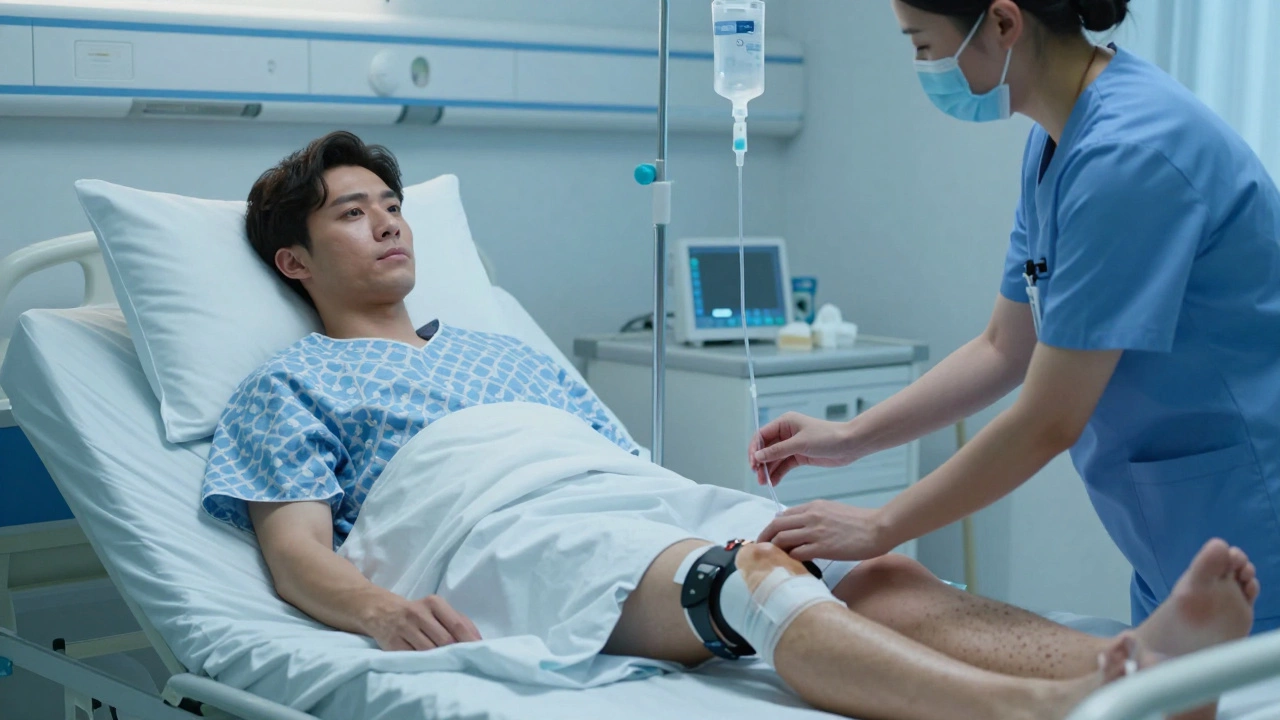
The immediate post-operative period is dominated by the fading effects of anesthesia and nerve blocks. During your hospital stay, typically lasting one to three days, you will have access to multimodal pain management. This includes intravenous opioids, acetaminophen, and anti-inflammatory drugs.
Why isn't Day 1 the hardest? Because your medical team is actively managing your discomfort. You will likely receive a femoral nerve block or spinal anesthesia that keeps the leg numb for 12 to 24 hours. When this wears off, the pain spikes, but it is usually manageable because you are still in a controlled environment with nurses checking on you every few hours.
- Pain Level: Moderate to High (but medicated)
- Main Challenge: Initial swelling and stiffness
- Key Activity: Learning to walk with a walker and performing basic ankle pumps
Days 3 to 5: The Real Struggle Begins
This window is frequently cited by patients as the most difficult part of the early recovery. Here is why: the local anesthetics are completely gone, the initial adrenaline has faded, and you are likely transitioning from strong IV medications to oral pills. Oral medications often provide less consistent relief than IV drips.
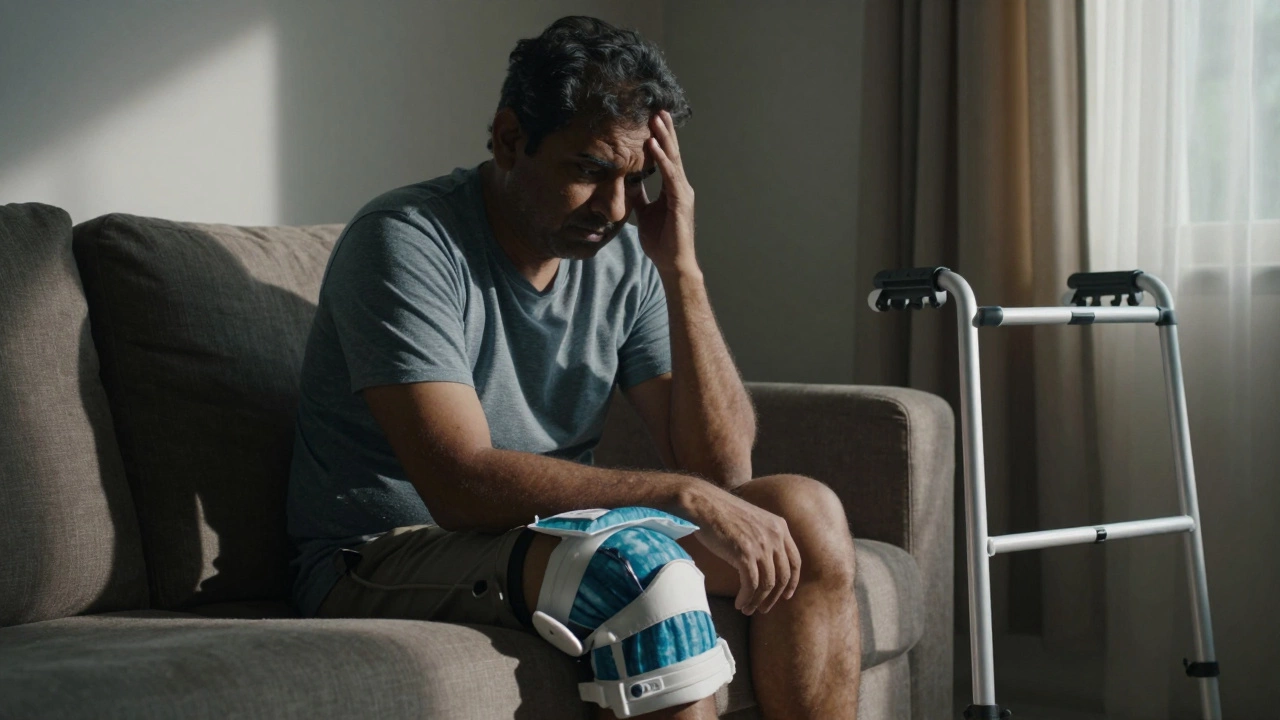
Furthermore, this is when the true extent of the tissue trauma becomes apparent. Your body is in full inflammatory mode. Swelling peaks around this time, causing a feeling of tightness and pressure inside the knee capsule. For many, this coincides with discharge from the hospital. Going home means losing the constant support of nursing staff. You are now responsible for your own medication schedule, ice application, and elevation.
The psychological shift is significant. In the hospital, recovery feels like a job with clear instructions. At home, it feels like a solitary confinement of sorts. Boredom, frustration, and the sheer effort of simple tasks like getting to the bathroom can make Days 3 to 5 feel insurmountable.
| Timeframe | Pain Source | Primary Challenge | Support Level |
|---|---|---|---|
| Day 1-2 | Surgical incision & bone cuts | Navigating anesthesia withdrawal | High (Hospital Staff) |
| Day 3-5 | Inflammation & muscle spasms | Self-management & isolation | Medium (Family/Caregiver) |
| Week 2-3 | Stiffness & scar tissue formation | Physical therapy intensity | Low (Independent) |
The Second Week: The Stiffness Plateau
By week two, the sharp, acute pain subsides, replaced by a dull ache and significant stiffness. This is another potential "hard" period, though for different reasons. The focus shifts from pain control to range of motion (ROM). Physical therapy becomes more rigorous.
You might find yourself struggling to bend your knee past 90 degrees or fully straighten it. This lack of progress can be discouraging. The muscles around the knee, particularly the quadriceps, undergo "arthrogenic muscle inhibition," meaning they shut down due to joint swelling. Trying to activate these muscles feels like trying to start a car with a dead battery.
During this phase, consistency is key. Missing physical therapy sessions can lead to permanent stiffness. The "hardest" aspect here is mental endurance rather than acute pain.
Managing Pain Effectively
To navigate these difficult days, proactive pain management is essential. Waiting until pain reaches a 10 out of 10 before taking medication is a common mistake. It is much harder to bring severe pain down than to keep moderate pain from escalating.
- Stay Ahead of the Curve: Take prescribed pain medication on a schedule, especially during the first week. Do not wait for pain to spike.
- Ice Aggressively: Use continuous cryotherapy machines or ice packs for 20 minutes every hour. Cold reduces inflammation and numbs the area.
- Elevate Correctly: Elevate your leg above heart level. Prop it up on pillows, ensuring the knee is slightly bent if comfortable, but mostly straight to prevent flexion contractures.
- Ankle Pumps: Perform ankle pumps frequently to promote blood flow and reduce the risk of deep vein thrombosis (DVT).

When to Call the Doctor
While pain and swelling are normal, certain symptoms indicate complications. Contact your surgeon immediately if you experience:
- Signs of infection: Fever over 101°F (38.3°C), chills, or increasing redness/warmth around the incision.
- Excessive bleeding: Soaking through bandages rapidly.
- Calf pain or swelling: Could indicate a blood clot (DVT).
- Sudden increase in pain: Not relieved by medication or rest.
Long-Term Outlook
It is important to remember that the "hardest days" are temporary. Most patients report a significant improvement in quality of life within three to six months. The artificial knee allows for pain-free movement, enabling activities like walking, swimming, and gardening that were previously impossible.
Recovery is not linear. You will have good days and bad days. Understanding that Days 3 to 5 are typically the peak of difficulty helps you mentally prepare. By focusing on small victories-like bending an extra degree or walking across the room-you build the resilience needed for full recovery.
Is it normal to have no pain after knee replacement?
Some patients report surprisingly little pain due to effective nerve blocks and modern pain management protocols. However, some discomfort is expected. If you have zero pain, ensure you are still moving your leg to prevent stiffness, as pain can sometimes be a useful signal for limits.
How long does the worst pain last?
The most intense pain usually lasts for the first 3 to 7 days. After the first week, pain should transition from sharp and acute to a dull ache and stiffness, which gradually improves over weeks.
Can I drive myself home after knee replacement?
No. You must have someone drive you home. Additionally, you cannot drive for at least 2 to 6 weeks, depending on whether the left or right knee was replaced and your ability to react quickly without pain.
What helps with sleep after knee replacement?
Sleep is often disrupted in the first two weeks. Keep your leg elevated with pillows between your knees if sleeping on your back. Take pain medication 30 minutes before bed to prevent waking up in pain. A cool room temperature also helps reduce swelling.
When can I return to work after knee replacement?
For desk jobs, most people return within 2 to 4 weeks. For jobs requiring standing, lifting, or heavy physical labor, recovery may take 3 to 6 months or longer. Consult your surgeon for personalized advice based on your specific role.