
If your knees feel like they’re rusted shut in the morning, or if climbing stairs feels like a battle, you’re not alone. Millions of people over 50 deal with stiff knees - and many wonder if walking will make it worse. The truth? walking is one of the best things you can do for stiff knees, even if you’ve had knee replacement surgery. But only if you do it right.
Why Your Knees Feel Stiff
Stiff knees aren’t just about aging. They’re often caused by osteoarthritis, where the cartilage between your bones wears down. Without that cushion, bones rub together. Fluid that normally lubricates the joint dries up. Muscles around the knee weaken from fear of pain, making the joint even stiffer. It becomes a cycle: pain → avoid movement → more stiffness → more pain.Some people think rest is the answer. But studies from the Arthritis Foundation show that people who avoid movement see their stiffness get worse 3 times faster than those who stay active. Your knee needs motion like a car needs oil - without it, things seize up.
How Walking Helps Stiff Knees
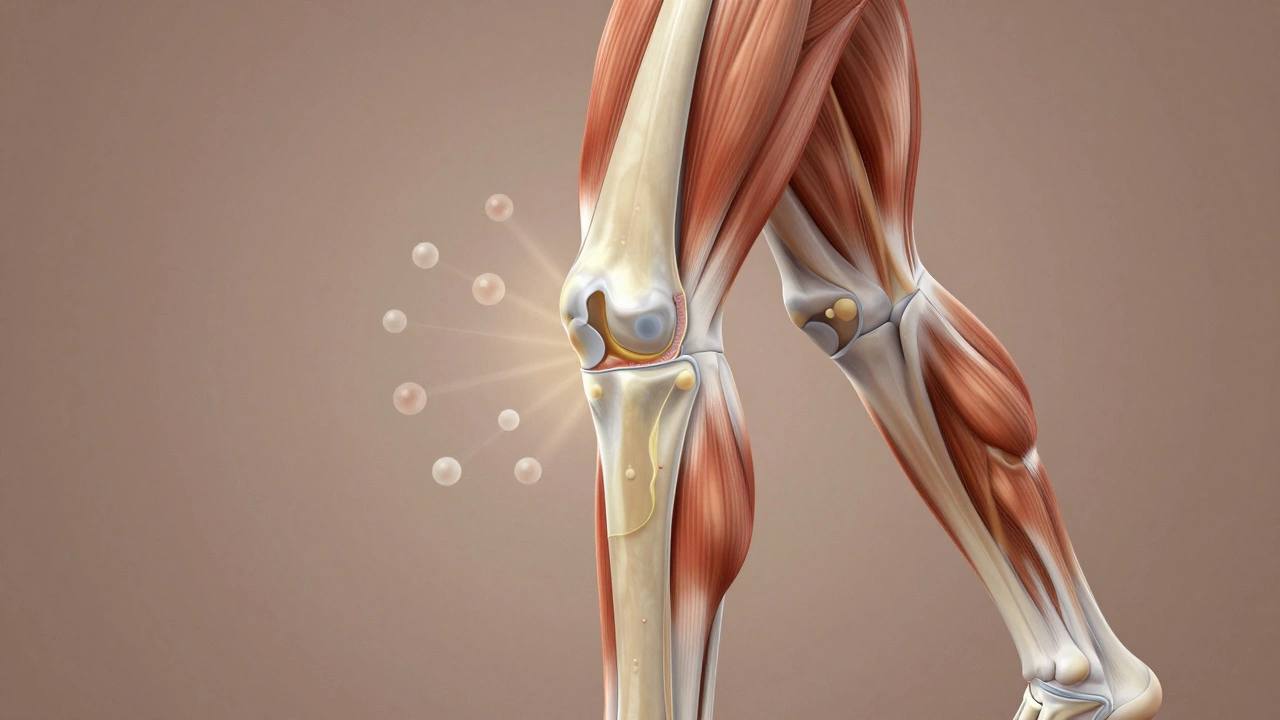
Walking isn’t just a gentle exercise. It’s a full-body reset for your knees. Here’s how it works:- Boosts synovial fluid: Every step squeezes and releases the joint, pumping fresh lubricating fluid into it. This reduces friction and eases movement.
- Strengthens supporting muscles: Your quadriceps, hamstrings, and calves act like natural braces. Walking builds them up without putting heavy load on the joint.
- Improves range of motion: Regular walking helps the knee bend and straighten more easily. Many patients report being able to sit cross-legged or get out of a low chair again after just 4-6 weeks.
- Reduces inflammation: Movement triggers the release of anti-inflammatory chemicals in your body. A 2024 study in the Journal of Orthopaedic Research found that daily walking lowered knee inflammation markers by 22% in 8 weeks.
One woman from Pune, 68, told her physiotherapist she hadn’t walked more than 10 minutes in 2 years after her knee replacement. She started with 5-minute walks twice a day. After 6 weeks, she walked to the market and back - 1.2 kilometers - without pain. She didn’t need stronger painkillers. She just moved.
What If You’ve Had Knee Replacement Surgery?
If you’ve had a knee replacement, your surgeon probably told you to walk. But many patients are scared. They think their new knee is fragile. It’s not. Modern implants are designed to handle daily use. In fact, walking is the #1 recommended activity after surgery.Here’s what works:
- Day 1-3 after surgery: Walk with a walker or crutches, even if just to the bathroom. Early movement prevents blood clots and keeps the joint from stiffening.
- Week 1-4: Aim for 10-15 minutes, 3 times a day. Walk on flat ground. Use a cane if needed.
- Week 5-8: Increase to 20-30 minutes at a time. Try walking on grass or a treadmill with low incline.
- After 3 months: Most people can walk 30-60 minutes daily without pain. Many return to gardening, temple walks, or evening strolls.
Don’t wait for pain to disappear before walking. Pain should decrease over time - not vanish instantly. If you feel sharp pain or swelling after walking, stop and rest. But mild discomfort? That’s normal.
How to Walk Without Making It Worse
Walking can help - or hurt - depending on how you do it. Here’s what to avoid:- Walking too fast: Speed doesn’t matter. Slow, steady steps are better than power-walking.
- Walking on uneven ground: Sidewalk cracks, gravel, or steep hills can throw off your balance and strain the knee.
- Wearing worn-out shoes: Flat, unsupportive slippers or flip-flops are worse than nothing. Look for shoes with cushioned soles and firm heel support.
- Walking for hours straight: Start small. Ten minutes twice a day beats one long walk that leaves you swollen the next day.
Try this: Walk at the same time every day - right after breakfast or before dinner. Put on your shoes and step out. Don’t think about distance. Just move. Your knee doesn’t care how far you go. It cares that you showed up.

When Walking Isn’t Enough
Walking helps most people. But if you’ve tried it for 6-8 weeks and your knee still locks up, swells, or gives out - you might need more.- Physical therapy: A therapist can teach you specific stretches and strengthening moves tailored to your knee.
- Heat or cold therapy: Warm packs before walking loosen stiffness. Ice after helps with swelling.
- Weight management: Losing just 5 kg reduces knee pressure by 20 kg with every step.
- Braces or supports: Simple neoprene sleeves can give extra stability if your knee feels wobbly.
If pain is constant, or you can’t walk 5 minutes without stopping - see an orthopedic doctor. You might need an X-ray or MRI to check for other issues like meniscus tears or bone spurs.
Real Progress, Not Perfect
You don’t need to walk 10,000 steps a day. You don’t need to run. You don’t need to impress anyone. You just need to keep moving.One man I know, 72, walked his granddaughter to school every morning - 15 minutes each way. He didn’t track steps. He didn’t wear a fitness tracker. He just showed up. After 4 months, he stopped using his cane. His doctor said his knee mobility had improved more than anyone expected.
Stiff knees don’t have to be your life sentence. Walking won’t fix everything overnight. But it’s the cheapest, safest, most effective tool you already have. Your body remembers how to move. You just have to remind it - one step at a time.
Is walking good for stiff knees after knee replacement?
Yes, walking is the most important exercise after knee replacement. It helps restore movement, reduces swelling, and strengthens muscles around the joint. Most patients start walking with support the day after surgery and gradually increase time and distance over weeks. Avoiding walking delays recovery and can lead to permanent stiffness.
How long should I walk each day for stiff knees?
Start with 5-10 minutes, 2-3 times a day. If you feel no increased pain or swelling the next day, add 2-5 minutes every few days. Aim for 20-30 minutes total per day within 4-6 weeks. Quality matters more than quantity - slow, steady steps are better than rushing.
Can walking make knee arthritis worse?
No - when done correctly. Low-impact walking doesn’t damage arthritic knees. In fact, it helps by improving joint lubrication and muscle support. Pain during walking is usually a sign you’re doing too much too soon, not that walking is harming your knee. Stop if you feel sharp pain, swelling, or instability, but mild discomfort is normal.
What shoes are best for walking with stiff knees?
Choose shoes with cushioned soles, firm heel support, and a flexible forefoot. Avoid flat slippers, flip-flops, or worn-out sneakers. Brands like Skechers, New Balance, or even local Indian brands like Bata’s orthopedic line work well. Try them on in the afternoon when your feet are slightly swollen for the best fit.
Should I walk if my knee is swollen?
If your knee is hot, red, and swollen, rest for 1-2 days and apply ice. Gentle movement is still important, so try seated leg lifts or ankle pumps instead of walking. Once swelling goes down, start walking again slowly. Constant swelling means you need to see a doctor - it could signal infection or a flare-up that needs treatment.
Is walking better than cycling or swimming for stiff knees?
Walking is better for most people because it’s weight-bearing, which strengthens bones and muscles around the knee. Cycling and swimming are great for reducing pain, but they don’t build the same level of support. For long-term knee health, walking is essential. You can combine them - walk on some days, swim on others - but don’t skip walking entirely.