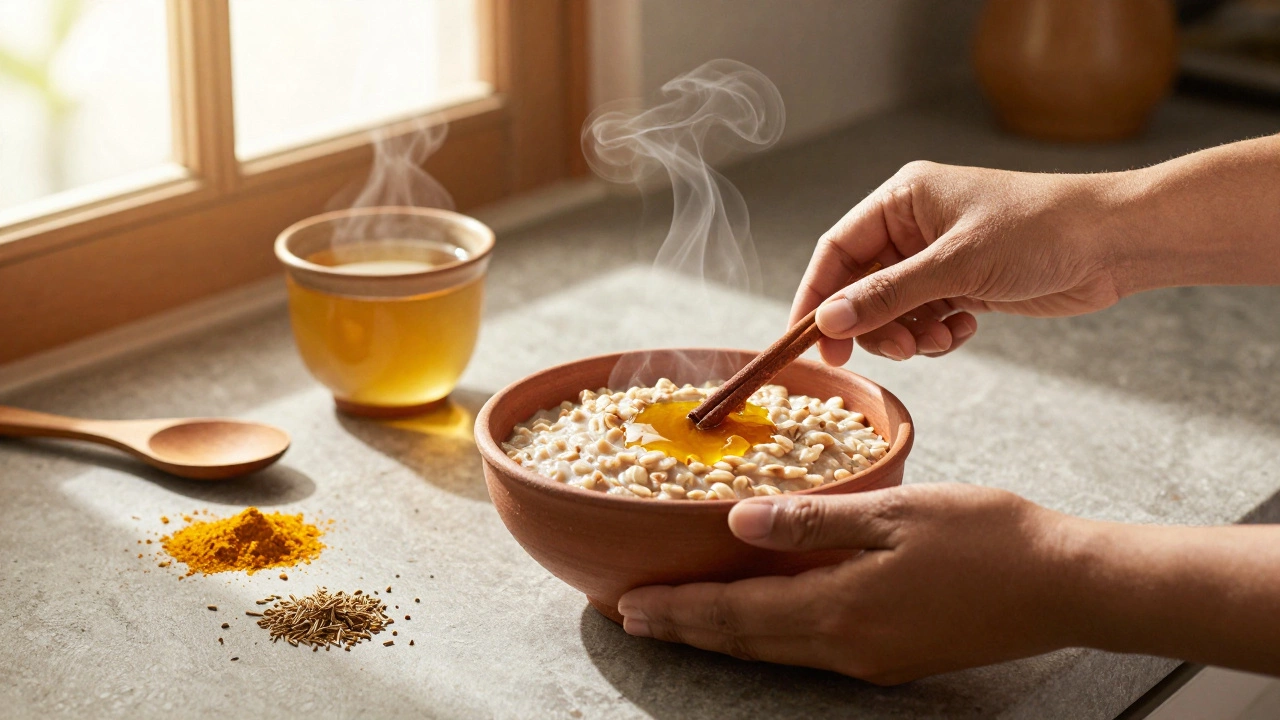
Starting an ayurvedic diet isn’t about cutting out carbs or counting calories. It’s about eating in a way that matches your body’s natural rhythm-something your ancestors did without even thinking about it. If you’ve ever felt tired after eating, bloated after a big meal, or just out of sync with your own energy, the ayurvedic diet might be the missing piece. Unlike fad diets that treat everyone the same, ayurveda says your ideal food depends on your unique constitution-your dosha.
What Is Your Dosha?
Ayurveda divides people into three main body-mind types: Vata, Pitta, and Kapha. These aren’t just buzzwords-they’re biological patterns shaped by elements in nature. Vata is air and space, Pitta is fire and water, and Kapha is earth and water. Most people are a mix, but one usually dominates.
Here’s how to tell yours:
- Vata: Thin frame, dry skin, quick thoughts, prone to anxiety or constipation. You feel cold easily.
- Pitta: Medium build, sharp appetite, warm body, strong digestion. You get irritable when hungry or overheated.
- Kapha: Heavier build, slow metabolism, calm mind, prone to sluggishness or weight gain. You love comfort foods.
Knowing your dosha is the first step. You don’t need a fancy test-just look at your natural tendencies. If you’re unsure, start by noticing what foods make you feel good or bad after eating them.
Start With the Basics: Eat Fresh, Cooked, and Warm
Ayurveda doesn’t require exotic ingredients. It asks you to return to simple, real food. Forget raw kale smoothies if you’re Vata. Skip spicy curry if you’re Pitta. The core rule? Eat food that’s freshly cooked, warm, and easy to digest.
Why warm? Because your digestive fire-called agni-is strongest when your body is warm. Cold drinks, salads straight from the fridge, or raw nuts can dull it. That’s why even Vata types, who crave warmth, benefit from a cup of ginger tea before meals. Pitta types do well with cooling herbs like coriander. Kapha types need light, spicy foods to stir their slow metabolism.
Start by replacing one cold meal a day with a warm one. Swap your morning cereal for oatmeal cooked with cinnamon and ghee. Replace your afternoon salad with a lentil soup. Small shifts build big results.
Match Your Food to Your Dosha
Here’s what each dosha needs to thrive:
Vata: Grounding and Nourishing
- Best foods: Cooked grains like rice and wheat, root vegetables (carrots, sweet potatoes), ghee, warm milk, nuts, soups, stews.
- Avoid: Raw veggies, crackers, cold drinks, caffeine, dried fruit, popcorn.
- Tip: Eat at regular times. Vata thrives on routine. Skip skipping meals.
Pitta: Cooling and Calming
- Best foods: Sweet fruits (melon, grapes), leafy greens, barley, coconut, milk, cucumber, mint, cilantro.
- Avoid: Spicy foods, chili, sour foods like vinegar or citrus, fried foods, alcohol, coffee.
- Tip: Eat in a calm space. Pitta gets angry when rushed. Don’t eat while working or arguing.
Kapha: Light and Stimulating
- Best foods: Legumes, bitter greens (kale, dandelion), light grains (quinoa, millet), honey, ginger, black pepper, warm spices.
- Avoid: Heavy dairy, oily foods, sugar, sweet fruits (bananas, mangoes), processed carbs, late-night eating.
- Tip: Eat less. Kapha types feel full slower. Stop eating when you’re 75% full.
These aren’t strict rules-they’re gentle guides. If you’re mostly Vata but love spicy food, try it in small amounts. Pay attention to how you feel afterward. That’s the real test.
Meal Timing Matters More Than You Think
Ayurveda doesn’t just care about what you eat-it cares when you eat. Your body has natural rhythms tied to the sun. The strongest digestive fire is between 10 a.m. and 2 p.m. That’s when your body is ready to break down food most efficiently.
So here’s the simple schedule:
- Breakfast: Light and warm. Oatmeal, warm fruit, or a small smoothie with ginger.
- Lunch: Your biggest meal. Cooked grains, lentils, steamed veggies, a little ghee.
- Dinner: Light and early. Before 7 p.m. Soup, stew, or steamed veggies. No heavy carbs.
Skipping breakfast? Fine. But don’t skip lunch. Eating late? That’s when Kapha builds up and digestion slows. If you eat dinner after 8 p.m., you’re asking your body to work while it’s trying to rest.
Spices Are Your Secret Weapon
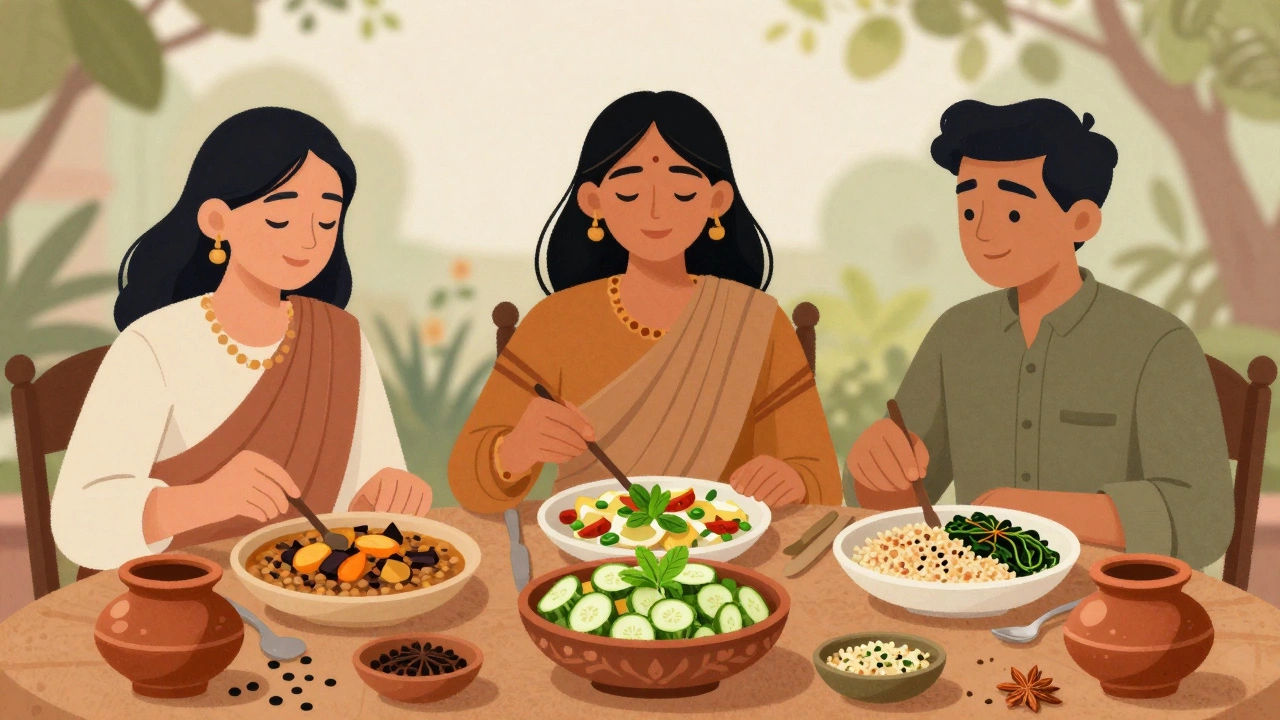
You don’t need supplements or pills. Ayurveda’s magic is in the spice rack.
Here’s what to keep on hand:
- Ginger: Boosts digestion for all doshas. Add fresh grated ginger to tea or meals.
- Turmeric: Anti-inflammatory. Use with black pepper to boost absorption.
- Cumin, coriander, fennel: Together, they’re called trikatu-a classic trio for digestion.
- Cinnamon: Warm and sweet. Great for Vata and Kapha.
- Himalayan salt: Better than table salt. Use a pinch in meals.
Don’t overdo it. One teaspoon of cumin in your rice, a dash of turmeric in your soup-that’s enough. These spices aren’t for flavor alone. They’re medicine.
Drink Smart
Water is the most important part of your diet. But how you drink it matters.
- Drink warm or room-temperature water. Cold water slows digestion.
- Sip slowly. Don’t gulp during meals. It drowns your agni.
- Start your day with a glass of warm water and lemon (or just warm water if you’re Pitta).
- Herbal teas: Ginger for Vata, mint for Pitta, cinnamon for Kapha.
- Avoid ice, soda, and sugary drinks. They create toxins (ama) in the body.
If you’re used to drinking iced tea or coffee, swap one cup a day for herbal tea. Notice how your energy changes after a week.
What to Avoid
Ayurveda doesn’t ban foods-it warns against habits that create imbalance. Here’s what to watch out for:
- Leftovers: Food older than 24 hours loses prana (life force). Eat fresh.
- Processed snacks: Chips, cookies, frozen meals-they’re heavy and hard to digest.
- Overeating: Even healthy food becomes toxic if you eat past fullness.
- Emotional eating: Stress, boredom, or sadness trigger cravings. Pause. Breathe. Drink water first.
- Combining milk with fruit or salty foods: Ayurveda says this creates mucus. Keep them separate.
You don’t have to be perfect. Just notice. If you ate pizza and felt sluggish the next day, that’s feedback-not failure.
Your First Week: A Simple Plan
Here’s how to start without overwhelm:
- Identify your dosha using the descriptions above.
- Replace one cold meal with a warm, cooked one.
- Drink warm water with ginger every morning.
- Stop eating after 7 p.m.
- Use one new spice-like cumin or turmeric-in your cooking.
- Write down how you feel after each meal: energized? bloated? calm? tired?
- By day 7, you’ll know what works for you.
This isn’t a diet you quit. It’s a way of eating that grows with you. After a few weeks, you’ll stop thinking about rules. You’ll just know what feels right.

When to Expect Results
You won’t lose 10 pounds in a week. But you might notice:
- Better digestion-less bloating, gas, or constipation.
- More stable energy-no mid-afternoon crashes.
- Clearer skin and better sleep.
- Less emotional eating.
These changes start in 3-7 days. Deeper shifts-like weight balance or reduced inflammation-take 4-8 weeks. Be patient. Ayurveda works slowly because it works deeply.
Common Mistakes and How to Fix Them
Most people start strong and quit because they expect too much too soon. Here’s what goes wrong-and how to fix it:
- Mistake: Trying to eat perfectly. Fix: Aim for 80% consistency. It’s okay to have a slice of cake. Just get back on track with your next meal.
- Mistake: Following someone else’s plan. Fix: Your dosha is unique. Don’t copy a Vata diet if you’re Kapha.
- Mistake: Skipping meals to lose weight. Fix: Eat regularly. Skipping meals slows your metabolism and triggers cravings.
- Mistake: Believing you need special products. Fix: You don’t need ayurvedic supplements. Start with your kitchen.
The goal isn’t perfection. It’s awareness. Every bite is a chance to listen to your body.
What Comes Next?
Once you’ve got the basics down, you can explore:
- Ayurvedic morning routines (dinacharya)-oil pulling, tongue scraping, dry brushing.
- Seasonal eating-what to eat in winter vs. summer.
- Herbal teas for sleep, digestion, or stress.
- Yoga and breathing practices to support digestion.
But don’t rush. Master eating first. Everything else builds on that.
Can I start an ayurvedic diet if I’m not Indian?
Yes. Ayurveda isn’t tied to culture or religion. It’s based on universal principles of nature and how your body responds to food. People from all backgrounds use it successfully. The doshas apply to everyone, regardless of ethnicity.
Do I need to be vegetarian to follow an ayurvedic diet?
No. While many ayurvedic diets are plant-based, meat is allowed in moderation-especially for Vata types who need more nourishment. The key is how it’s prepared: fresh, spiced, and eaten in small amounts. Avoid processed meats and fried chicken.
Can I drink coffee on an ayurvedic diet?
It depends. Coffee is heating and drying-great for Kapha, tough on Pitta and Vata. If you’re Pitta, skip it or switch to herbal tea. If you’re Vata, try a small cup with milk and cinnamon. Avoid black coffee on an empty stomach. It’s a stimulant, not a nourisher.
How long should I follow this diet?
Long-term. Ayurveda isn’t a short-term fix. It’s a lifestyle. You don’t “complete” it-you adapt it as you age, change seasons, or face stress. Think of it like brushing your teeth: you do it daily because it keeps you healthy.
What if I have a medical condition like diabetes?
Ayurveda can support diabetes management by improving digestion and reducing sugar cravings, but it’s not a replacement for medical care. Work with your doctor. Focus on whole foods, avoid refined sugar, and eat at regular times. Many people with diabetes find their blood sugar stabilizes naturally when they follow ayurvedic eating habits.
Final Thought
You don’t need to overhaul your life to start an ayurvedic diet. Just begin with one warm meal. One cup of ginger tea. One moment of awareness before you eat. That’s enough. The rest follows naturally. Your body already knows what it needs. You just have to stop ignoring it.