Knee Replacement Recovery Timeline Explorer
Select a recovery period below to see what to expect during each phase of your knee replacement journey.
Your Recovery Journey
Click on any time period to explore detailed milestones
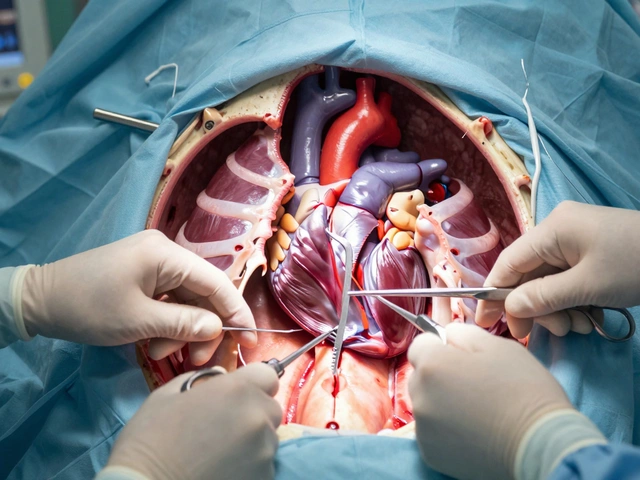
You just had your knee replacement is a surgical procedure to replace a damaged or worn-out knee joint with an artificial implant.. The anesthesia is wearing off. You’re lying in the hospital bed, staring at the ceiling, and asking yourself one burning question: "How long do I have to stay in bed?" It’s a natural fear. We associate surgery with weeks of immobilization, right? Wrong.
In modern orthopedic care, the concept of "bed rest" after a total knee arthroplasty (TKA) is practically dead. In fact, staying in bed for too long can actually hurt your recovery. The short answer? You shouldn’t be resting in bed at all-not really. Most patients are up walking within 24 hours of surgery.
The Myth of Bed Rest vs. The Reality of Early Mobilization
Let’s clear up a massive misconception. When doctors talk about "rest," they don’t mean lying flat like a statue. They mean protecting the new joint while keeping the muscles active. If you spend days in bed, you risk blood clots (deep vein thrombosis), muscle atrophy, and stiffness that could ruin the outcome of your surgery.
Here is the reality of the first few days:
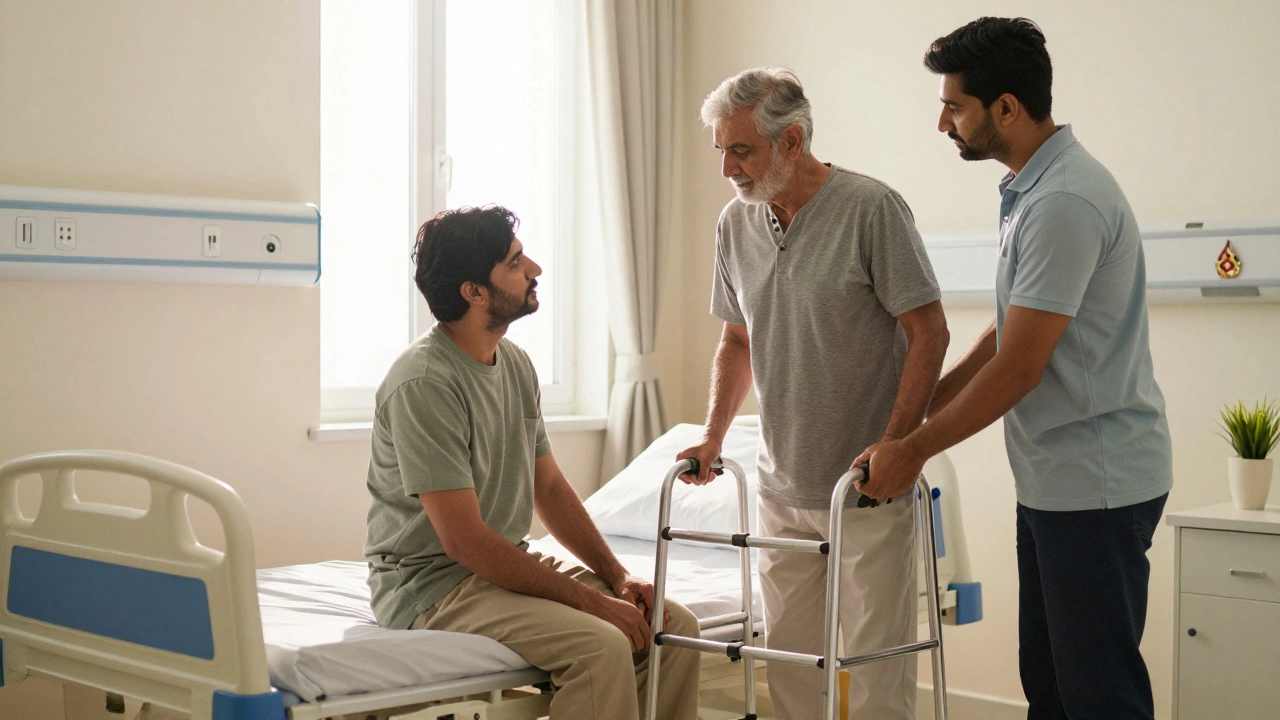
- Day 0 (Surgery Day): You will likely stand and take a few steps with a physical therapist on the same day as your surgery. Yes, today. This prevents complications and proves the knee is stable.
- Day 1-3 (Hospital Stay): If you stay overnight, you’ll walk multiple times a day. You might use a walker. You’ll do ankle pumps every hour to keep blood flowing.
- Week 1-2 (Home Recovery): You aren’t in bed. You’re sitting in a chair, sleeping, and doing prescribed exercises. "Rest" means avoiding high-impact activities, not horizontal immobility.
The goal isn’t to heal by lying down; it’s to heal by moving safely. Think of it this way: your new knee is a machine part. Machines need calibration. Walking is the calibration process.
A Week-by-Week Recovery Timeline
Recovery isn’t linear. Some days you’ll feel great; others, you’ll be sore. Here is what a typical timeline looks like for most patients undergoing Total Knee Arthroplasty is the complete replacement of the knee joint components..
| Timeframe | Activity Level | Pain Management | Mobility Aid |
|---|---|---|---|
| Week 1 | Walking short distances, leg lifts, heel slides | High (medication-heavy) | Walker or crutches |
| Weeks 2-4 | Increased walking range, stationary bike | Moderate (less medication) | Cane or no aid |
| Months 2-3 | Normal daily activities, swimming, golf | Low (occasional soreness) | None |
| Months 6-12 | Full strength return, hiking, tennis | Minimal | None |
Notice that "bed rest" doesn’t appear anywhere. Instead, you see progressive loading. Your bone needs stress to integrate with the implant (osseointegration). Without weight-bearing, the bond between your bone and the metal/plastic parts can weaken.
What "Rest" Actually Looks Like at Home
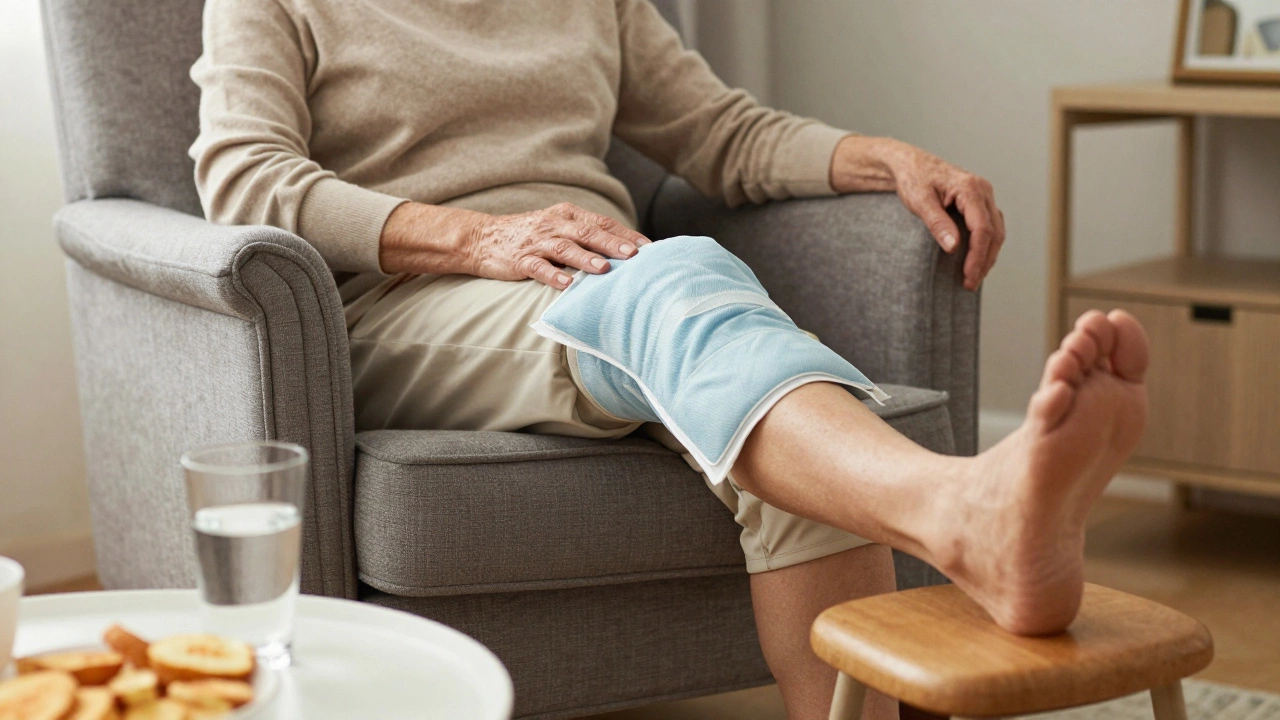
So, if you aren’t in bed, where are you? You’re probably in a recliner or a firm chair. Why? Because getting out of bed requires bending your knees deeply and pushing up with weak quadriceps. A chair with arms allows you to sit and stand with less strain.
Here is how to structure your day during the first two weeks:
- Sleep Positioning: Keep your leg straight. Place a pillow under your calf (not behind the knee) to reduce swelling. Avoid sleeping on your stomach if it causes hip rotation.
- Elevation: When sitting, elevate your leg above heart level. This uses gravity to drain fluid. Do this for 20-30 minutes every few hours.
- Ice Therapy: Ice for 20 minutes on, 40 minutes off. This reduces inflammation better than any pill.
- Micro-Movements: Every hour, do ankle pumps and quad sets (tightening thigh muscles). This keeps the brain connected to the leg.
Many patients make the mistake of overdoing it on Day 3 because they feel good, then crashing hard on Day 4. Listen to your body. Swelling is your stop sign. If your knee looks like a balloon, you’ve done too much. Back off, elevate, and ice.
Red Flags: When to Call the Doctor
Pain is normal. Soreness is expected. But certain symptoms indicate trouble. Don’t ignore these signs thinking they’ll pass with more rest.
- Signs of Infection: Fever over 101°F (38.3°C), chills, or redness spreading from the incision site. Pus or foul-smelling drainage is an emergency.
- Blood Clots (DVT): Calf pain, warmth, redness, or swelling in one leg. This can travel to the lungs (pulmonary embolism), which is life-threatening.
- Nerve Issues: Numbness that doesn’t go away, or inability to move your toes or foot.
- Stiffness: If you can’t bend your knee past 90 degrees by week 4, you may need aggressive physical therapy.
If you experience chest pain or shortness of breath, call emergency services immediately. These are signs of a pulmonary embolism.
Tips to Speed Up Your Recovery
You can’t change the biology of healing, but you can optimize your environment. Here are practical tips that matter more than strict bed rest.
1. Nutrition Fuels Healing
Your body is building tissue. It needs protein. Aim for 1.2 to 1.5 grams of protein per kilogram of body weight. Include vitamin C (for collagen) and zinc (for wound healing). Avoid sugar and processed foods, which increase inflammation.
2. Hydration is Key
Dehydration thickens blood, increasing clot risk. Drink at least 8 glasses of water a day. Herbal teas count, but avoid alcohol, which interferes with pain meds and sleep.
3. Physical Therapy Compliance
This is the biggest factor. Do your exercises even when you don’t want to. Range of motion (ROM) is everything. If you lose flexion (bending), you’ll limp forever. If you lose extension (straightening), you’ll drag your foot.
4. Home Safety Modifications
Before you leave the hospital, prep your home. Remove throw rugs (trip hazards). Install grab bars in the shower. Use a raised toilet seat. Keep frequently used items at waist height so you don’t have to bend down.
When Can You Return to Normal Life?
"Normal" varies. For office workers, returning to work might happen in 2-4 weeks if you can sit comfortably. For manual laborers, it could take 3-6 months. Driving usually resumes when you can brake suddenly without pain-typically 4-6 weeks for left-knee replacements, longer for right-knee replacements.
Sexual activity? Usually safe after 2-3 weeks, depending on comfort and positioning. Swimming? Great once the incision is fully closed (4-6 weeks). Running? Generally discouraged for life to protect the implant longevity.
Can I sleep on my side after knee replacement?
Yes, but with caution. Sleep on your non-operated side with a pillow between your knees to keep the hips aligned. Avoid sleeping on the operated side until your surgeon clears you, usually after 4-6 weeks, to prevent pressure on the incision and internal structures.
How long does swelling last after knee replacement?
Swelling can last for 3 to 6 months. It’s normal for the knee to look puffy after activity. Use elevation, ice, and compression stockings to manage it. Significant swelling that persists despite rest may indicate infection or a clot.
Do I need blood thinners after surgery?
Most patients take blood thinners (anticoagulants) for 2 to 4 weeks post-surgery to prevent deep vein thrombosis (DVT). Common options include aspirin, warfarin, or direct oral anticoagulants like rivaroxaban. Follow your doctor’s specific prescription.
When can I stop using a walker or cane?
Most patients transition from a walker to a cane within 2-3 weeks. You can drop the cane when you can walk without a limp and maintain balance. This typically happens around week 4-6. Never rush this; a limp can cause long-term gait issues.
Is it normal to feel numbness around the scar?
Yes, some numbness near the incision is common due to small nerve damage during surgery. It often improves over 6-12 months but may never fully disappear. However, widespread numbness or tingling in the foot requires immediate medical attention.