Ayurvedic Meal Timing Planner
Discover when your digestive fire is strongest according to Ayurveda. Click a time slot or use the slider to see what you should eat right now.
Digestive Fire (Agni)
PittaRecommended Action
This is the golden window! Eat your largest meal of the day. Rice, lentils, and vegetables are digested efficiently now.
You’ve probably heard the phrase "you are what you eat." But in Ayurveda, it’s more accurate to say you are what you digest. You can eat the freshest, most organic spinach on the planet, but if your body can’t break it down properly, that spinach becomes toxic waste (known as Ama) rather than nourishment. The secret isn't just what is on your plate; it’s when it hits your stomach.
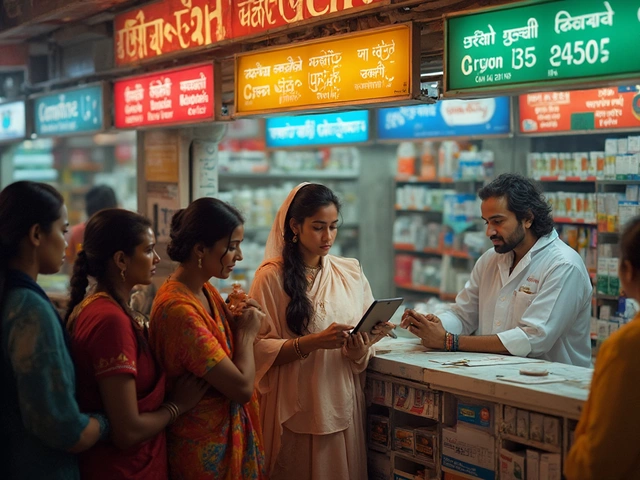
Living in Pune, I’ve seen how traditional Indian schedules align perfectly with Ayurvedic principles, yet many of us have drifted away from them. We skip breakfast, grab heavy lunches at 2 PM when our energy dips, and eat dinner late at night before bed. This chaos confuses our internal clocks and weakens our digestive fire. Let’s fix that by looking at the specific eating times prescribed by Ayurveda to keep your metabolism humming.
The Concept of Agni: Your Internal Furnace
To understand timing, you first need to understand Agni is the metabolic fire responsible for digestion and transformation of food into energy. Think of Agni as a furnace in a blacksmith’s shop. If you throw cold water on a hot fire, it sizzles and dies. If you throw wet wood on a dying fire, it smokes and creates soot. In Ayurveda, food is the fuel, and time dictates how strong that fire is.
Your Agni fluctuates throughout the day based on the sun’s position. It peaks when the sun is highest and weakest when the sun is lowest or absent. Eating against this rhythm is like trying to light a campfire during a rainstorm-it’s inefficient and messy. When Agni is strong, you digest everything completely. When it’s weak, undigested food ferments, leading to bloating, gas, fatigue, and long-term disease.
Morning Hours: Igniting the Fire (6:00 AM - 8:00 AM)
The day begins with Kapha Dosha which dominates the morning hours (6-10 AM) and is characterized by heaviness and stability. Because Kapha is heavy and slow, your digestive system is naturally sluggish right after waking up. You don’t want to overload it immediately.
- Wake up early: Ideally between 6:00 AM and 6:30 AM. This aligns with Vata time, which is light and mobile, helping you wake up mentally.
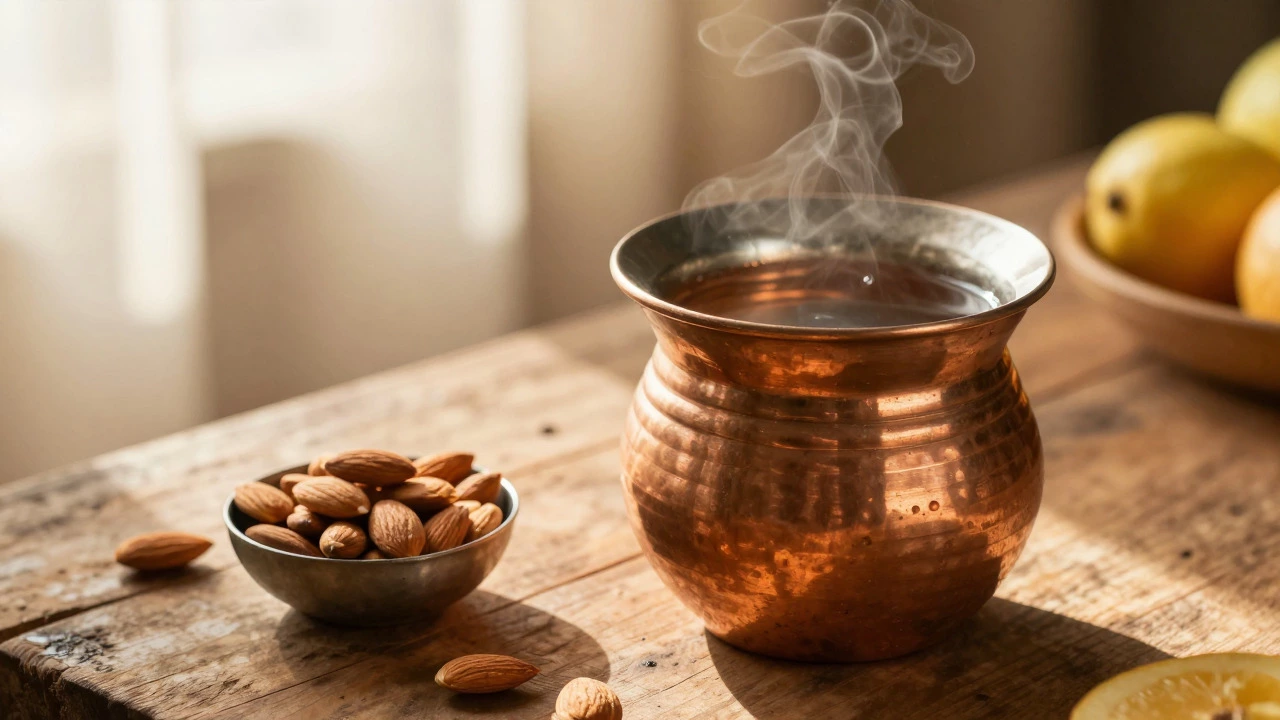
- Hydrate first: Drink warm water or water stored in a copper vessel overnight. This flushes toxins without dampening the nascent digestive fire.
- Light Breakfast: Keep it small. A handful of soaked almonds, a piece of fruit, or warm oatmeal is sufficient. Avoid heavy proteins or fried foods now. Your stomach is still "waking up," not ready for a workout.
If you’re not hungry in the morning, don’t force it. Ayurveda respects natural hunger cues. Skipping a light breakfast when you have no appetite is better than forcing a heavy meal that sits like a rock in your gut.
Lunch Time: The Golden Window (12:00 PM - 2:00 PM)
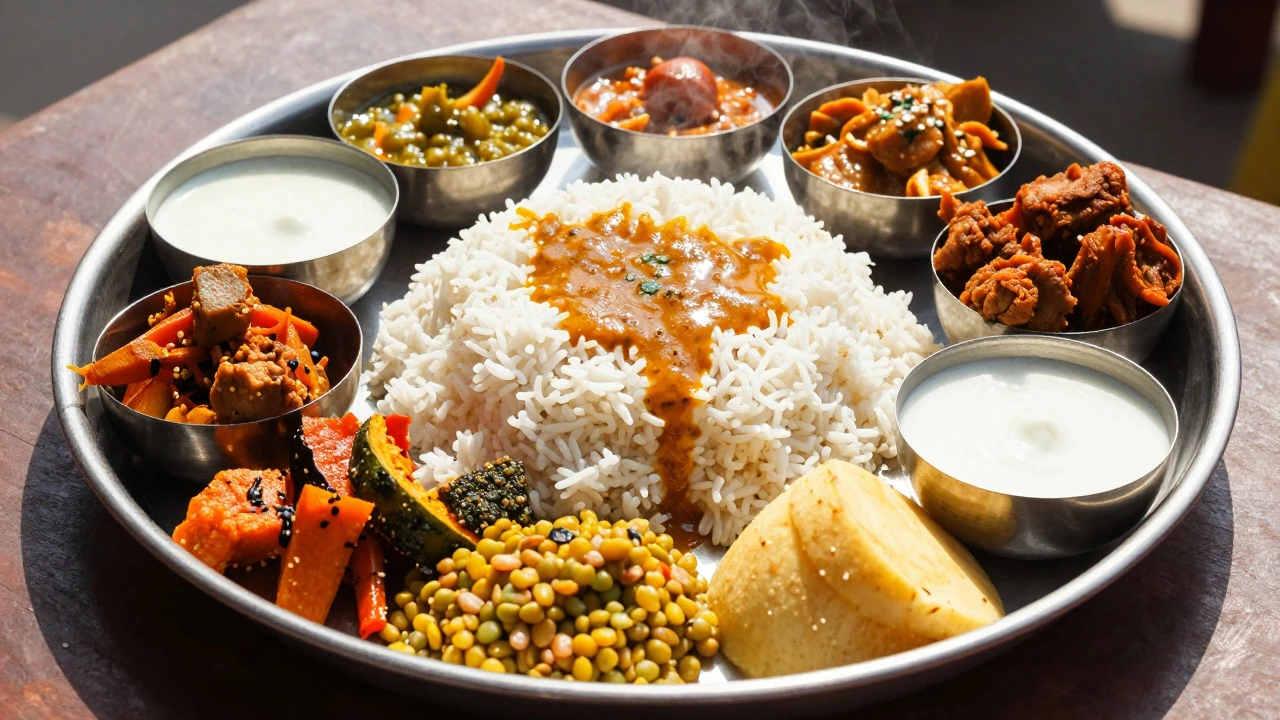
This is the non-negotiable rule of Ayurvedic eating: Lunch should be your largest meal. Why? Because Pitta Dosha governs midday (10 AM-2 PM) and represents heat and transformation, peaking around noon. Pitta is literally the energy of digestion. When the sun is overhead, your internal fire is at its maximum capacity.
Eat your main calories here. Rice, lentils, vegetables, curd, and ghee are all digested efficiently during this window. If you eat a massive dinner instead of lunch, you’re asking your weakened evening fire to do a noon job. It will fail, leaving you with Ama (toxins).
| Time Slot | Dosha Dominance | Digestive Fire (Agni) | Recommended Meal Size |
|---|---|---|---|
| 6 AM - 10 AM | Kapha (Heavy/Slow) | Low to Moderate | Small / Light |
| 10 AM - 2 PM | Pitta (Hot/Sharp) | Maximum Peak | Largest Meal (Lunch) |
| 2 PM - 6 PM | Vata (Dry/Mobile) | Declining | Snack Only (if needed) |
| 6 PM - 10 PM | Kapha (Heavy/Slow) | Weak | Small / Early Dinner |
Afternoon Slump: To Snack or Not to Snack?
Between 2:00 PM and 4:00 PM, Vata Dosha takes over, bringing qualities of dryness, movement, and instability, which can cause afternoon anxiety or hunger. Many people feel a dip in energy here. Should you eat?
Only if you are genuinely hungry. And even then, keep it light. A cup of herbal tea, a few nuts, or a piece of fruit works. Avoid heavy snacks like biscuits, samosas, or sugary coffees. These spike insulin and crash your energy further, disrupting the delicate balance of Vata. If you aren’t hungry, wait until dinner. Fasting between lunch and dinner allows your body to clear out any remaining toxins from the midday meal.
Dinner: The Critical Cut-Off (Before 7:30 PM)
Here is where most modern lifestyles fail Ayurvedic standards. We often eat dinner at 9:00 PM or later, then go to sleep at 11:00 PM. This is disastrous for digestion.
Ayurveda recommends finishing dinner at least three hours before bedtime. If you sleep at 10:00 PM, eat by 7:00 PM. Why? As the sun sets, Pitta declines, and Kapha returns. Kapha brings heaviness and lethargy. If you eat a heavy meal when Kapha is rising, your body wants to rest, not digest. The food sits in the stomach, fermenting and creating toxins.
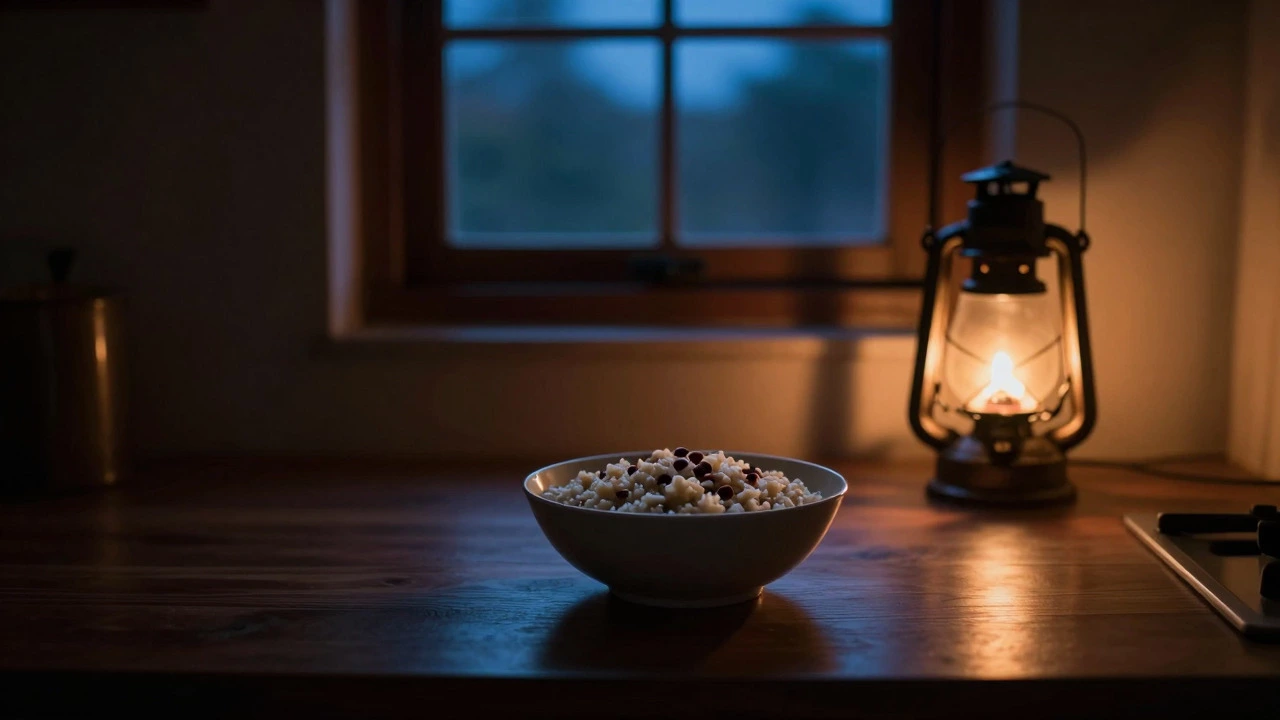
- Keep it simple: Soup, khichdi (rice and lentil porridge), or steamed vegetables are ideal.
- Avoid: Red meat, cheese, raw salads, and heavy grains at night.
- The Rule: If you ate a huge lunch, skip dinner or have just a warm milk drink. Listen to your stomach.
In my experience consulting with clients in India, shifting dinner from 9:30 PM to 7:00 PM is the single most effective change for weight loss and improved sleep quality. It stops the nighttime reflux and morning grogginess almost immediately.
Food Combining Rules That Matter More Than Timing
Eating at the right time won’t help if you combine incompatible foods. Ayurveda calls these combinations Viruddha Ahara refers to incompatible food combinations that disrupt digestion and create toxins. Even if you eat at peak Agni time, bad combinations can extinguish your fire.
Common mistakes include:
- Fruit and Dairy: Never mix banana or citrus fruits with milk. They digest at different rates, causing fermentation.
- Fish and Milk: A classic incompatibility that can lead to skin issues and digestive upset.
- Honey and Heat: Never cook honey. Heating it turns it into glue-like toxins in the body. Add it only to lukewarm drinks.
- Water During Meals: Don’t gulp large amounts of water while eating. It dilutes digestive juices. Sip small amounts if needed, or drink a glass 30 minutes before or an hour after meals.
Practical Tips for Implementing Ayurvedic Timing
Changing your eating schedule feels hard because we’re creatures of habit. Here is how to ease into it:
- Start with Lunch: Move your biggest meal to noon. Make sure it’s substantial enough to keep you full until evening.
- Shift Dinner Earlier: Gradually move your dinner time back by 15 minutes every week until you hit the 7:00 PM mark.
- Observe Hunger: Eat only when you feel true physical hunger, not emotional boredom. True hunger comes with a slight emptiness in the stomach, not a craving for sugar.
- Chew Thoroughly: Digestion starts in the mouth. Chewing food to a paste reduces the workload on your Agni, allowing you to eat heavier foods without distress.
Remember, consistency is key. Your body loves rhythm. If you eat at random times, your hormones (like ghrelin and leptin) get confused, leading to overeating. By anchoring your meals to the sun’s cycle, you sync your biology with nature, not against it.
Can I exercise before or after eating according to Ayurveda?
Ayurveda strongly advises against exercising immediately after a full meal. Blood flow needs to be directed toward the stomach for digestion. Exercise diverts it to muscles, halting digestion. Wait at least 2-3 hours after a heavy meal. However, a short walk (Vajrasana walking) for 5-10 minutes after eating can actually aid digestion. Morning exercise on an empty stomach is generally preferred.
What if I work night shifts? How do I follow Ayurvedic eating times?
If you work nights, shift your "sun" cycle. Treat your waking period as the day. Eat your largest meal when you feel most alert (usually mid-shift). Keep the meal closest to your sleep time very light. Prioritize hydration and easily digestible foods like soups and khichdi to reduce the burden on your weakened night-time Agni.
Is intermittent fasting compatible with Ayurveda?
Yes, but selectively. Ayurveda supports skipping meals if there is no hunger. However, prolonged fasting (more than 24 hours) can aggravate Vata, causing anxiety and dryness. For most people, a 12-14 hour overnight fast (e.g., finish dinner by 7 PM, breakfast at 8 AM) is ideal. It gives the digestive tract ample rest time without stressing the nervous system.
Why should I avoid cold water during meals?
Cold water dampens Agni (digestive fire). Imagine pouring ice water on a burning stove-the flames die down. Warm or room-temperature water aids digestion by keeping the enzymes active and helping to liquefy fats. Cold water constricts blood vessels in the stomach, slowing down the breakdown of food.
How does eating late affect weight gain?
Eating late coincides with high Kapha dosha, which promotes storage and heaviness. Since your metabolic rate drops at night, excess calories are less likely to be burned off and more likely to be stored as fat. Additionally, poor digestion leads to Ama, which blocks cellular channels, slowing metabolism further and promoting weight retention.