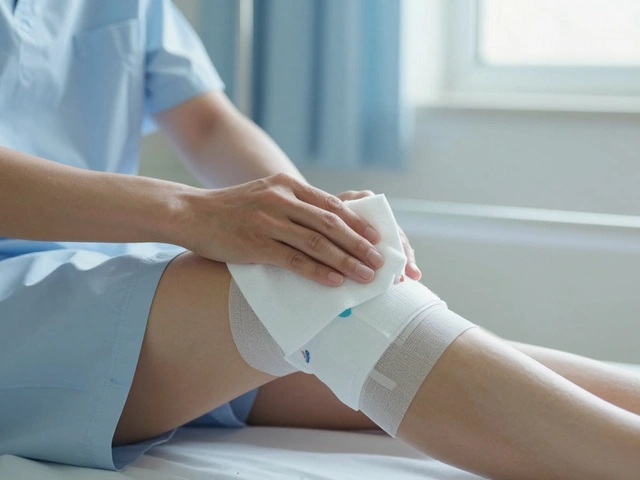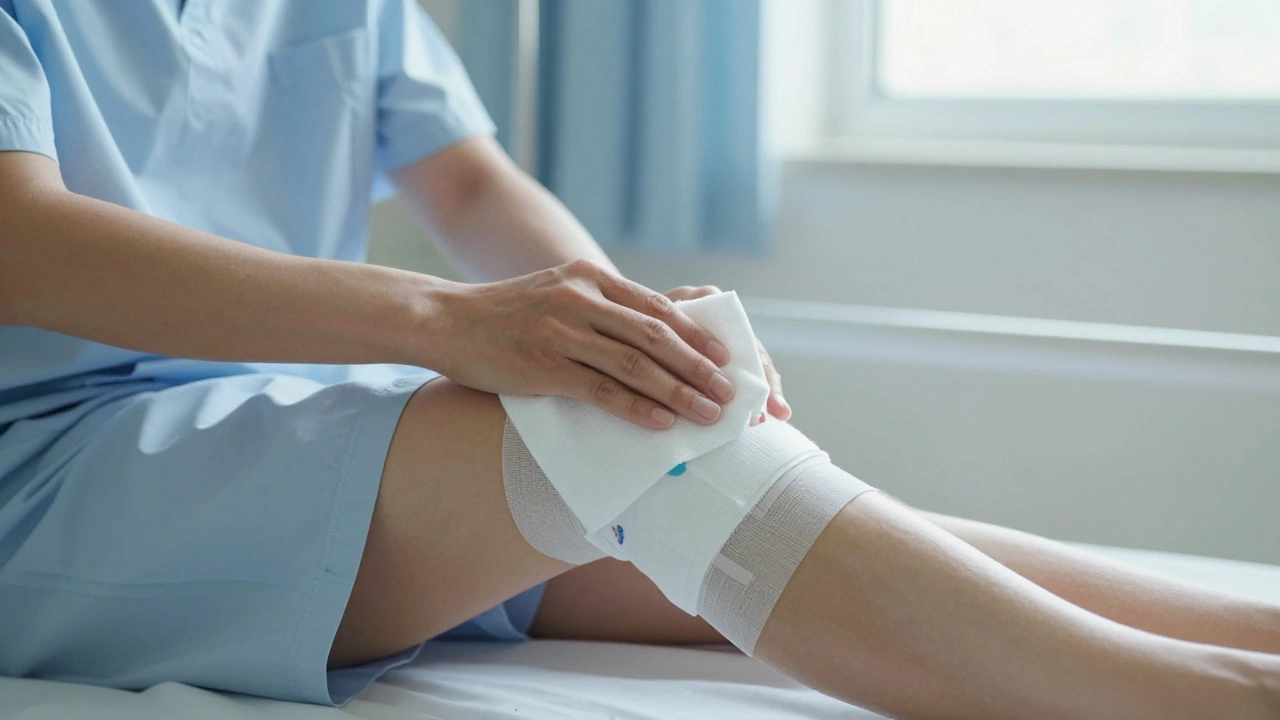
After knee replacement surgery, your body is healing in ways you can’t see. The incision is closed, but the skin, muscle, and tissue underneath are still repairing themselves. That’s why your doctor tells you not to shower right away - and why ignoring this advice can set back your recovery by weeks.
It’s Not Just About Water
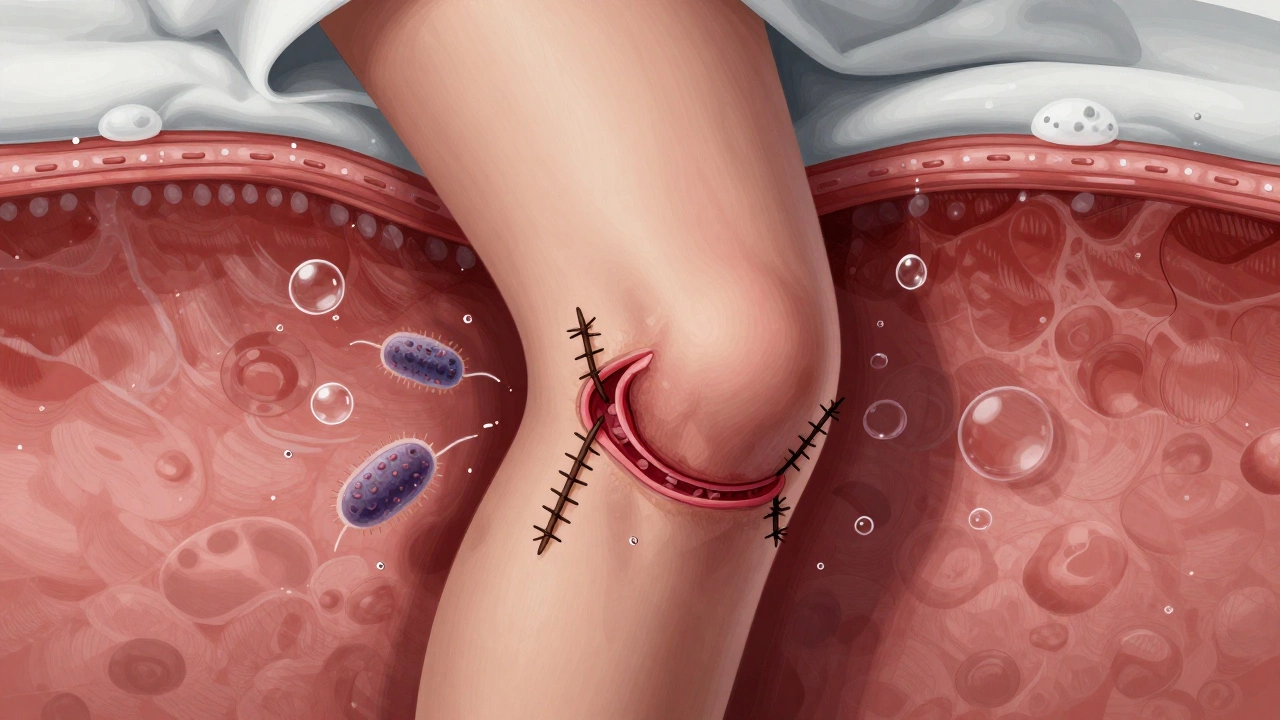
People think the problem is getting the wound wet. But it’s not the water itself. It’s what comes with it: soap, steam, pressure, and bacteria. Even clean tap water can carry microbes that find their way into the surgical site. In the first 48 to 72 hours after surgery, the incision is still an open wound, even if it looks sealed. The stitches or staples are holding the skin together, but the deeper layers haven’t formed a strong barrier yet.Studies show that early exposure to moisture increases the risk of surgical site infections by up to 30%. That’s not a small number. An infected knee replacement can mean more surgeries, longer hospital stays, and even permanent damage to the joint. Hospitals don’t ban showers just to make rules - they do it because the data backs it up.
What Happens If You Shower Too Soon?
Imagine your incision like a fresh plaster on a wall. If you pour water on it before it dries, it cracks. The same thing happens inside your body. Water softens the edges of the wound, making it easier for bacteria to slip in. Soap can irritate the tissue around the incision. Steam from a hot shower raises your body temperature and increases blood flow - which sounds good, but it also brings more immune cells and fluids to the area, creating swelling that delays healing.One patient in Pune, 68 years old, showered on day two after his knee replacement. He didn’t scrub the area, just rinsed quickly. Within three days, the incision turned red, started leaking fluid, and felt hot to the touch. He was back in the hospital with a deep infection. His recovery took three extra months. He didn’t break the rules because he was careless - he did it because no one explained why it mattered.
How Long Should You Wait?
Most surgeons recommend waiting 48 to 72 hours before showering. But it’s not a one-size-fits-all rule. Some patients get waterproof dressings that allow showers as early as 24 hours after surgery. Others, especially those with diabetes or weakened immune systems, may need to wait five to seven days.Your surgeon will tell you what’s right for you. But here’s how to know if you’re ready:
- The dressing is dry and intact - no wet spots, no peeling.
- No drainage from the incision - clear or bloody fluid is normal at first, but thick yellow or green fluid means trouble.
- Your temperature is normal - no fever above 37.8°C.
- You’re not feeling dizzy or weak - standing in a steamy bathroom can drop your blood pressure.
If any of these signs are off, wait. Don’t rush.
How to Shower Safely After the Waiting Period
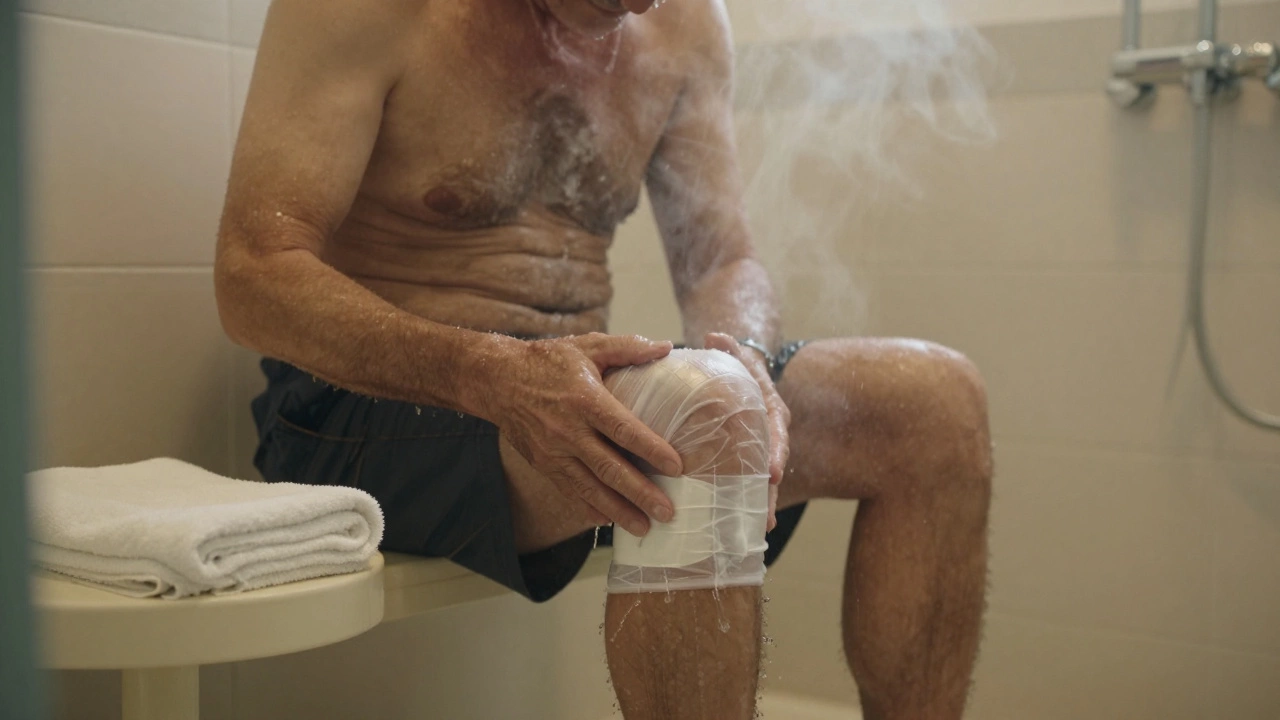
When you’re cleared to shower, do it right. Here’s how:- Use a shower chair or bench. Standing for long periods puts stress on your new knee and increases your risk of falling.
- Keep the water lukewarm - not hot. High heat increases swelling and slows healing.
- Use mild, fragrance-free soap. Harsh soaps can irritate the skin around the incision.
- Let water run gently over the area. Don’t scrub. Don’t rub. Don’t use a loofah.
- Pat the incision dry with a clean towel - don’t wipe. Wiping pulls on the skin.
- Apply a fresh dressing only if your doctor told you to. Many modern dressings are waterproof and don’t need changing after every shower.
Some hospitals give patients special waterproof covers - plastic sleeves or adhesive films - that seal the incision. If you were given one, use it. If not, ask your nurse for one. They’re cheap, easy to apply, and worth their weight in gold.
What About Sponge Baths?
If you’re not cleared for a full shower, sponge baths are your friend. Use a damp washcloth with warm water and mild soap. Clean your body, but avoid the knee area entirely. Focus on underarms, groin, feet, and back. Keep the surgical site dry at all costs.Change your dressing daily - or more often if it gets damp from sweat. Wet dressings trap bacteria. Dry dressings let the wound breathe.
Signs You’re Doing It Wrong
Even if you wait the full 72 hours, you can still mess up. Watch for these red flags:- Redness spreading beyond the incision
- Pus or cloudy fluid leaking from the wound
- Increased pain that doesn’t improve with medication
- Fever above 38°C
- Swelling that gets worse, not better
If you see any of these, call your surgeon immediately. Don’t wait. Don’t Google it. Don’t think it’ll go away. Infections after knee replacement don’t heal on their own - they get worse.
Why Some People Get Away With It
You’ve probably heard someone say, “I showered the next day and nothing happened.” That’s true - some people do. But that’s like saying, “I drove without a seatbelt and didn’t crash.” Luck isn’t a recovery plan.People who recover fine after breaking the rules are usually younger, healthier, and have no underlying conditions. They also have strong immune systems and good hygiene habits. But if you’re over 60, have diabetes, smoke, or take steroids, your body doesn’t have the same advantage. You’re not gambling with your health - you’re betting your mobility.
What Your Doctor Isn’t Telling You
Most surgeons focus on the surgery itself - the implant, the alignment, the range of motion. They assume you’ll follow basic post-op instructions. But they rarely explain the why behind the rules. That’s why so many patients break them.Here’s what they know but don’t always say: The first week after knee replacement is the most critical. That’s when your body is deciding whether to heal or to fight infection. Every time you expose the wound to moisture, heat, or pressure, you’re tipping the balance. The goal isn’t just to avoid infection - it’s to give your body the best possible chance to rebuild tissue around the new joint.
Healing after knee replacement isn’t just about physical therapy. It’s about patience. It’s about respecting your body’s limits. And it’s about understanding that a simple thing like a shower can make or break your recovery.
What Comes Next
Once you’re cleared to shower, you’ll still need to protect your knee for weeks. Avoid baths, swimming pools, hot tubs, and saunas for at least six weeks. Even after your incision looks fine, the deeper tissues are still healing. Water pressure from a pool or the heat of a sauna can cause swelling and delay your progress.Keep your incision clean and dry. Wash your hands before touching it. Wear loose clothing that doesn’t rub. And if you’re unsure - ask. Call your clinic. Text your nurse. Don’t guess.
Your new knee is a gift. But it needs care. Not just from your surgeon - from you.
Can I shower 24 hours after knee surgery?
Usually not. Most surgeons recommend waiting 48 to 72 hours. Some patients with waterproof dressings may be cleared earlier, but this is decided case by case. Never assume it’s safe - always check with your medical team.
What if my dressing gets wet by accident?
If your dressing gets damp, remove it carefully and replace it with a clean, dry one. If you don’t have a spare, cover the area with plastic wrap and contact your clinic. Don’t wait until it’s swollen or oozing - early action prevents infection.
Can I use a hairdryer to dry my knee?
No. Even on cool settings, the airflow can carry dust and bacteria onto the incision. Always pat the area dry gently with a clean towel. Let it air-dry if possible.
Is it okay to take a bath after knee surgery?
No. Baths are unsafe for at least six weeks. Soaking the incision in standing water increases infection risk dramatically. Even if the water is clean, the enclosed environment traps bacteria and moisture against your skin.
How do I know if my incision is healing properly?
A healing incision will look pink or light red, with no swelling or discharge. The edges should be closed and slightly raised. Pain should decrease over time, not get worse. If the area feels hot, looks shiny, or you develop a fever, contact your doctor right away.