Aggressive Cancer Comparison Tool
When you hear the word "cancer," you might picture a slow-moving threat that gives doctors years to fight. But for some types, that isn't true. Some cancers move with terrifying speed, doubling in size or spreading to other organs before symptoms even appear. If you are asking which cancer kills fastest, you are looking for answers about aggression, not just diagnosis.
The short answer is that pancreatic cancer, small cell lung cancer, and glioblastoma are often cited as the most lethal due to their rapid growth and late detection. However, "fast" is relative. It depends on where the tumor starts, how quickly it spreads (metastasizes), and how well current treatments work. Let’s break down the specific types that medical professionals consider the most aggressive.
The Silent Killer: Pancreatic Cancer
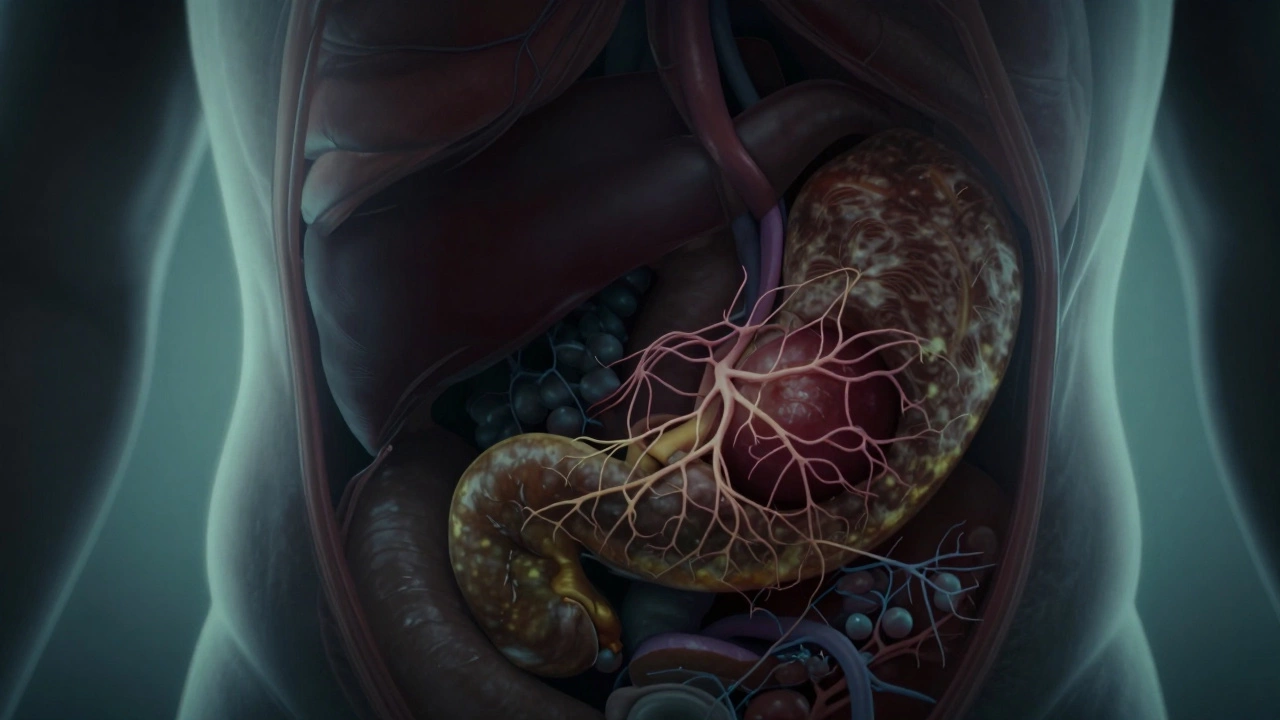
Pancreatic cancer is a malignant tumor that forms in the tissues of the pancreas, an organ behind the stomach that produces digestive enzymes and hormones. It holds the grim title of having one of the lowest five-year survival rates among all major cancers, hovering around 12% according to recent data from the American Cancer Society.
Why does it kill so fast? First, it is hard to find. The pancreas sits deep inside the abdomen. Tumors there don’t cause pain or visible lumps until they press on nerves or block bile ducts. By the time a patient sees a doctor-often complaining of jaundice, weight loss, or back pain-the cancer has usually already spread to the liver or lungs.
Second, it grows aggressively. Most pancreatic cancers are adenocarcinomas, which form dense networks of blood vessels that feed the tumor while shielding it from chemotherapy drugs. This creates a tough barrier that makes surgery difficult and drug delivery less effective. Even if caught early, the recurrence rate is high.
The Rapid Spreader: Small Cell Lung Cancer
Small cell lung cancer (SCLC) is a type of lung cancer characterized by small, round cells that grow rapidly and spread early to other parts of the body. Unlike non-small cell lung cancer, which can sometimes be managed for years, SCLC is known for its explosive growth pattern.
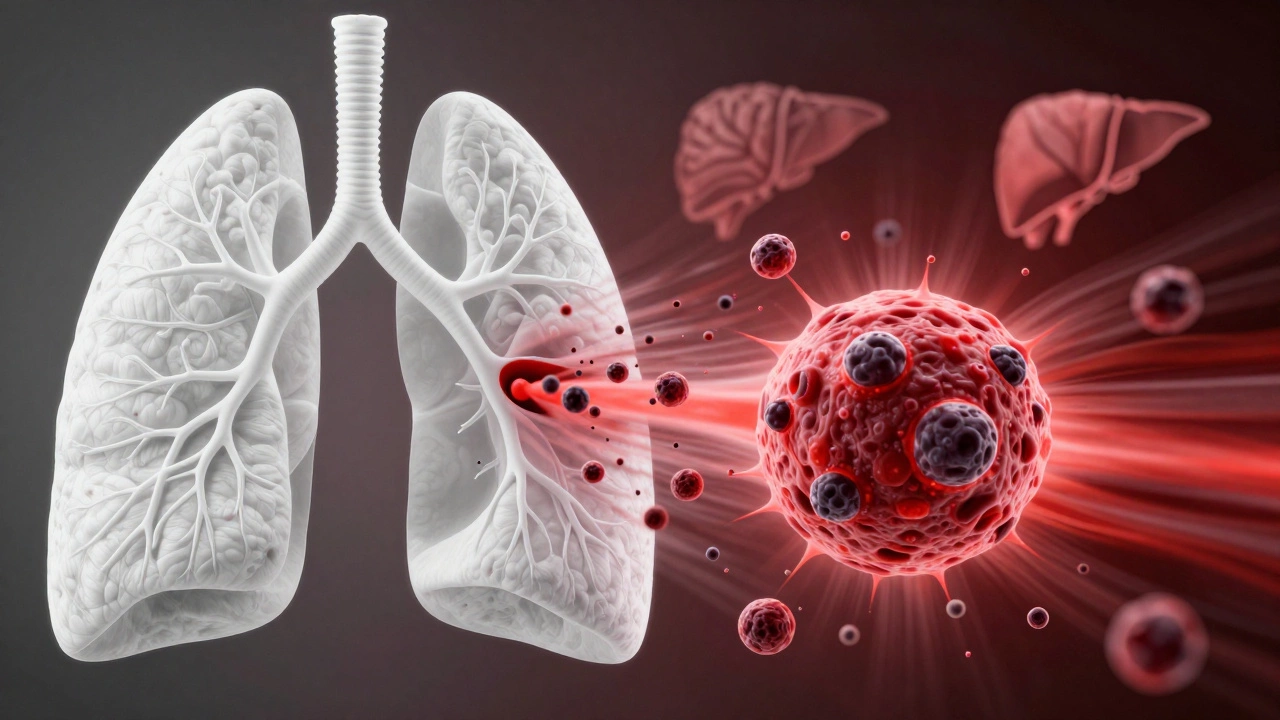
This cancer is strongly linked to smoking, accounting for about 13-14% of all lung cancers. It doubles in size incredibly quickly-sometimes every few weeks. Because it starts in the lungs, the body’s airway system allows it to shed cells into the bloodstream easily. These cells travel to the brain, liver, bones, and adrenal glands.
Patients often present with "extensive stage" disease, meaning it has spread beyond the chest cavity at the time of diagnosis. While SCLC responds well to initial chemotherapy and radiation, shrinking tumors dramatically, it almost always comes back. The median survival for extensive-stage SCLC is roughly 7 to 9 months without treatment, and slightly longer with modern immunotherapy combinations.
The Unreachable Tumor: Glioblastoma
Glioblastoma is the most aggressive and common type of primary brain cancer in adults, originating from glial cells that support neurons. Also known as glioblastoma multiforme (GBM), it is classified as a Grade IV astrocytoma, the highest grade possible.
Brain tumors are unique because you cannot remove the organ they occupy. Glioblastoma doesn’t just grow; it invades. It sends out microscopic tendrils into healthy brain tissue, making complete surgical removal impossible. Doctors can only debulk the tumor, removing the main mass, but residual cells remain.
These remaining cells multiply rapidly. The standard treatment involves surgery followed by radiation and a chemotherapy drug called temozolomide. Despite this aggressive approach, the median survival is typically 15 to 18 months. The cancer kills quickly because it disrupts critical brain functions, causing seizures, cognitive decline, and increased intracranial pressure.
Other Highly Aggressive Cancers
While the three above are notorious, other cancers also pose immediate threats due to their speed or location.
- Acute Promyelocytic Leukemia (APL): A subtype of acute myeloid leukemia. Without immediate treatment, it causes fatal bleeding because the cancer cells prevent blood clotting. However, with prompt therapy using all-trans retinoic acid (ATRA), survival rates have jumped significantly.
- Triple-Negative Breast Cancer: This breast cancer lacks estrogen, progesterone, and HER2 receptors. It tends to grow faster than other breast cancers and has fewer targeted treatment options, relying mainly on chemotherapy.
- Ovarian Cancer: Often called a "silent killer" similar to pancreatic cancer, many women are diagnosed at Stage III or IV. High-grade serous ovarian cancer progresses quickly and is resistant to many drugs.
What Makes a Cancer "Fast"?
Understanding why some cancers kill faster than others helps in recognizing risk factors. Several biological markers contribute to aggressiveness:
- Doubling Time: How quickly the tumor volume doubles. Fast-growing cancers like SCLC have short doubling times.
- Metastatic Potential: The ability to spread through lymph nodes or blood vessels. Cancers that metastasize early are harder to treat locally.
- Anatomic Location: Cancers in vital organs (brain, heart, lungs) leave less room for error. A small tumor in the brain stem can be fatal, whereas a larger tumor in the skin may not be immediately life-threatening.
- Lack of Symptoms: If a cancer doesn’t hurt or show visible signs until it’s advanced, the window for effective intervention closes quickly.
| Cancer Type | Primary Challenge | Average Median Survival (Advanced) | Key Risk Factor |
|---|---|---|---|
| Pancreatic | Late detection & chemo resistance | 3-6 months | Age, smoking, chronic pancreatitis |
| Small Cell Lung | Rapid spread & recurrence | 7-9 months | Heavy smoking history |
| Glioblastoma | Inability to fully resect | 15-18 months | Age, genetic mutations (IDH) |
| Acute Myeloid Leukemia | Blood failure & infection | Varies widely | Prior chemo, genetic syndromes |

Early Detection Changes Everything
The scariest part of these fast-killing cancers is that they often offer no warning. You cannot feel pancreatic cancer growing. You might not cough up blood with early lung cancer. This is why screening and awareness are critical.
If you have a family history of these cancers, talk to your doctor about earlier screenings. For lung cancer, low-dose CT scans are recommended for heavy smokers aged 50-80. For pancreatic cancer, there are no standard population-wide screenings, but high-risk individuals may undergo MRI or endoscopic ultrasound.
Pay attention to your body. Unexplained weight loss, persistent fatigue, changes in bowel habits, or new neurological symptoms should never be ignored. Early detection doesn’t guarantee a cure for these aggressive types, but it significantly extends life expectancy and improves quality of life.
Treatment Advances Are Happening
It is important to note that statistics represent the past. New treatments are changing the landscape. Immunotherapy, such as checkpoint inhibitors, has helped some patients with lung cancer and melanoma live longer. Targeted therapies for specific genetic mutations in pancreatic and brain cancers are under intense research. Clinical trials offer hope for those facing aggressive diagnoses.
Is pancreatic cancer always fatal?
No, but it is highly dangerous. If detected very early when the tumor is localized and operable, some patients survive for several years. However, most cases are found after the cancer has spread, making curative surgery impossible. Survival rates are improving slowly with better chemotherapy regimens.
Can small cell lung cancer be cured?
In rare cases of limited-stage disease (confined to one side of the chest), a combination of chemotherapy and radiation can lead to long-term remission, effectively curing the patient. However, for the majority of patients with extensive-stage disease, it is considered manageable but not curable, with a focus on extending life.
Why is glioblastoma so hard to treat?
Glioblastoma is difficult to treat because it infiltrates healthy brain tissue, making complete surgical removal impossible. Additionally, the blood-brain barrier prevents many chemotherapy drugs from reaching the tumor effectively. Recurrence is almost inevitable despite aggressive treatment.
What are the first signs of aggressive cancer?
Signs vary by type but often include unexplained weight loss, persistent fatigue, fever, night sweats, lumps or swelling, changes in bowel or bladder habits, and difficulty swallowing. Neurological changes like headaches or vision issues can signal brain tumors.
Does age affect how fast cancer kills?
Yes. Older adults often have weaker immune systems and may not tolerate aggressive treatments like high-dose chemotherapy or major surgery as well as younger patients. This can limit treatment options and impact survival outcomes.