When your heart isn’t working right, surgery might be the only way to fix it. But not all heart surgeries are the same. Some are big, open procedures. Others are done through tiny cuts with cameras and robotic tools. Knowing the difference can help you ask better questions and understand what’s coming next.
Coronary Artery Bypass Grafting (CABG)
This is the most common type of heart surgery. It’s done when the arteries that feed your heart muscle get clogged with plaque. Think of it like rerouting traffic around a blocked road. Surgeons take a healthy blood vessel - usually from your leg, chest, or arm - and connect it to the coronary artery, bypassing the blockage.
Most CABG surgeries are done as open heart surgery. That means the chest is opened, the heart is stopped, and a heart-lung machine takes over. But newer versions use smaller incisions and sometimes skip the heart-lung machine altogether. These are called off-pump or beating-heart bypasses. They reduce recovery time and lower the risk of complications like stroke.
People who get CABG usually have multiple blockages, diabetes, or poor heart function. One study from the New England Journal of Medicine showed that for patients with three-vessel disease, CABG improved survival by 15% over 10 years compared to stents alone.
Heart Valve Repair and Replacement
Your heart has four valves that open and close to keep blood flowing in the right direction. When they leak (regurgitation) or stiffen (stenosis), your heart has to work harder. That’s when valve surgery becomes necessary.
There are two options: repair or replace. Repair is preferred when possible. Surgeons can reshape the valve, patch holes, or add support rings. This keeps your own tissue and often means you won’t need lifelong blood thinners.
If repair isn’t possible, replacement is done. Mechanical valves last forever but require daily blood thinner medication. Biological valves - made from pig, cow, or human tissue - don’t need blood thinners long-term but wear out after 10-15 years. That means younger patients might need another surgery later.
Today, many valve surgeries are done minimally invasively. A small cut near the ribs, a camera, and a catheter can replace a valve without opening the chest. This is called TAVR (transcatheter aortic valve replacement) and is common for older adults or those with high surgical risk.
Minimally Invasive Heart Surgery
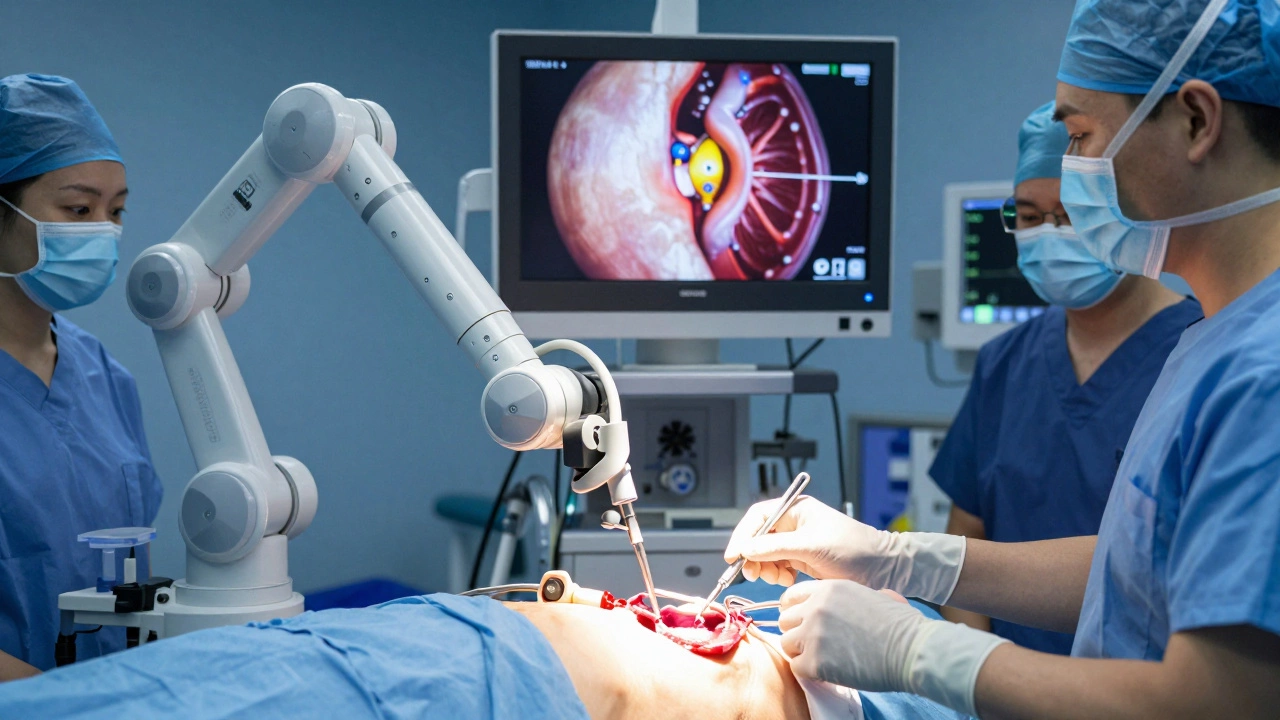
Forget the long scar down your chest. Minimally invasive heart surgery uses 2-4 small cuts, often between the ribs. Surgeons use tiny cameras and instruments to do the same jobs as open surgery - bypasses, valve repairs, even some arrhythmia fixes.
Benefits? Less pain, shorter hospital stays (often 3-5 days vs. 7-10), faster return to work, and lower infection risk. But it’s not for everyone. It requires special training and equipment. Not all hospitals offer it. And if your heart condition is complex - like multiple blockages plus a weak pump - open surgery might still be safer.
It’s becoming more common. In 2024, about 30% of valve surgeries in the U.S. were done minimally invasively, up from just 8% in 2015. The trend is growing as technology improves and surgeons gain experience.
Arrhythmia Surgery (Maze Procedure)
When your heart beats too fast, too slow, or irregularly, it’s called an arrhythmia. Atrial fibrillation (AFib) is the most common. Medications help, but they don’t fix the root cause - abnormal electrical pathways in the heart.
The Maze procedure creates a pattern of scar tissue that blocks those bad signals and guides the heartbeat back to normal. Traditionally, it was done during open heart surgery. Now, it’s often done with catheters threaded through blood vessels (called ablation). But for patients needing other heart surgery at the same time, surgeons can do the Maze during the same operation.
Success rates? About 80-90% of patients stay in normal rhythm one year after the procedure. Many no longer need blood thinners or anti-arrhythmia drugs. It’s not a cure for everyone, but it’s life-changing for those who respond.
Heart Transplant
This is the last resort. When the heart muscle is so damaged - from years of disease, infection, or congenital defects - that no other treatment works, a transplant is the only option.
The surgery replaces your entire heart with one from a deceased donor. You’ll need to take immune-suppressing drugs for the rest of your life to prevent rejection. These drugs increase infection risk and can damage kidneys or cause cancer over time.
Survival rates have improved. About 90% of patients live at least one year after transplant. Half live more than 10 years. But the waiting list is long - over 4,000 people in the U.S. are waiting right now. Some get a mechanical heart pump (VAD) to keep them alive until a donor heart is found.
Repair of Congenital Heart Defects
Some people are born with heart problems - holes between chambers, misshapen valves, or blood vessels in the wrong place. These aren’t always caught in childhood. Some only cause symptoms later in life.
Surgery can fix these. For example, closing a hole in the wall between the heart’s upper chambers (atrial septal defect) is a common repair. Surgeons might use a patch or stitch it closed. In more complex cases like tetralogy of Fallot, multiple repairs are done in stages, sometimes starting in infancy.
Today, even adults with untreated childhood defects can have successful repairs. Outcomes are better than ever. Many patients go on to live full, active lives after surgery.
Ascending Aortic Aneurysm Repair
The aorta is the main artery leaving your heart. If it bulges like a balloon - an aneurysm - it can rupture. That’s life-threatening.
Surgery involves removing the weakened section and replacing it with a synthetic tube. If the aneurysm is near the aortic valve, the valve might be replaced too. This is a high-risk operation, but necessary. Without surgery, a 5 cm aneurysm has a 10% chance of rupturing each year.
Minimally invasive options exist for some patients. A stent graft can be threaded up from the leg and placed inside the aorta to reinforce the weak spot. This avoids opening the chest - but only works if the anatomy is right.

What to Expect After Heart Surgery
Recovery depends on the surgery. Open heart surgery usually means 6-8 weeks before you feel like yourself again. Minimally invasive? Often 2-4 weeks.
Physical therapy is key. Cardiac rehab programs help you rebuild strength safely. You’ll start walking the day after surgery, even if you’re still sore. By week two, you’ll be doing light chores. By week six, many return to work - if their job isn’t physically demanding.
Medications are critical. Blood thinners, beta-blockers, statins - you’ll likely need them for life. Skipping them increases the risk of another heart attack or clot.
Don’t ignore signs of trouble: swelling in the legs, sudden shortness of breath, chest pain, or fever. Call your doctor right away. Infections or blood clots can happen weeks after surgery.
How to Choose the Right Surgery
Your doctor won’t just pick the most advanced option. They’ll consider your age, other health problems, heart function, and how much damage is already done.
For example:
- If you’re 75 with diabetes and three blocked arteries, CABG is usually better than stents.
- If you’re 80 with severe aortic stenosis and can’t handle open surgery, TAVR is the go-to.
- If you’re 45 with a leaky valve and no other issues, repair is preferred over replacement.
Ask your surgeon: Why this procedure? What are the alternatives? What happens if I don’t do anything? Don’t be afraid to get a second opinion. Heart surgery is life-changing - you deserve to understand every option.
Is open heart surgery still the most common type of heart surgery?
Yes, open heart surgery is still the most common, especially for complex cases like multi-vessel bypass or valve replacement in younger patients. But minimally invasive options are growing fast. In 2024, nearly one in three valve surgeries in the U.S. was done without opening the chest. The choice depends on your health, age, and the specific problem.
Can heart surgery be done without stopping the heart?
Yes. This is called off-pump or beating-heart surgery. It’s used mainly for coronary bypass grafting. Instead of using a heart-lung machine to take over, the surgeon works on the heart while it’s still beating. It reduces risks like stroke and kidney damage. Not all patients are candidates - it depends on heart rhythm and artery location - but it’s becoming more common in experienced centers.
How long do heart valves last after replacement?
Mechanical valves last 20+ years and usually don’t need replacement, but require lifelong blood thinners. Biological valves - made from animal tissue - last 10-15 years on average. After that, they may wear out and need another surgery. Younger patients often get mechanical valves. Older patients usually get biological ones because they avoid blood thinners and have a shorter life expectancy.
Is minimally invasive heart surgery safer than open surgery?
For the right patient, yes. Minimally invasive surgery has lower infection rates, less blood loss, shorter hospital stays, and faster recovery. But it’s not always safer overall. If the procedure is too complex or the patient has poor anatomy, open surgery may be the only safe option. The surgeon’s experience matters just as much as the technique.
What’s the recovery time after heart surgery?
Open heart surgery usually takes 6-8 weeks to fully recover. Minimally invasive procedures can cut that in half - many people return to normal activities in 2-4 weeks. But recovery isn’t just about time. It’s about rebuilding strength. Cardiac rehab programs - which include monitored exercise and education - improve survival by 25% and reduce hospital readmissions. Skipping rehab is one of the biggest mistakes patients make.
Next Steps if You’re Considering Heart Surgery
Don’t rush. Get a full evaluation. Ask for a stress test, echocardiogram, and coronary angiogram if you haven’t had them. These show exactly what’s wrong.
Find a surgeon who specializes in your type of problem. A center that does 200+ valve surgeries a year has better outcomes than one that does 20. Ask about their complication rates and success numbers.
Bring someone with you to appointments. It’s easy to forget details when you’re stressed. Write down your questions ahead of time. And don’t be afraid to ask: What’s the worst that could happen? Knowing the risks helps you make a clear choice.