Cancer Treatment Comparison Explorer
How to use: Select a treatment modality below to explore its specific mechanism, scope of action, and primary objective in cancer care.
Ready to Explore
Click on a treatment card above to see detailed comparisons of modern therapy options.
Key Takeaways
- Surgery is still the gold standard for removing solid tumors.
- Chemotherapy works systemically to kill fast-growing cells throughout the body.
- Radiation uses high-energy particles to shrink tumors and stop their spread.
- Immunotherapy trains your own immune system to recognize and attack cancer.
- Targeted therapy attacks specific proteins that allow cancer cells to grow.
Surgery: The Direct Approach
When a tumor is contained in one spot, the most straightforward answer is often to just take it out. Surgery is the physical removal of a cancerous tumor and some of the surrounding healthy tissue. This is often the first line of defense for cancers of the colon, breast, or skin.
But surgery isn't always about curing the disease. Sometimes, it's used for palliation-which is a fancy way of saying 'making things more comfortable.' For example, if a tumor is pressing against a nerve or blocking a digestive tract, a surgeon might remove just enough of the mass to relieve the pain or restore a bodily function, even if the cancer has spread too far to be fully removed.
The success of surgery usually depends on the "margin." If a surgeon can get a "clear margin," it means they removed all the visible cancer and a thin layer of healthy tissue around it. If the margins are "positive," it means some cancer cells were left behind, and the patient will likely need a follow-up treatment like chemotherapy to mop up whatever is left.
Chemotherapy: The Systemic Warrior
If surgery is a sniper, Chemotherapy is a shotgun. It is a type of treatment that uses powerful chemicals to kill fast-growing cells in your body. Since cancer cells divide much faster than most normal cells, these drugs target that rapid growth.
Because chemotherapy travels through the bloodstream, it hits every part of the body. This is why it's so effective for cancers that have metastasized (spread) to other organs. However, it's also why the side effects are so well-known. Your hair follicles and the lining of your gut also grow quickly, which is why patients often experience hair loss and nausea.
Modern oncology uses "cocktails"-combinations of different drugs-to prevent the cancer from developing resistance. If you use only one drug, the cancer might evolve to ignore it. By hitting it from three different chemical angles at once, the chances of total eradication increase significantly.
Radiation Therapy: Precision Energy
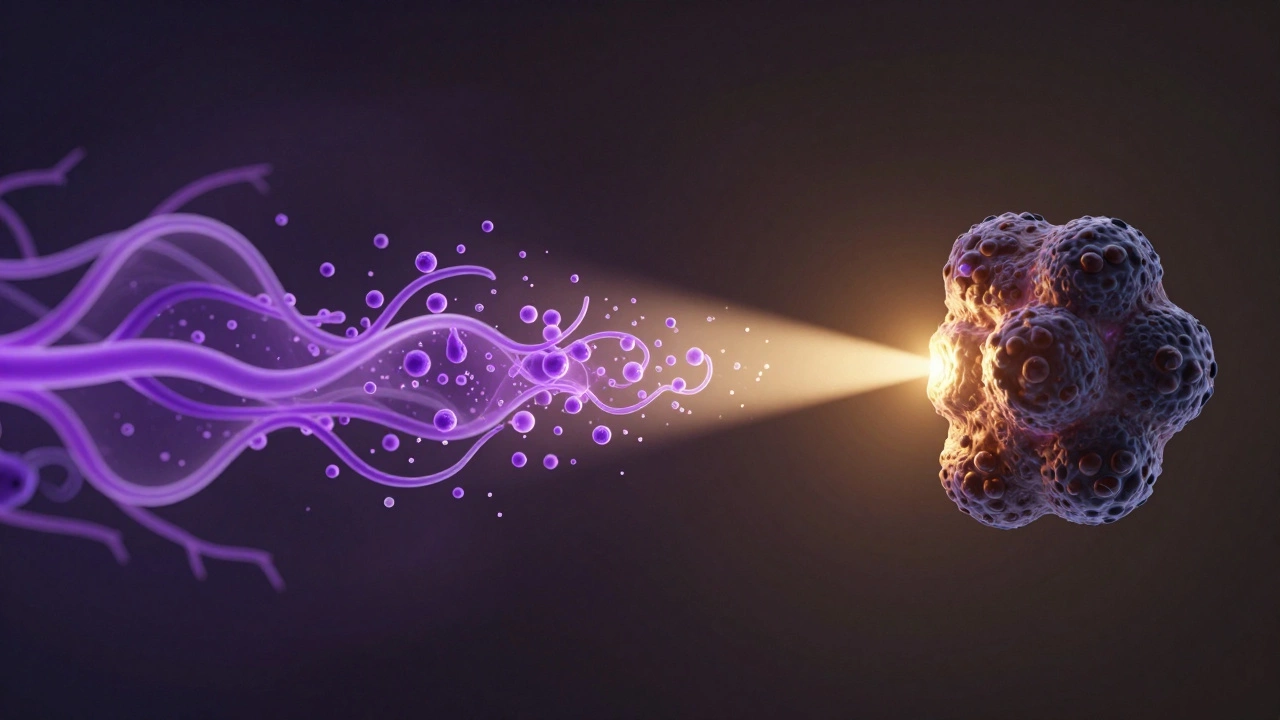
While chemotherapy is a whole-body approach, Radiation Therapy is a localized strike. It uses high doses of ionizing radiation, such as X-rays or gamma rays, to damage the DNA of cancer cells, preventing them from dividing and growing.
There are two main ways this is done. External beam radiation is the most common, where a giant machine aims a beam of energy at a specific point in your body. Then there is brachytherapy, where radioactive "seeds" are actually implanted inside the tumor. This is frequently used for prostate cancer to deliver a high dose of radiation directly to the source without damaging the surrounding bladder or rectum.
Radiation is often paired with surgery. Neoadjuvant therapy happens *before* surgery to shrink a tumor so it's easier to remove. Adjuvant therapy happens *after* surgery to kill any microscopic cells that might have been missed by the scalpel.
| Treatment | Target | Scope | Primary Goal |
|---|---|---|---|
| Surgery | Solid Tumor | Local | Physical Removal |
| Chemo | Rapidly Dividing Cells | Systemic | Cellular Kill |
| Radiation | DNA of Cancer Cells | Local/Regional | Tumor Shrinkage |
| Immunotherapy | Immune System | Systemic | Immune Activation |
| Targeted Therapy | Specific Proteins/Genes | Systemic | Growth Inhibition |
Immunotherapy: Unlocking the Body's Defense
For a long time, cancer "tricked" the body. It developed ways to hide from the immune system, essentially wearing a cloak of invisibility. Immunotherapy is a type of biological therapy that enables the immune system to recognize and attack cancer cells. Instead of attacking the cancer directly with poison, it removes the brakes from your own T-cells.
One of the most famous versions of this is Checkpoint Inhibitors. These drugs block the proteins that cancer uses to tell the immune system, "I'm a friendly cell, don't eat me." Once those proteins are blocked, the immune system realizes the cancer is an intruder and begins to attack it. Another method is CAR T-cell therapy, where doctors take T-cells out of a patient's blood, genetically engineer them in a lab to recognize a specific protein on the cancer cell, and then pump them back in.
The beauty of immunotherapy is that it can have a "memory." Unlike chemo, which stops working the moment the drug leaves your system, a trained immune system can potentially keep patrolling the body for years, preventing the cancer from returning.
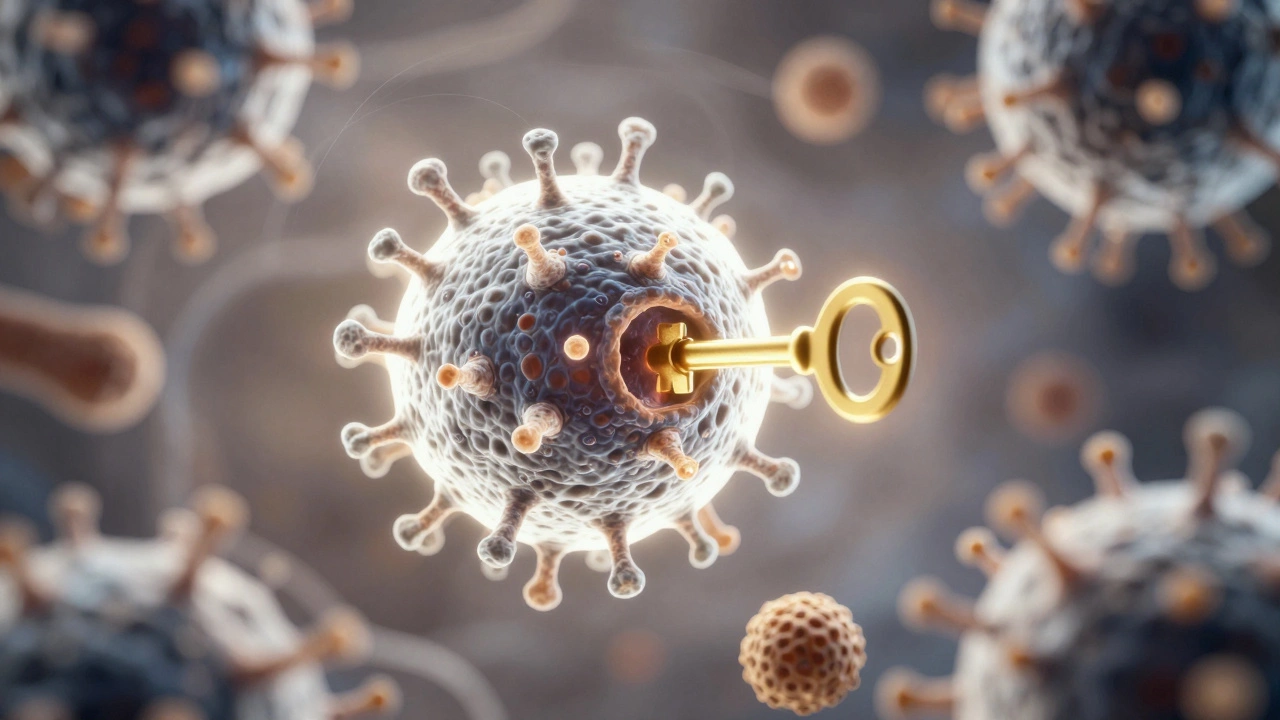
Targeted Therapy: The Molecular Key
If chemotherapy is a blanket approach, Targeted Therapy is a key fitting into a specific lock. This is a treatment that targets the specific genetic mutations or proteins that drive a tumor's growth. It focuses on the "drivers" of the cancer rather than just any cell that grows fast.
For instance, some breast cancers overexpress a protein called HER2. In these cases, doctors use a drug like Trastuzumab that specifically binds to the HER2 receptor, blocking the signal that tells the cell to divide. If you don't have that specific protein, the drug won't work. This is why genomic sequencing is now so critical-doctors need to know the "address" of the mutation before they can send the right drug.
Because targeted therapy doesn't attack all fast-growing cells, it often has fewer systemic side effects than chemotherapy. You might not lose your hair, but you might deal with skin rashes or high blood pressure, depending on which pathway the drug is blocking.
Combining Therapies: The Multimodal Strategy
Rarely does a patient get just one of these. The most effective way to fight cancer treatments is through a multimodal approach. Think of it as a coordinated attack. Surgery removes the bulk of the tumor, radiation kills the remaining local cells, and chemotherapy or immunotherapy patrols the rest of the body to catch any stray cells that escaped into the blood.
For example, in a typical lung cancer case, a patient might undergo a biopsy to check for mutations (Targeted Therapy potential), then have surgery to remove the primary nodule, followed by a few rounds of chemotherapy to lower the risk of recurrence. This layers the defenses, making it much harder for the cancer to adapt and survive.
The goal is to move toward "Adaptive Therapy." This is where doctors monitor how the tumor is changing in real-time using liquid biopsies (blood tests that find cancer DNA) and adjust the treatment plan on the fly. If the cancer evolves to resist a targeted drug, they switch to an immunotherapy agent that attacks a different pathway.
Which of the top 5 treatments is the most effective?
There is no single "most effective" treatment. Effectiveness depends entirely on the cancer's stage, type, and location. Surgery is most effective for localized tumors, while immunotherapy has shown revolutionary success in treating advanced melanoma and certain lung cancers that were previously considered untreatable.
Does chemotherapy always cause hair loss?
Not always. Hair loss depends on the specific drugs used and the dosage. Some chemotherapy agents are less aggressive toward hair follicles than others. Additionally, many hospitals now offer scalp cooling caps that can reduce blood flow to the scalp during infusion, which may help preserve hair.
What is the difference between targeted therapy and chemotherapy?
Chemotherapy attacks all rapidly dividing cells in the body, regardless of whether they are cancerous or healthy. Targeted therapy identifies specific molecular targets (like proteins or gene mutations) unique to the cancer cells, allowing for a more precise attack with generally fewer systemic side effects.
Is immunotherapy safe for everyone?
Immunotherapy is generally well-tolerated, but it has a unique set of risks. Because it "wakes up" the immune system, the body can sometimes start attacking healthy organs, such as the colon (colitis) or the lungs (pneumonitis). This is why close monitoring by an oncologist is essential.
Can radiation be used if surgery is not an option?
Yes. In cases where a tumor is too close to a vital organ or the patient is too frail for surgery, radiation can be used as the primary treatment to shrink the tumor and control the disease, or as a palliative measure to reduce pain and pressure.
Next Steps and Support
If you or a loved one are navigating these options, the first step is to ask your doctor for a multidisciplinary team review. This means your case is discussed by a surgeon, a medical oncologist, and a radiation oncologist together, rather than just one specialist. This ensures that the sequence of treatments-whether it's surgery first or chemo first-is optimized for your specific biology.
For those feeling overwhelmed by the side effects, don't hesitate to look into palliative care early in the process. Palliative care isn't just for end-of-life; it's a specialty focused on managing symptoms like pain, nausea, and fatigue while you are actively fighting the cancer. This support often makes it easier for patients to complete their full course of treatment without needing to take breaks due to toxicity.