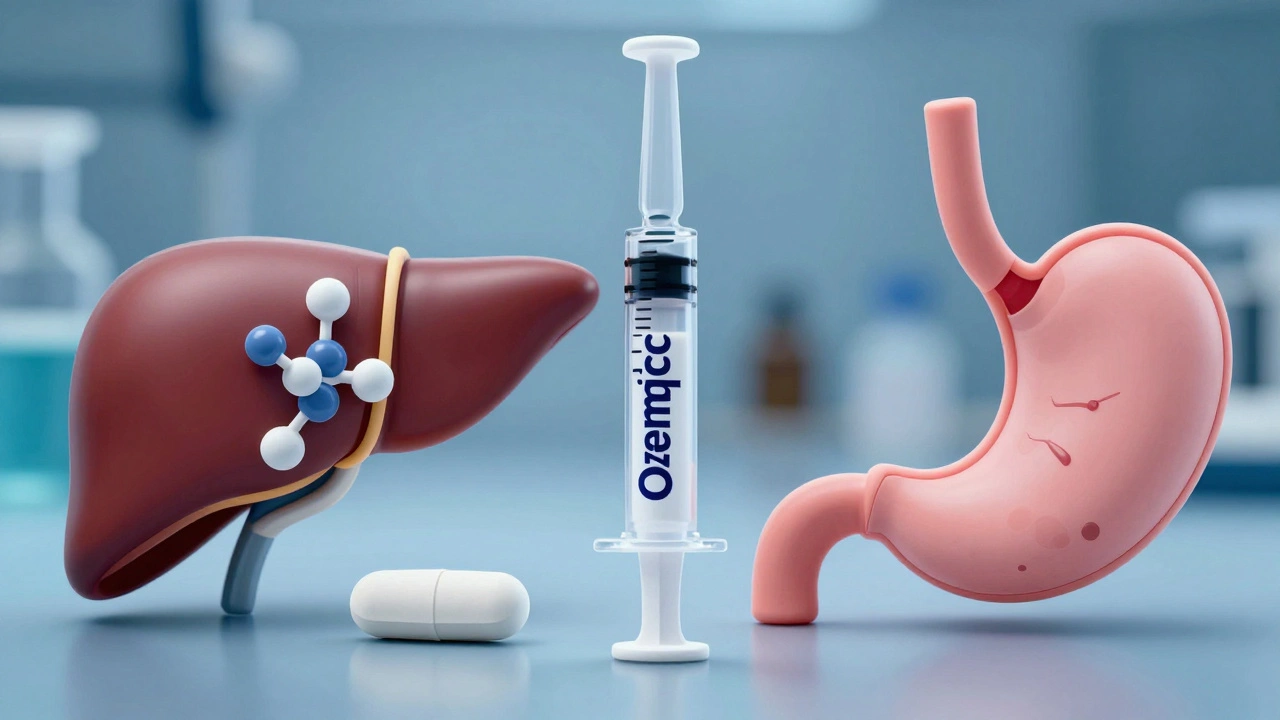
Medication Cost Comparison Tool
Compare the actual out-of-pocket costs for Metformin vs Ozempic based on your treatment duration and insurance coverage. This tool helps you understand the significant financial difference between these two common diabetes medications.
Results will appear here after calculation
Why This Question Matters
No, metformin and Ozempic aren't the same. They’re both used for type 2 diabetes, but they work in completely different ways. Many people get confused because doctors sometimes prescribe both, but mixing them up can lead to serious issues. Understanding the difference is key to safe and effective treatment.
What is Metformin?
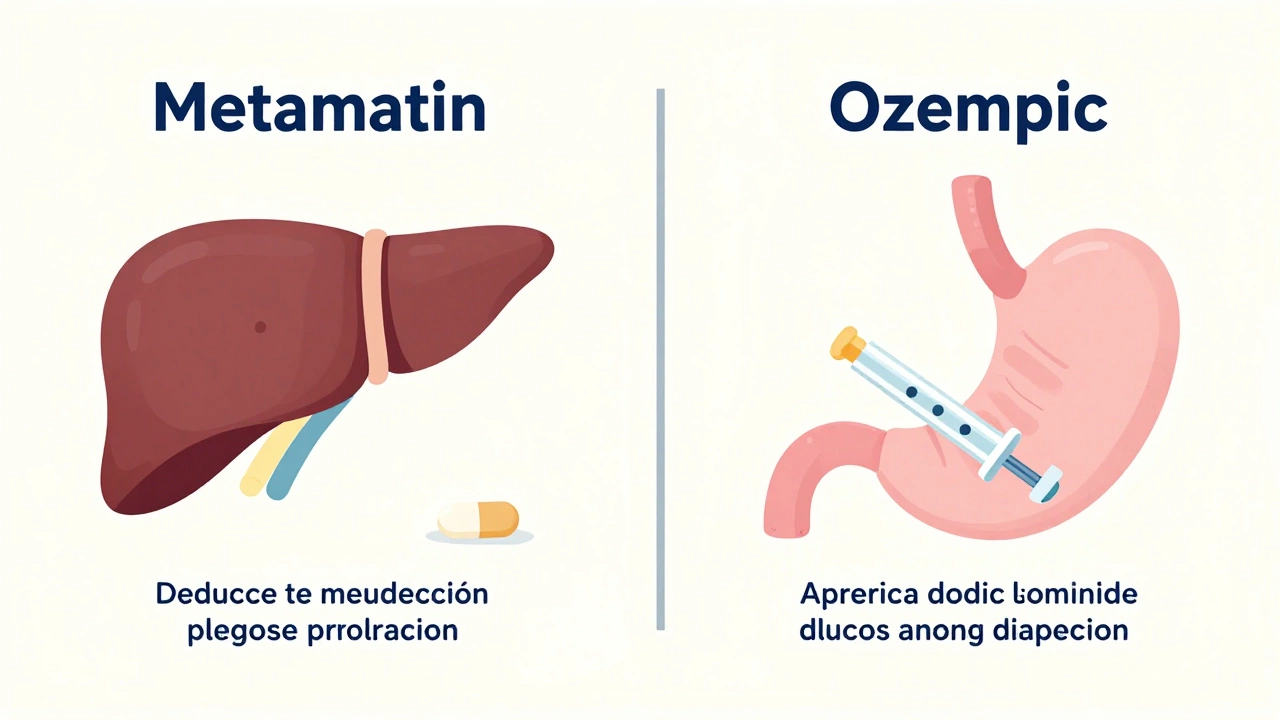
Metformin is a biguanide medication that's been the go-to treatment for type 2 diabetes since the 1950s. It's taken as a pill, usually once or twice daily. Its main job is to reduce glucose production in the liver and improve how your body uses insulin. This helps lower blood sugar levels without causing dangerous lows. Most people tolerate it well, though stomach issues like nausea or diarrhea can happen at first. These usually fade after a few weeks. It's also very affordable-generic metformin costs around $10 to $50 a month. The American Diabetes Association recommends it as the first medication for most people with type 2 diabetes.
What is Ozempic?
Ozempic is a brand name for semaglutide, a GLP-1 receptor agonist. It's injected once a week under the skin. Ozempic works by slowing digestion, boosting insulin release when blood sugar is high, and reducing appetite. This helps lower blood sugar and often leads to weight loss. Common side effects include nausea, vomiting, or diarrhea, especially when starting. It's more expensive-around $800 to $1,000 per month without insurance. Ozempic is typically prescribed when metformin alone doesn't control blood sugar well enough, or for people who need weight loss as part of their treatment.
Key Differences Between Metformin and Ozempic
Here's a clear comparison of how these two medications stack up:
| Feature | Metformin | Ozempic |
|---|---|---|
| Class | Biguanide | GLP-1 receptor agonist |
| Administration | Oral tablet (once or twice daily) | Subcutaneous injection (once weekly) |
| Primary Use | First-line treatment for type 2 diabetes | Used when metformin isn't enough; also for weight management |
| How It Works | Reduces liver glucose production, improves insulin sensitivity | Slows digestion, increases insulin release, decreases appetite |
| Common Side Effects | Stomach upset, diarrhea, gas | Nausea, vomiting, diarrhea, reduced appetite |
| Cost (approx.) | $10-$50/month (generic) | $800-$1,000/month (brand name) |
Can You Take Metformin and Ozempic Together?
Yes, doctors sometimes combine them. If metformin alone isn't enough to control blood sugar, adding Ozempic can help. This combo is common for people with higher HbA1c levels. However, it's not a simple swap. Your doctor will adjust doses carefully to avoid low blood sugar. Combining these medications is safe under supervision but requires regular monitoring. Never switch or combine them on your own.
Common Misconceptions
There are several myths about these drugs:
- Myth: Ozempic is only for weight loss. Fact: Ozempic is FDA-approved for type 2 diabetes first. Weight loss is a beneficial side effect, but it's not a weight loss drug by itself. The higher-dose version (Wegovy) is approved for weight management, but Ozempic is primarily for diabetes.
- Myth: Metformin is outdated. Fact: Metformin remains the first-choice treatment for most people with type 2 diabetes. Its safety profile and affordability make it irreplaceable for many.
- Myth: You can switch between them easily. Fact: These medications aren't interchangeable. Switching without medical guidance can cause dangerous blood sugar swings.
Frequently Asked Questions
Is Ozempic stronger than metformin?
It depends on what you're measuring. Ozempic typically lowers HbA1c more than metformin alone-around 1.5% to 2% reduction versus metformin's 1% to 2%. But metformin is still the first-line choice because it's effective for most people, has fewer side effects, and costs much less. Ozempic is usually added later when metformin isn't enough.
Can I switch from metformin to Ozempic without my doctor's advice?
Absolutely not. These medications work differently and aren't interchangeable. Stopping metformin suddenly could spike your blood sugar, while starting Ozempic without guidance might cause severe nausea or other issues. Always consult your healthcare provider before changing medications.
Does Ozempic work better for weight loss than metformin?
Yes, significantly. Clinical trials show Ozempic users lose about 5% to 10% of their body weight on average. Metformin may cause modest weight loss (around 2% to 3%), but it's not its primary purpose. For weight loss, higher-dose semaglutide (Wegovy) is approved specifically for that use.
Are there risks to taking both medications together?
When prescribed together under medical supervision, the combination is generally safe. However, the risk of low blood sugar (hypoglycemia) increases, especially if you're also using insulin. Your doctor will monitor your blood sugar closely and adjust doses as needed. Never combine them without professional guidance.
Is metformin still used today, or is it outdated?
Metformin remains the gold standard first-line treatment for type 2 diabetes. It's been used for decades and is still highly effective for most people. Newer drugs like Ozempic are added when needed, not to replace metformin. The American Diabetes Association continues to recommend it as the initial therapy for most patients.