
Orthopedic Swelling Medication Selector
Select your symptoms and health profile below to get a personalized recommendation on which type of medication might be most suitable for managing orthopedic swelling.
Why this choice?
You twist your ankle playing cricket on a Sunday morning. By Monday, it’s not just painful-it’s swollen to the size of a grapefruit. You’re looking at your leg and wondering, "What pill do I take to make this go away?" It’s a common question, but the answer isn’t as simple as grabbing the first bottle from your medicine cabinet. Orthopedic swelling is your body’s alarm system, signaling tissue damage or inflammation. While some swelling is necessary for healing, too much of it can delay recovery and increase pain. So, what actually works?
Most people reach for over-the-counter painkillers, but not all pills treat swelling effectively. Some only mask the pain while leaving the fluid buildup untouched. Others might reduce inflammation but come with side effects that aren’t worth the risk if you have a sensitive stomach or kidney issues. This guide breaks down exactly which medications target orthopedic swelling, how they work, and when you should see a doctor instead of self-medicating.
Understanding Why Your Joint Swells
Before popping a pill, you need to understand what you’re treating. Swelling, medically known as edema in a localized context, occurs when blood vessels leak fluid into surrounding tissues after an injury. Think of it like a traffic jam: white blood cells rush to the site to repair damage, causing fluid to accumulate. This process is called inflammation.
In orthopedics, swelling usually stems from three main causes:
- Acute Injury: Sprains, strains, fractures, or ligament tears (like an ACL tear).
- Chronic Conditions: Arthritis, tendonitis, or bursitis where inflammation persists over time.
- Post-Surgical Recovery: Swelling is expected after joint replacement or fracture fixation.
The goal of medication isn’t always to eliminate swelling completely-some fluid helps deliver nutrients to the injured area. The goal is to control excessive swelling that restricts movement and causes throbbing pain.
NSAIDs: The First Line of Defense
If you ask any orthopedic surgeon what they prescribe first for swelling, the answer will almost certainly be Non-Steroidal Anti-Inflammatory Drugs (NSAIDs). Unlike regular painkillers like paracetamol, NSAIDs actively block the enzymes (COX-1 and COX-2) that produce prostaglandins-the chemicals responsible for inflammation and pain.
Common NSAIDs available in India include:
- Ibuprofen: Often sold as Brufen or Combiflam. Effective for mild to moderate swelling.
- Diclofenac: Available as tablets (Voveran) or gels (Volini). Stronger than ibuprofen for acute injuries.
- Naproxen: Longer-lasting effect, often preferred for chronic conditions like arthritis.
- Etoricoxib: A newer COX-2 selective inhibitor (e.g., Nucoxia) that is gentler on the stomach but requires a prescription.
Pro Tip: Always take NSAIDs with food. An empty stomach increases the risk of gastric ulcers and bleeding, especially if you use them for more than three days.
Topical Gels and Creams: Targeted Relief
Do you really need to swallow a pill for a sprained wrist? Not always. Topical NSAIDs are gaining popularity because they deliver medication directly to the affected area without flooding your entire system. This means fewer systemic side effects like stomach upset or kidney stress.
Popular options include Diclofenac gel, which is widely recommended for superficial joints like knees, ankles, and wrists. When applied, about 6% of the drug penetrates the skin to reach the inflamed tissue. Another option is Ketoprofen gel, which offers similar benefits. For deeper joints like hips, topicals may not penetrate deeply enough, so oral meds remain superior.
| Medication Type | Best For | Onset of Action | Key Risk |
|---|---|---|---|
| Oral NSAIDs (Ibuprofen/Diclofenac) | Moderate to severe swelling; multiple joints | 30-60 minutes | Gastric irritation, kidney strain |
| Topical NSAIDs (Diclofenac Gel) | Superficial joints (knees, hands, feet) | 1-2 hours | |
| Corticosteroids (Oral Injection) | Severe inflammation; autoimmune flare-ups | Rapid (injection) / Hours (oral) | Blood sugar spikes, bone density loss |
| Paracetamol (Acetaminophen) | Pain only (does NOT reduce swelling) | 30-45 minutes |

Corticosteroids: When Inflammation Gets Out of Hand
Sometimes, NSAIDs aren’t enough. If you have severe synovitis (inflammation of the joint lining) or a massive post-surgical reaction, doctors might prescribe corticosteroids. These are powerful anti-inflammatories that mimic cortisol, your body’s natural stress hormone.
You’ll typically encounter these in two forms:
- Oral Steroids: Prednisone or Methylprednisolone tablets for short courses (5-7 days). They rapidly reduce swelling but shouldn’t be used long-term due to side effects like weight gain and mood changes.
- Intra-articular Injections: A direct injection into the joint space (often called a "cortisone shot"). This provides targeted relief for knee osteoarthritis or shoulder bursitis. The effect can last weeks to months.
Caution: Never self-administer steroid injections. Doing so incorrectly can introduce infection or damage cartilage.
Enzymes and Diuretics: The Supporting Cast
Beyond standard painkillers, there are niche medications used specifically for stubborn swelling.
Proteolytic Enzymes: Drugs containing trypsin, bromelain, or chymotrypsin (such as Trypsin-Bromelain-Papain-Rutoside combinations) help break down proteins involved in inflammation. Many orthopedic surgeons in India prescribe these alongside antibiotics after surgery to speed up bruise resolution and reduce edema. Evidence suggests they are most effective when taken on an empty stomach.
Diuretics: If swelling is caused by fluid retention rather than pure inflammation (common in elderly patients or those with heart/kidney issues), diuretics like Furosemide might be prescribed. However, these don’t treat the injury itself-they just flush out excess water.
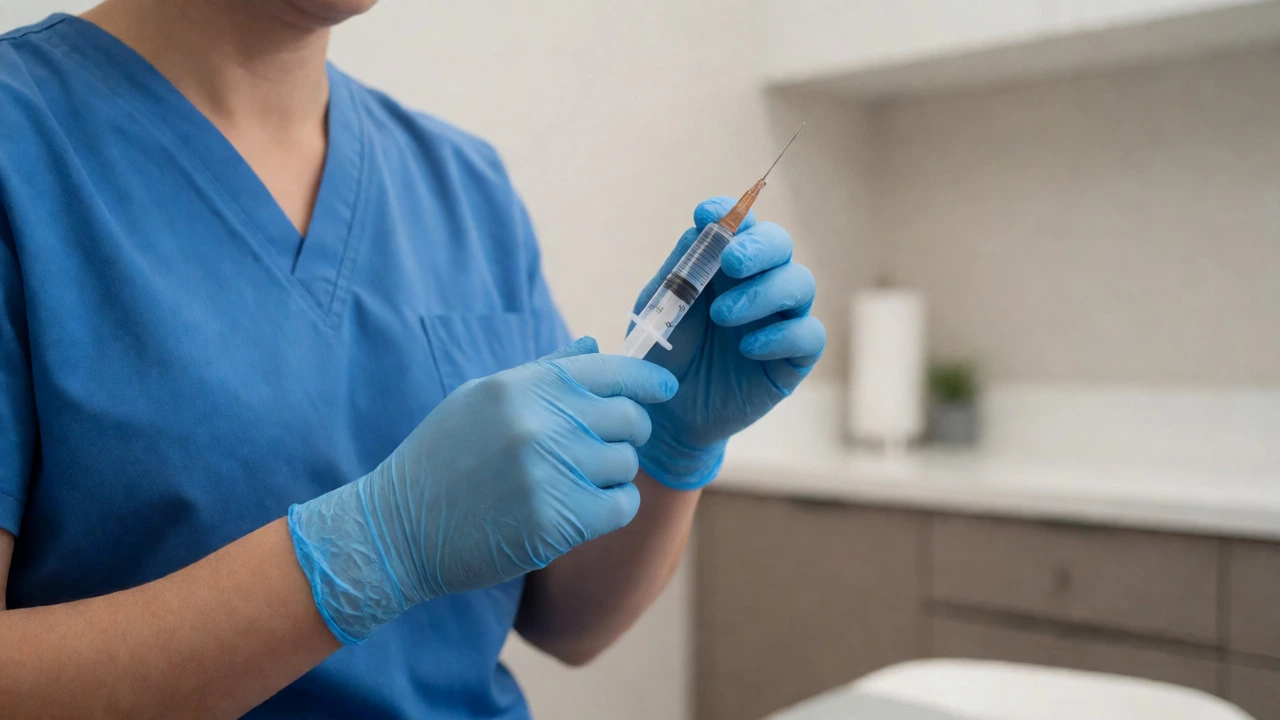
When to Stop Self-Medicating and See a Doctor
Medication manages symptoms, but it doesn’t fix the underlying mechanical problem. You need professional evaluation if:
- Swelling persists for more than 7 days despite rest and OTC meds.
- The joint feels hot, red, and you develop a fever (signs of infection).
- You cannot bear weight on the limb.
- There is visible deformity or instability.
In cases of fractures or ligament tears, no amount of Diclofenac will realign bones or stitch torn ligaments. Delaying proper diagnosis can lead to chronic stiffness or arthritis later in life.
Practical Tips for Maximizing Medication Effectiveness
Taking the right pill is half the battle. Here’s how to boost its impact:
- R.I.C.E. Protocol: Rest, Ice, Compression, Elevation. Ice reduces blood flow to the area, complementing the anti-inflammatory action of NSAIDs. Apply ice packs for 15 minutes every 2-3 hours during the first 48 hours.
- Hydration: Drink plenty of water. Dehydration concentrates inflammatory markers and stresses kidneys processing NSAIDs.
- Avoid Alcohol: Alcohol increases bleeding risk and interferes with liver metabolism of painkillers.
- Consistency Matters: Don’t wait until pain peaks. Take scheduled doses as prescribed to maintain steady blood levels of the anti-inflammatory agent.
Does Paracetamol reduce orthopedic swelling?
No. Paracetamol (Acetaminophen) is an analgesic (pain reliever) and antipyretic (fever reducer), but it has negligible anti-inflammatory properties. It will stop the hurt, but it won’t shrink the swollen joint. You need NSAIDs like Ibuprofen or Diclofenac for that.
How long does it take for NSAIDs to reduce swelling?
Pain relief often starts within 30-60 minutes. However, significant reduction in visible swelling takes longer-usually 2 to 3 days of consistent dosing combined with R.I.C.E. therapy. Full resolution may take 1-2 weeks depending on injury severity.
Are topical gels as effective as oral pills for knee swelling?
For mild to moderate swelling in superficial joints like knees and ankles, topical Diclofenac is nearly as effective as oral NSAIDs with fewer systemic side effects. For deep joints like hips or severe trauma, oral medication is generally required for adequate tissue concentration.
Can I take Etoricoxib if I have a history of acidity?
Etoricoxib is a COX-2 selective inhibitor, meaning it is designed to be gentler on the stomach than traditional NSAIDs like Diclofenac. However, it still carries some risk. If you have a history of ulcers or severe GERD, consult your doctor before starting it. They may prescribe a proton pump inhibitor (PPI) alongside it.
What is the role of compression bandages in reducing swelling?
Compression physically prevents fluid from accumulating in the tissue spaces. It works synergistically with medication. Without compression, even strong anti-inflammatories may struggle to keep swelling down during movement. Ensure the bandage is snug but not tight enough to cut off circulation.