Stage 4 Cancer Survival Estimator
Cancer Type & Survival Statistics
Based on 2020 American Cancer Society data. This is an educational tool only and not medical advice.
Estimate Your Survival
Estimated Survival Rates
Stage 4 cancer used to mean a death sentence. But that’s not the whole story anymore. People are living years-sometimes decades-after being told they had months. It’s not common, but it’s real. And it’s happening more than you think.
What Does Stage 4 Cancer Actually Mean?
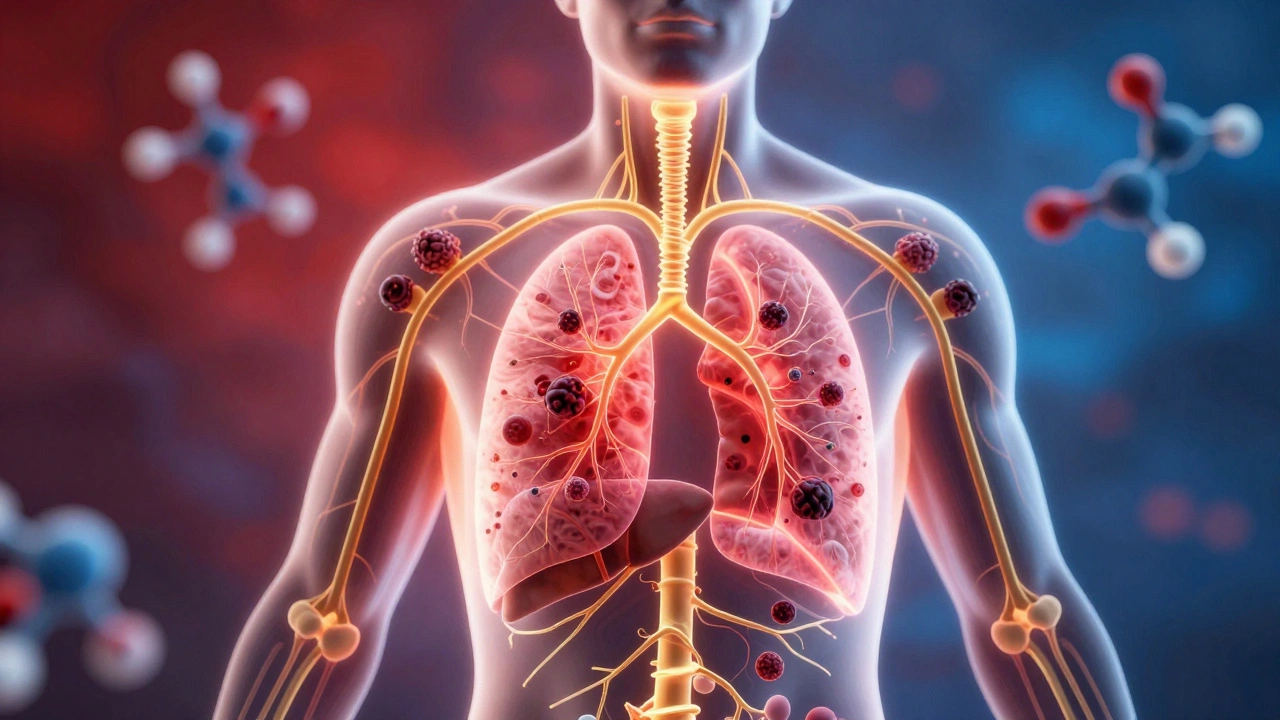
Stage 4 cancer means the disease has spread beyond its original site to distant parts of the body-like the lungs, liver, bones, or brain. This is also called metastatic cancer. It doesn’t mean the cancer is untreatable. It means it’s systemic. The goal shifts from curing to controlling.
Think of it like a wildfire that’s jumped rivers and burned across forests. You can’t just put out one flame. You need to manage the whole fire, reduce its spread, and keep it from consuming everything. That’s what modern treatment does.
Yes, People Survive Stage 4 Cancer
In 2020, the American Cancer Society reported that 28% of people diagnosed with stage 4 breast cancer lived at least five years. For stage 4 colorectal cancer, that number was 14%. But those are averages. They don’t tell you about the person who lived 12 years. Or the one who went into remission after trying a new immunotherapy drug.
There’s Maria, a teacher from Texas, diagnosed with stage 4 lung cancer in 2018. Her tumor had spread to her liver. She was given six to nine months. She’s still teaching today. Her tumor markers dropped to normal after she started a combination of targeted therapy and immunotherapy. She doesn’t call herself cured. But she calls herself alive.
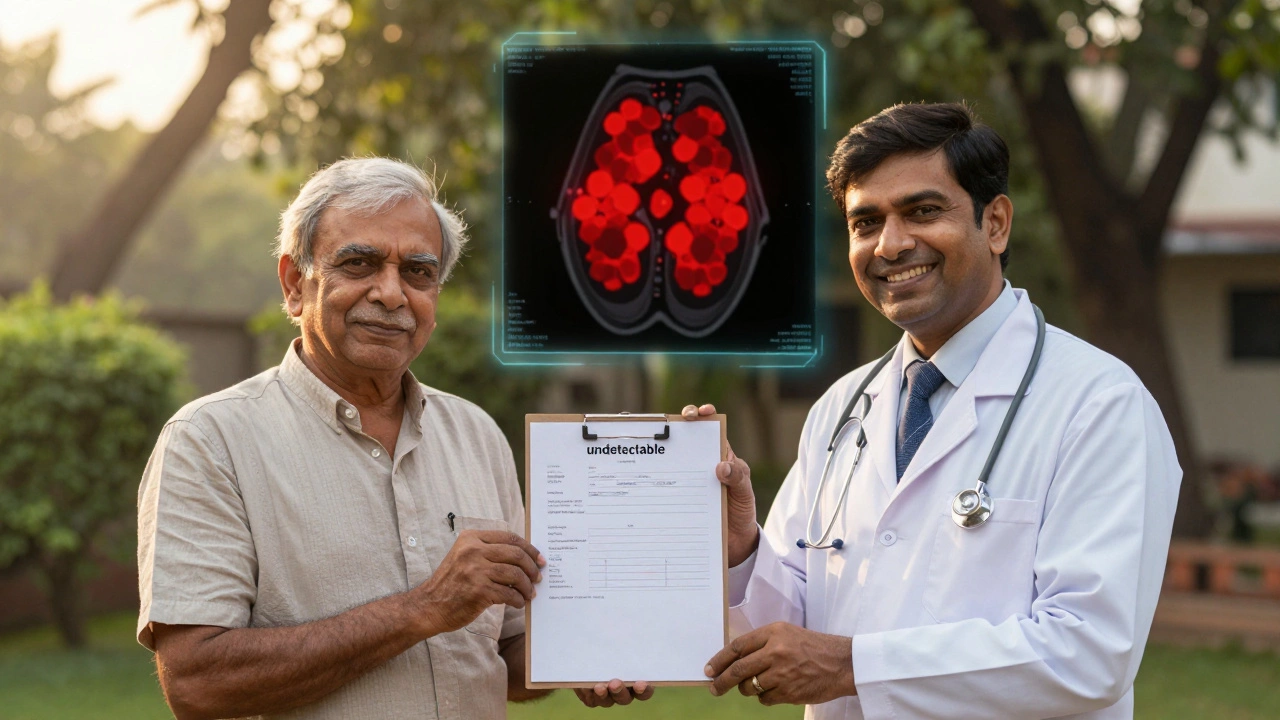
Or Raj, a 52-year-old from Pune, diagnosed with stage 4 prostate cancer in 2021. His PSA levels were off the charts. He tried hormone therapy, then a newer drug called Lu-177 PSMA. Within six months, his cancer was undetectable on scans. He’s been in remission for over three years.
These aren’t outliers. They’re part of a growing group. And their stories aren’t magic. They’re science.
Why Are More People Surviving?
Three big changes have turned the tide.
First, precision medicine. Instead of treating all breast cancers the same, doctors now test tumors for specific mutations-like BRCA, HER2, or EGFR. Drugs like trastuzumab for HER2-positive cancers or osimertinib for EGFR-mutated lung cancers target those exact flaws. These drugs don’t just slow cancer-they shrink it, sometimes completely.
Second, immunotherapy. This isn’t chemo. It’s about waking up your immune system. Drugs like pembrolizumab and nivolumab help your T-cells recognize cancer as an invader. For some people with melanoma or lung cancer, these drugs have led to long-term remission-even when the cancer had spread everywhere.
Third, better monitoring. Liquid biopsies now let doctors track cancer through a simple blood test. Instead of waiting for a scan to show growth, they can see changes in tumor DNA weeks earlier. That means treatment can be adjusted before the disease worsens.
These aren’t lab experiments. They’re in use right now-in Mumbai hospitals, in Delhi clinics, in small towns across India. And they’re changing outcomes.
What Doesn’t Work Anymore
Not all treatments are equal. Chemo still has a role, but it’s no longer the only tool. And it’s not always the best first step.
For example, giving chemo to someone with stage 4 pancreatic cancer without testing for BRCA mutations is like using a hammer to fix a watch. It might do something, but it’s not precise. The same goes for using old-school radiation on widespread disease. It’s painful, it’s exhausting, and it often doesn’t help.
Doctors now ask: What’s the tumor’s genetic profile? Has the patient had prior treatments? Are there clinical trials available? What’s the quality of life like with each option?
Survival isn’t just about living longer. It’s about living well.
Who Has the Best Chance?
Survival isn’t random. Certain factors make a difference.
- Type of cancer: Some cancers spread more slowly. Thyroid, prostate, and some breast cancers can be controlled for years. Pancreatic and liver cancers remain tougher.
- Number of sites: If cancer spread to just one organ, like the liver, the outlook is better than if it’s in the liver, lungs, and bones.
- Age and fitness: Younger, healthier people tolerate aggressive treatments better. But age alone doesn’t rule out survival. Many 70+ patients are doing well on targeted therapies.
- Genetic markers: Having a treatable mutation-like ALK in lung cancer or MSI-H in colon cancer-can mean years of control.
- Access to care: In India, patients in cities like Mumbai, Delhi, or Bangalore have access to newer drugs and trials. Those in smaller towns may not. But telemedicine and government schemes are slowly closing that gap.
It’s not about luck. It’s about matching the right tool to the right cancer.
Hope Isn’t a Lie
There’s a dangerous myth that if you survive stage 4 cancer, you’re just lucky. That’s not true. Luck plays a part-but so does science, timing, and persistence.
Survival doesn’t mean the cancer is gone forever. For many, it becomes a chronic condition-like diabetes or high blood pressure. You take pills. You get checked. You adapt.
But that’s not failure. That’s progress.
Five years ago, a stage 4 diagnosis meant giving up. Today, it means starting a new chapter. One that might include travel, grandchildren, or a new job. One that might last longer than anyone expected.
What You Can Do Right Now
If you or someone you love has been told they have stage 4 cancer:
- Don’t accept the first answer. Ask for a molecular profiling test. This isn’t optional-it’s essential.
- Seek a second opinion from a cancer center that does clinical trials. Even if you don’t join one, they know what’s working.
- Ask about palliative care early. It’s not about giving up. It’s about managing pain, nausea, and stress so you can live better while fighting.
- Connect with patient groups. Real stories from people who’ve been there are more powerful than any statistic.
- Don’t rush. Treatment is a marathon, not a sprint. Choose options that fit your life, not just your fear.
There is no single path. But there is a path forward.
What’s Next?
Researchers are working on vaccines that train the immune system to hunt cancer cells. They’re testing AI to predict which drugs will work for which tumors. And they’re finding ways to make these treatments cheaper and more accessible.
In 2025, the first nationwide cancer genome mapping project in India began. It’s not about curing every case. It’s about giving every patient the best shot.
Stage 4 cancer isn’t a death sentence anymore. It’s a challenge. And like every challenge, some people rise to meet it.
Can stage 4 cancer be cured?
Cure means no cancer remains and never comes back. For most stage 4 cancers, that’s rare. But remission-where cancer is undetectable and doesn’t grow for years-is becoming more common. Some people live 10, 15, even 20 years with stage 4 cancer under control. That’s not a cure, but it’s not a death sentence either.
How long can someone live with stage 4 cancer?
There’s no fixed answer. For some cancers like prostate or breast, people often live 5-10 years or longer with treatment. For others, like pancreatic or lung, survival is shorter-but even here, new drugs are pushing averages upward. A few people live more than 15 years. It depends on the cancer type, how it responds to treatment, and the person’s overall health.
Is immunotherapy effective for stage 4 cancer?
Yes-for some people. It works best in cancers with high mutation rates, like melanoma, lung, and kidney cancer. About 20-40% of patients respond well. Some see tumors shrink dramatically. A small group-5-10%-stay in remission for over a decade. It doesn’t work for everyone, but it’s changed the game for those it does help.
Are clinical trials worth considering?
Absolutely. Clinical trials test new drugs before they’re widely available. Many of today’s best treatments started in trials. If you’re eligible, joining one gives you access to cutting-edge care-and helps others too. Hospitals in India like Tata Memorial, AIIMS, and Apollo now run dozens of trials for advanced cancers.
Does stage 4 cancer always cause pain?
No. Many people have little to no pain, especially if treatment is working. Pain can be managed effectively with modern medicines, nerve blocks, and physical therapy. Palliative care teams specialize in this. You don’t have to suffer. Asking for help is part of fighting.
Can diet or supplements cure stage 4 cancer?
No. No diet, vitamin, or herbal remedy has been proven to cure stage 4 cancer. Some can help with energy or side effects-like ginger for nausea or protein shakes for weight loss. But relying on them instead of medical treatment can be dangerous. Always talk to your oncologist before taking anything new.
What should I ask my oncologist?
Ask: What’s the goal of treatment? (Control? Comfort? Cure?) What are my options? What are the side effects? Are there clinical trials? What’s the expected timeline? What happens if this doesn’t work? Write these down. Don’t be afraid to ask again. Your questions matter.
Stage 4 cancer is no longer the end. It’s a turning point. And for thousands of people around the world-including right here in India-it’s the start of a new kind of life.