
Medicare International Coverage Checker
U.S. Medicare generally does not cover health care outside the United States. Use this tool to check if your specific scenario falls under one of the rare exceptions or requires private insurance.
Coverage Assessment
...Here is the hard truth that trips up thousands of American seniors every year: U.S. Medicare generally does not cover health care services outside the United States and its territories. If you are planning to retire in Costa Rica, spend winters in Mexico, or travel through Europe, your standard Part A and Part B coverage likely won’t pay for a doctor’s visit, an emergency room trip, or even a simple prescription refill across the border. This isn't a glitch; it is a strict federal rule designed to protect the domestic healthcare system. But does this mean you are uninsured when you step off the plane? Not exactly. The landscape of international healthcare for Americans is nuanced, filled with exceptions, private add-ons, and specific countries where bilateral agreements or private networks create a safety net. Understanding who accepts what-and more importantly, who pays-is critical before you book that one-way ticket.
The Myth of Global Coverage
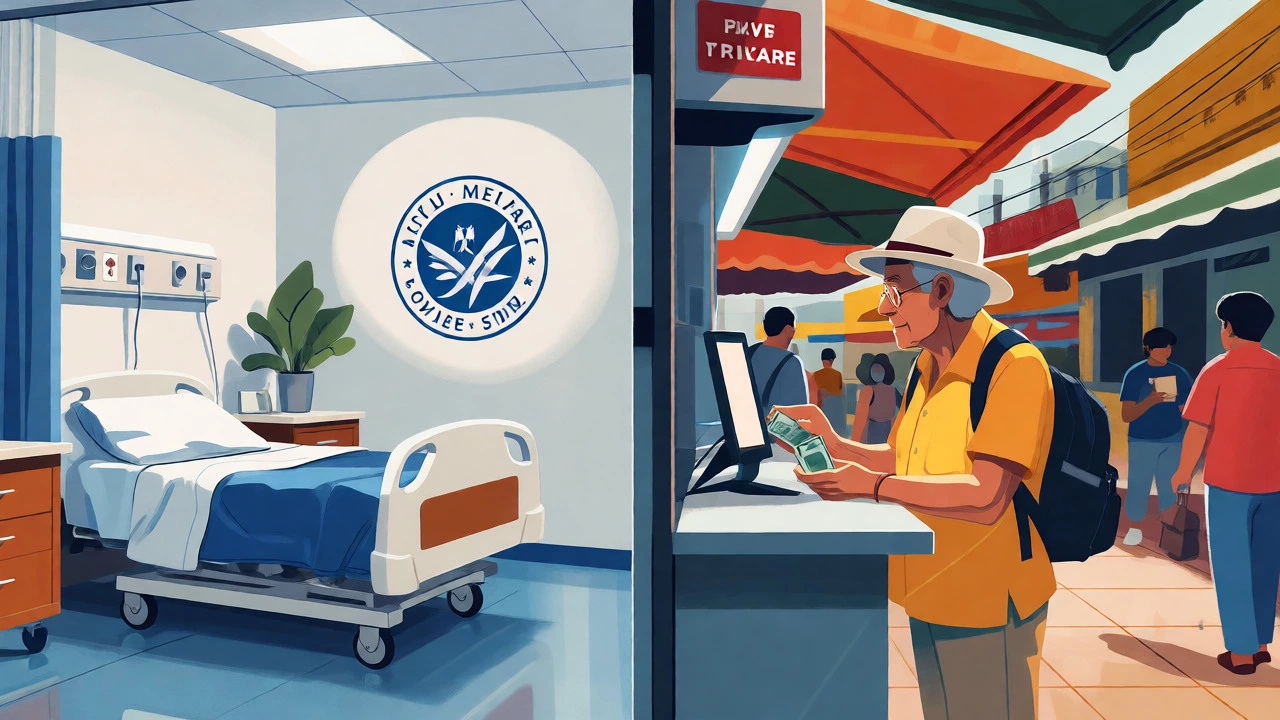
Many people assume that because Medicare is a government program, it has some sort of diplomatic immunity or global reach. It doesn’t. Medicare is administered by the Centers for Medicare & Medicaid Services (CMS), which focuses exclusively on beneficiaries within the fifty states, Washington D.C., Puerto Rico, the Virgin Islands, Guam, and the Northern Mariana Islands. Once you cross into Canada, Mexico, or France, you are effectively self-pay unless you have additional coverage. There are no countries that "accept" Medicare in the way they accept credit cards. Instead, providers in these nations simply bill you directly. You then have to navigate the complex process of submitting claims to Medicare, hoping for a rare exception approval, or rely entirely on out-of-pocket funds.
This distinction matters because it changes how you budget for retirement abroad. If you think you can walk into a clinic in Cancun and swipe your Medicare card like a Visa, you will be met with confusion at the front desk. Hospitals and clinics in popular expat hubs like Belize, Panama, and Thailand operate on private payment models. They may offer cash discounts, but they do not have direct billing relationships with CMS. This means you need to shift your mindset from "coverage" to "reimbursement," and even then, reimbursement is the exception, not the rule.
Rare Exceptions When Medicare Pays Abroad
Before you panic and buy an expensive international policy, know that there are three specific scenarios where Medicare might actually pick up the tab overseas. These are narrow windows, but knowing them can save you thousands in emergencies.
- The Canadian Transit Rule: If you live in the contiguous United States and are traveling between Alaska and another U.S. state through Canada, Medicare may cover medically necessary inpatient hospital care in Canada if the Canadian hospital is closer than the nearest U.S. facility. This also applies if a foreign hospital is closer to you than any U.S. hospital, regardless of whether you are traveling. For example, residents of Detroit or Buffalo often use hospitals in Ontario because they are geographically closer than those in Michigan or New York.
- Cruise Ship Medical Care: If you are on a cruise ship that meets certain criteria set by the Department of Health and Human Services, Medicare covers services provided by doctors and hospitals on board. However, this only applies if the ship is in U.S. waters or within six hours of a U.S. port. Once you are deep in international waters, you are on your own unless the ship’s medical staff qualifies under specific federal guidelines, which is rare.
- Emergency Care Near the Border: Similar to the transit rule, if you experience a medical emergency while in a foreign country immediately adjacent to the U.S., and a U.S. hospital is farther away, Medicare may cover treatment at the foreign hospital. This is strictly limited to true emergencies-think heart attacks or severe trauma-not routine checkups or elective surgeries.
Notice what isn’t on this list: vacation illnesses, chronic condition management, dental work, or vision exams. If you break your leg skiing in Switzerland, Medicare likely won’t pay. If you need insulin in Spain, Medicare won’t reimburse you. These exceptions are designed for geographic necessity, not convenience or cost-saving.
Medicare Advantage Plans: The Hidden International Perk
If traditional Medicare leaves you exposed, Medicare Advantage (Part C) plans might offer a lifeline. Unlike Original Medicare, these are offered by private insurance companies approved by Medicare. Because they compete for customers, many insurers include extra benefits that Original Medicare lacks, such as vision, dental, and crucially, international coverage.
Some Medicare Advantage plans, particularly those marketed to snowbirds or frequent travelers, include emergency care coverage worldwide. For instance, plans from major carriers like Humana, UnitedHealthcare, or Blue Cross Blue Shield sometimes offer $50,000 to $100,000 in emergency coverage per trip. However, this is never automatic. You must read the Evidence of Coverage document for your specific plan. Often, this coverage comes with high deductibles or requires you to seek care at specific network hospitals, which may not exist in rural areas of developing nations.
| Feature | Original Medicare (A & B) | Medicare Advantage (Part C) | Private International Insurance |
|---|---|---|---|
| General Coverage Abroad | No (except rare emergencies) | Varies by plan (often emergency only) | Yes (comprehensive) |
| Direct Billing | No | Sometimes (within networks) | Often available |
| Pre-existing Conditions | N/A (no coverage) | Generally covered | May exclude or require waiting period |
| Cost Structure | Premium + Deductible | Premium + Copays | Premium based on age/location |
| Best For | Domestic care only | Travelers with good domestic plans | Expats living abroad full-time |
Where Do Seniors Go? Popular Destinations and Their Systems
Since Medicare doesn’t transfer well, successful expats choose destinations based on affordability and quality of care rather than insurance compatibility. Here is how some top countries handle healthcare for foreigners.
Mexico remains the most popular destination for American retirees due to proximity and cost. Cities like San Miguel de Allende, Lake Chapala, and Cancun have world-class hospitals accredited by Joint Commission International (JCI). While Medicare doesn’t pay, the out-of-pocket costs are staggering low compared to the U.S. A knee replacement might cost $15,000 in Mexico versus $35,000+ in the U.S. Many expats use a hybrid model: they keep their U.S. Medicare for home visits and buy a separate local Mexican health insurance policy or a short-term travel medical plan for daily needs.
Portugal offers a different model. As a European Union member, it has a public healthcare system accessible to legal residents. If you obtain residency, you can register for the Serviço Nacional de Saúde (SNS) and access public hospitals for free or at very low co-pays. This is a massive advantage over countries that require private insurance for everyone. However, wait times can be long, so many Portuguese-based expats still carry private insurance for faster access to specialists. Medicare plays no role here except as a backup for returning to the U.S.
Thailand is a hub for medical tourism, known for its efficiency and English-speaking staff in Bangkok and Chiang Mai. Hospitals like Bumrungrad International are renowned globally. Since Thailand does not have a bilateral healthcare agreement with the U.S., all care is private. Seniors typically purchase comprehensive international health insurance policies that cover both routine and emergency care. The cost of living is low enough that paying for robust insurance plus out-of-pocket expenses is often cheaper than living in the U.S. without insurance.
The Risk of Relying Solely on Medicare
Why risk it? Imagine you are hiking in the Andes in Peru and suffer a fall requiring helicopter evacuation to Lima. Without private insurance, that evacuation could cost $10,000 to $20,000. Medicare will not reimburse this because it wasn’t an emergency near the U.S. border, nor were you transiting through Canada. You would be liable for the full amount. Furthermore, if you need ongoing care for a chronic condition like diabetes or hypertension, you cannot rely on sporadic emergency coverage. You need consistent access to medications and monitoring, which Medicare does not provide internationally.
There is also the issue of continuity of care. Doctors abroad may not understand the nuances of Medicare billing codes, making it difficult to coordinate records. If you return to the U.S. after a year abroad, getting your foreign medical records integrated into your Medicare-covered provider’s system can be a bureaucratic nightmare. It is far easier to manage health when you have a single insurer that understands both your domestic and international needs.
Strategic Solutions for the Global Senior
So, what should you do? If you plan to spend significant time abroad, you need a layered approach to healthcare.
- Keep Your Medicare Parts A and B: Never drop these unless you are certain you won’t return to the U.S. for major care. If you delay enrollment now, you may face penalties later when you re-enter the U.S. system.
- Add a Medigap Policy with Foreign Travel Benefits: Some Medigap (Supplemental) plans, specifically Plan F and Plan G (for those eligible before 2020), offer foreign travel emergency coverage. This typically covers 80% of costs after a deductible, up to a lifetime limit. Check your current policy details.
- Purchase Dedicated International Health Insurance: Companies like GeoBlue, Cigna Global, or Allianz Care offer plans designed for expats. These plans often include direct billing at hospitals worldwide, meaning you don’t have to pay upfront and chase refunds. Look for plans that cover pre-existing conditions if you have them, though premiums will be higher.
- Consider Local Public Healthcare: In countries like Portugal, Spain, or Italy, becoming a legal resident grants access to public systems. Research the requirements for each country. Sometimes, proving you have private insurance is a prerequisite for getting a visa, creating a catch-22 that requires careful planning.
For those who only travel occasionally, a short-term travel medical insurance policy is sufficient. These policies are cheap, cover emergencies, and fill the gap left by Medicare’s lack of global reach. They are not meant for long-term residency, but they are perfect for two-week vacations or winter stays.
Final Thoughts on Planning Ahead
Don’t let the complexity scare you off. Living abroad as a senior is entirely feasible, but it requires treating healthcare as a logistical challenge rather than an assumption. The key is to stop thinking about "which countries accept Medicare" and start asking "how do I pay for care in these countries?" By combining your base Medicare coverage with targeted private insurance or leveraging local public systems, you can enjoy international living without financial ruin. Always consult with a licensed insurance broker who specializes in expat health coverage before making final decisions. They can help you navigate the fine print that CMS leaves ambiguous.
Can I use my Medicare card at a hospital in Mexico?
No, you cannot use your Medicare card for direct billing in Mexico. Most hospitals and clinics in Mexico are private and require payment at the time of service. You will need to pay out-of-pocket and then submit a claim to Medicare, which will likely deny it unless it was a specific emergency near the border. Most expats pay cash or use private travel insurance.
Does Medicare cover prescriptions bought in Canada?
Generally, no. Medicare Part D does not cover drugs purchased outside the U.S. There is a rare exception if you are in Canada and the drug is medically necessary, you cannot get it in the U.S., and the pharmacy is not part of a chain that primarily serves tourists. Even then, the rules are strict, and reimbursement is not guaranteed. Many seniors pay cash for lower-cost medications in Canada.
What happens if I move abroad permanently regarding Medicare?
You can keep your Medicare coverage even if you live abroad. However, you must continue paying your Part B premiums. If you decide to drop Part B because you don't use it, you may face late enrollment penalties if you ever return to the U.S. and want to re-enroll. It is usually safer to keep Part B active just in case you need to return for specialized care.
Are there any countries with healthcare agreements with the U.S.?
The U.S. has social security agreements with many countries, but these primarily affect pension credits, not healthcare coverage. There are no broad reciprocal healthcare treaties that allow U.S. Medicare holders to receive free or subsidized care in other nations, unlike the EU’s EHIC system for Europeans. You are always responsible for your own medical costs abroad.
Is travel medical insurance better than relying on Medicare abroad?
Yes, for almost all situations. Travel medical insurance is designed to cover unexpected illnesses and injuries abroad, including emergency evacuations, which Medicare rarely covers. It is affordable, easy to purchase online, and provides peace of mind. Relying solely on Medicare's rare exceptions is risky and can lead to massive out-of-pocket bills.