Sperm Retrieval Pain Estimator
Your Procedure
Recovery Timeline
Pro Tip: Bring a partner for emotional support - studies show it reduces pain perception by 30%.
Pain Estimate
Based on the latest 2024 study of 217 men undergoing sperm retrieval (82% reported mild pain, 6% moderate)
When you’re going through IVF, sperm retrieval might not be the first thing on your mind-but it’s one of the most common questions men have: how painful is sperm retrieval? The answer isn’t simple. It depends on the method, your pain tolerance, and whether you’re awake or sedated. But here’s the truth: for most men, it’s less painful than they expect.
What Is Sperm Retrieval?
Sperm retrieval is a medical procedure used to collect sperm directly from the testicles or epididymis when there’s no sperm in the ejaculate. This happens in about 10-15% of male infertility cases. It’s often paired with IVF and ICSI, where a single sperm is injected into an egg.
There are four main types of sperm retrieval procedures:
- PESA (Percutaneous Epididymal Sperm Aspiration)
- TESE (Testicular Sperm Extraction)
- Micro-TESE (Microsurgical Testicular Sperm Extraction)
- TESA (Testicular Sperm Aspiration)
Each one has different techniques, recovery times, and pain levels. But none of them are done without anesthesia.
PESA and TESA: Needle-Based Procedures
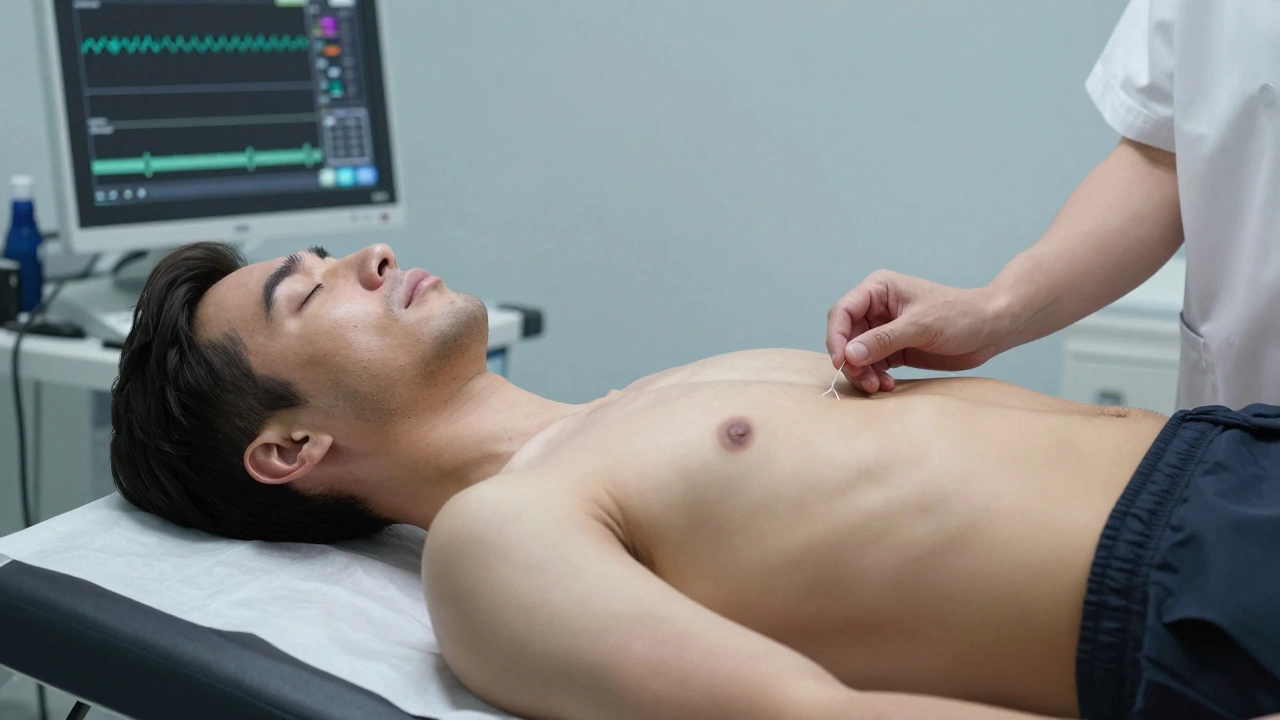
PESA and TESA are the least invasive. A fine needle is inserted through the skin into the epididymis (PESA) or testicle (TESA) to draw out fluid containing sperm. Think of it like a blood draw, but deeper.
Local anesthesia is used, so you’ll feel a quick sting when the numbing shot is given. After that, you’ll feel pressure-maybe a dull ache-but no sharp pain. Some men describe it as a heavy, pulling sensation. It lasts under 15 minutes.
Afterward, there’s mild soreness for a day or two, like a bruise. Swelling is common but usually goes down with ice and rest. Most men return to light activity the next day. No stitches. No hospital stay.
TESE and Micro-TESE: Small Incisions
TESE involves a small cut (about 1-2 cm) in the scrotum to remove a tiny piece of testicular tissue. Micro-TESE is the same, but done under a microscope to find sperm-producing areas more precisely. This is often used when sperm production is very low.
Here, you’ll be under local anesthesia with sedation-or sometimes general anesthesia. If you’re awake, you’ll feel pressure and tugging, but not pain. If you’re asleep, you won’t feel anything at all.
Recovery takes a bit longer. You’ll have some swelling and tenderness for 3-5 days. Some men report a dull ache that feels like a pulled muscle. Painkillers like ibuprofen are usually enough. You’ll need to avoid heavy lifting, sex, and exercise for about a week.
Real Stories: What Men Actually Say
One man, 34, had PESA after a vasectomy reversal failed. He said: “I was terrified. The needle part didn’t hurt. The worst was waiting. The doctor asked if I was okay every 30 seconds. That’s when I got nervous.”
Another, 41, had Micro-TESE. “I was out cold. Woke up with a bandage and a weird feeling. My wife said I looked like I’d been in a fight. But I didn’t cry. I didn’t scream. It was just… quiet.”
These aren’t rare experiences. A 2024 study of 217 men undergoing sperm retrieval found that 82% rated their pain as mild (1-3 on a scale of 10). Only 6% said it was moderate (4-6). No one reported severe pain.

What About the Nerves?
Most of the discomfort isn’t physical-it’s psychological. Men worry about:
- Will this hurt more than a shot?
- Will I lose sensation?
- Will I be able to have sex again?
- What if they can’t find any sperm?
Let’s clear these up.
Will I lose sensation? No. The procedure doesn’t touch nerves that control sensation or erections. Testicular tissue is removed, not nerves.
Will I be able to have sex? Yes. Most men resume intercourse after 7-10 days. No long-term impact on libido or performance.
What if they don’t find sperm? That’s possible, especially with severe infertility. Micro-TESE has the highest success rate-up to 60% in non-obstructive cases. If no sperm is found, doctors may suggest donor sperm or revisit options later.
How to Make It Easier
Here’s what actually helps:
- Ask for sedation-even if you think you’re tough. Being relaxed cuts pain perception.
- Wear tight underwear or a jockstrap after. It reduces swelling fast.
- Apply ice packs for 20 minutes every hour the first day.
- Take ibuprofen (400 mg) every 6-8 hours for the first 48 hours. Avoid aspirin-it increases bleeding risk.
- Don’t check your scrotum every 10 minutes. Swelling looks worse than it is.
Also, bring someone with you. Having a partner or friend there lowers anxiety. One study showed men who had emotional support reported 30% lower pain scores.
When to Call Your Doctor
Most side effects are normal. But call if you have:
- Fever over 101°F (38.3°C)
- Increasing redness or pus around the site
- Severe pain that doesn’t improve with medication
- Heavy bleeding (soaking through a pad in under an hour)
These are rare-less than 2% of cases-but they need quick attention.
Recovery Timeline
Here’s what to expect day by day:
- Day 1: Soreness, swelling. Rest. Ice. Take pain meds as needed.
- Day 2-3: Swelling peaks, then starts to fade. Mild discomfort. Walk around gently.
- Day 4-5: Most men feel 80% back to normal. Can return to desk work.
- Day 7: Can resume light exercise. Avoid biking, running, lifting.
- Day 10-14: Full recovery. Can have sex and resume all activities.
Some men feel fine in 48 hours. Others take two weeks. Both are normal.
Is It Worth It?
If you’ve been told you can’t father a child naturally, sperm retrieval changes everything. For couples using IVF with retrieved sperm, live birth rates are similar to those using ejaculated sperm-around 30-40% per cycle, depending on age and other factors.
It’s not glamorous. It’s not easy. But for many men, it’s the only way to become a biological father. And the pain? It’s temporary. The result? Lasts a lifetime.
Is sperm retrieval surgery dangerous?
Sperm retrieval is considered very safe. Major complications like infection or bleeding happen in less than 2% of cases. Most risks are minor-swelling, bruising, temporary discomfort. The procedure is done by reproductive urologists who specialize in this exact type of surgery. There’s no evidence it causes long-term damage to fertility or sexual function.
Can I drive myself home after the procedure?
If you only had local anesthesia, yes-you can drive yourself. But if you received sedation or general anesthesia, you’ll need someone to drive you. Even if you feel fine, sedatives can slow your reaction time for up to 24 hours. It’s not worth the risk.
How long does it take to get results from the sperm sample?
The embryology lab checks the sample right away. You’ll usually know within 1-2 hours whether sperm were found. If they are, they’ll be prepared for ICSI that same day or frozen for later use. If no sperm are found, your doctor will discuss next steps-like repeating the procedure or using donor sperm.
Does sperm retrieval affect testosterone levels?
No. Only a tiny amount of testicular tissue is removed-far less than what’s needed to impact hormone production. Your testosterone levels will stay the same. In fact, some men report feeling more confident after the procedure because they’ve taken a concrete step toward fatherhood.
Can sperm retrieval be done more than once?
Yes. Many men have multiple retrievals if they freeze sperm for future IVF cycles. Some men need a second attempt if the first didn’t yield enough sperm. Micro-TESE is often repeated if needed because it’s more precise. There’s no limit to how many times it can be done safely, as long as there’s enough healthy tissue left.
What Comes Next?
Once sperm is retrieved, it’s either used right away in IVF with ICSI or frozen for later. The egg retrieval for your partner happens around the same time. There’s no waiting-both procedures are timed to match.
If you’re considering this, talk to your fertility specialist. Ask to see the clinic’s success rates for sperm retrieval. Ask how many procedures they do each year. Experience matters. A clinic that does 50+ retrievals a year will have better outcomes than one that does five.
And remember: you’re not alone. Thousands of men go through this every year. The pain fades. The worry fades. What stays is the chance to hold your child.