Heart Surgery Recovery Timeline Calculator
Personal Recovery Assessment
Get a personalized recovery timeline based on your age, health status, and surgery type.
Your Recovery Timeline
Activity Recommendations
When someone hears the words open heart surgery, images of brutal procedures and broken bones often pop into their head. The big question? Do they have to break your ribs for open heart surgery? The short answer: no, they don’t break your ribs-but they do cut through your breastbone. And that’s a big deal on its own.
Why the Breastbone Gets Cut, Not the Ribs
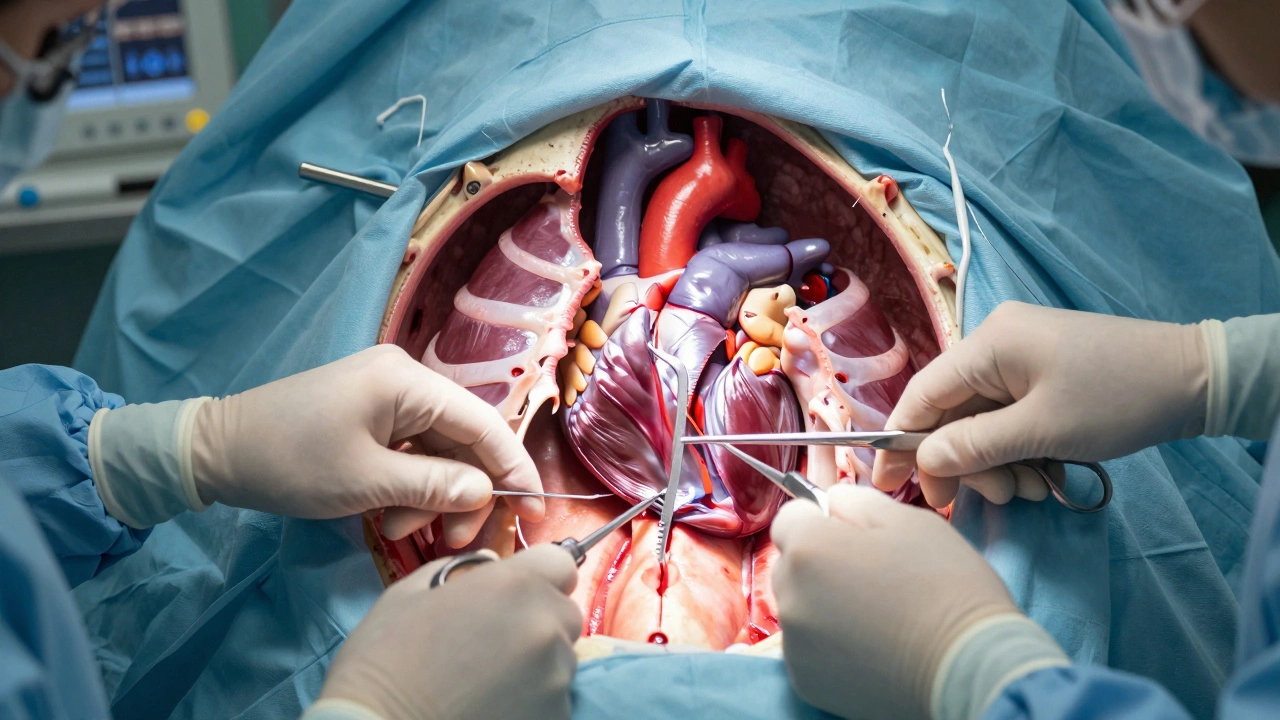
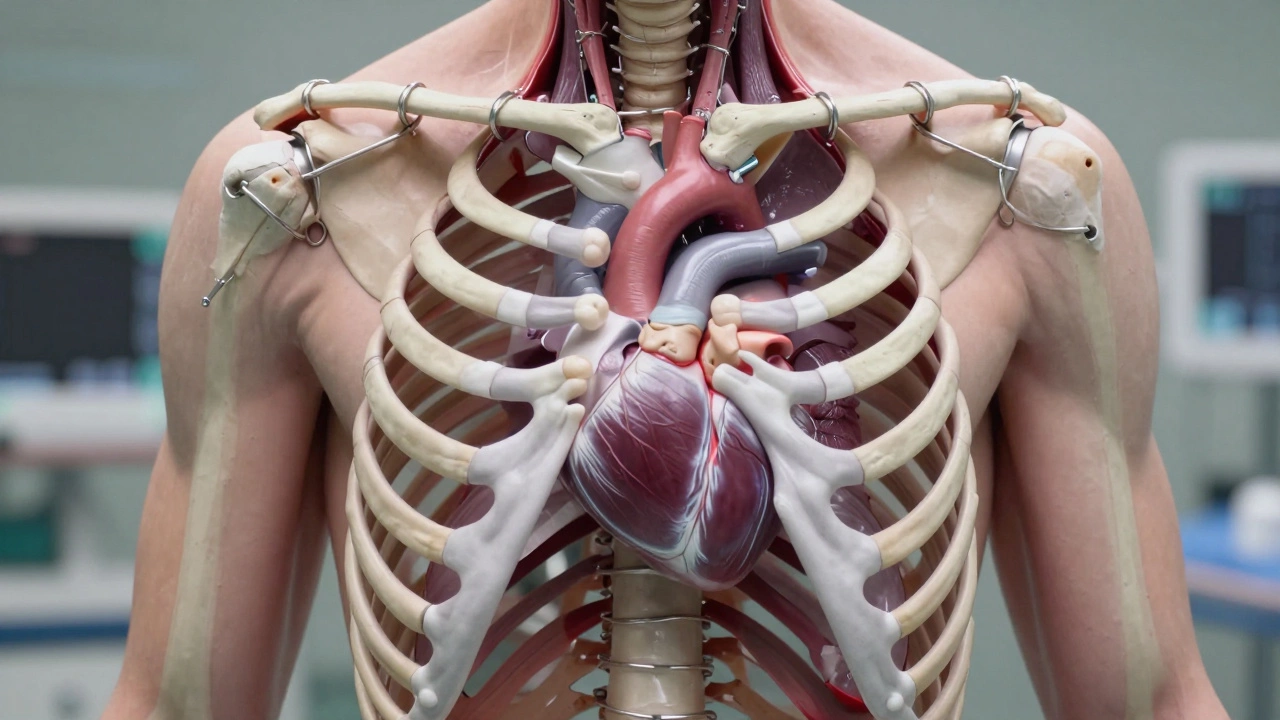
Most open heart surgeries use a method called median sternotomy. This means the surgeon makes a single vertical cut down the middle of your chest, then splits your sternum-the flat bone in the center of your chest-right down the middle. The ribs? They stay perfectly intact. What happens is the sternum is separated like a book opening, giving the surgeon full access to your heart. The ribs act like a protective cage around it, and they’re left untouched to heal faster and reduce complications.This isn’t because ribs are harder to work with-it’s because breaking them would make recovery way worse. Broken ribs mean chronic pain, higher risk of lung infections, and longer hospital stays. Surgeons avoid that whenever possible. The sternum, on the other hand, is designed to be cut and rejoined. It’s made of dense bone, but it’s also got a rich blood supply, which helps it heal back together over time.
What Happens During the Procedure
Before the surgery, you’re put under full anesthesia. The surgical team then makes the incision from just below your neck down to your belly button. They use a special saw-called a sternal saw-to cut through the sternum. It’s loud, like a power drill, but you won’t hear it. Once the sternum is split, retractors are inserted to hold your chest open. Your heart is exposed, and the surgery begins.Depending on what’s wrong, the surgeon might fix a valve, clear a blocked artery, or replace your heart entirely. The whole procedure can take anywhere from three to six hours. Afterward, the sternum is wired back together with stainless steel wires-just like a broken bone would be stabilized. These wires stay in forever. You won’t feel them, and they don’t set off metal detectors.
Recovery: What to Expect
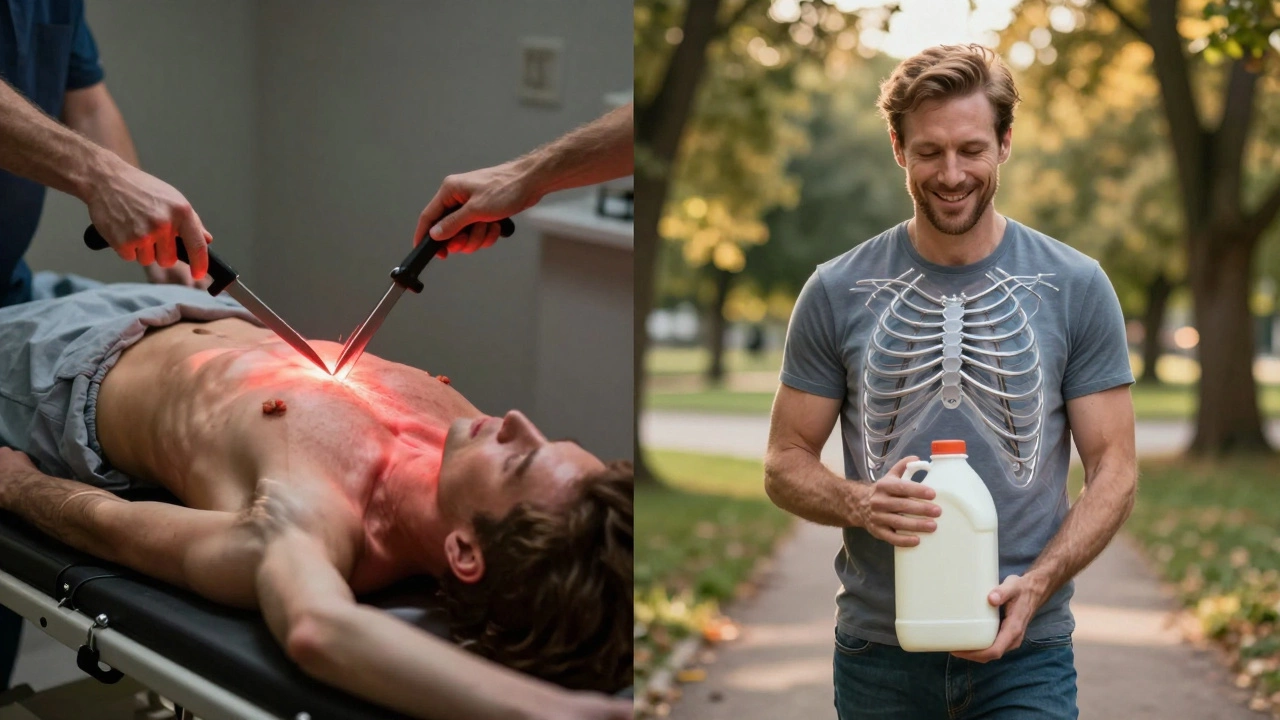
You’ll wake up in the ICU, connected to tubes and monitors. Pain is normal, but it’s not from broken ribs-it’s from the sternum cut and the stretching of your chest muscles. Most people feel pressure or tightness more than sharp pain. Doctors give you strong painkillers at first, then switch to over-the-counter options like acetaminophen or ibuprofen.For the first six weeks, you can’t lift anything heavier than a gallon of milk. That’s about 10 pounds. Why? The sternum needs time to heal. If you lift too much too soon, the wires can snap, and the bone can separate. It’s rare, but it happens. You’ll also avoid twisting your torso, reaching behind your back, or doing push-ups. Even hugging too tightly can hurt.
Most patients are out of the hospital in 5 to 7 days. Full recovery takes 3 to 6 months. You’ll go to cardiac rehab-three times a week, for about 12 weeks-where you’ll slowly rebuild strength under supervision. Many people say the worst part isn’t the pain, but the frustration of moving slowly. Simple things like brushing your teeth or getting dressed take effort.
Alternatives: Minimally Invasive Options
Not everyone needs a full sternotomy. In recent years, surgeons have developed less invasive techniques. These include:- Minimally invasive direct coronary artery bypass (MIDCAB): A small incision on the left side of the chest, no sternum cut. Used for one or two blocked arteries.
- Robotic-assisted surgery: Tiny ports for instruments, controlled by a robot. Used for valve repairs.
- Transcatheter procedures: No surgery at all. A catheter goes through your groin to fix valves or open arteries.
These options aren’t right for everyone. If you have multiple blocked arteries, a badly damaged valve, or complex heart disease, the traditional sternotomy is still the safest and most reliable method. But if you’re a good candidate, the recovery time can be cut in half. Hospital stays drop from 7 days to 2 or 3. Pain is less. You’re back to normal faster.
Myths vs. Reality
There’s a lot of misinformation out there. Let’s clear up a few:- Myth: They break your ribs. Reality: They split your sternum. Ribs stay whole.
- Myth: You’ll never lift again. Reality: You can lift, but you have to wait and do it right. Most people return to weightlifting, gardening, and even sports after recovery.
- Myth: The wires will cause problems later. Reality: They’re made of medical-grade stainless steel. They don’t rust. They don’t move. They’re meant to last.
- Myth: You’ll be in pain forever. Reality: Most people report zero pain after six months. The chest heals stronger than before.
Who Gets the Traditional Surgery?
Not everyone qualifies for the small-incision options. You’re more likely to get a full sternotomy if you:- Have multiple blocked coronary arteries
- Need valve replacement or repair
- Have had previous heart surgery
- Have a complex heart condition like an aortic aneurysm
- Are older or have other health issues that make minimally invasive techniques riskier
Doctors choose the method based on your anatomy, heart condition, age, and overall health-not just what’s trendy. The goal is always safety and long-term results.
What You Can Do to Speed Up Recovery
Your recovery isn’t just up to the surgeon. You play a big role. Here’s what helps:- Breathe deep: Use the incentive spirometer they give you. It keeps your lungs clear and prevents pneumonia.
- Walk daily: Start with short walks the day after surgery. Movement improves circulation and healing.
- Eat protein: Your body needs extra protein to rebuild bone and tissue. Eggs, chicken, beans, and Greek yogurt help.
- Avoid smoking: Smoking cuts blood flow and delays healing. Even one cigarette can set you back weeks.
- Follow up: Don’t skip your cardiac rehab. It’s not optional-it’s your best shot at a full recovery.
Final Thoughts
No, they don’t break your ribs for open heart surgery. But yes, they cut through your breastbone-and that’s enough to make you feel like you’ve been through hell. The good news? The body is built to heal. Most people return to normal life within months. The pain fades. The strength comes back. And many say they feel better than they have in years.If you’re facing this surgery, know this: it’s one of the most common and well-understood procedures in modern medicine. Thousands do it every year. You’re not alone. And while the recovery is tough, it’s temporary. The reward? A second chance at life.
Do they break your ribs during open heart surgery?
No, they do not break your ribs. Instead, surgeons make a vertical cut down the center of your chest and split your sternum (breastbone) using a special saw. The ribs remain intact and act as a protective cage around your heart. Breaking ribs would increase pain, risk of infection, and recovery time, so it’s avoided entirely.
How long does it take for the sternum to heal after open heart surgery?
The sternum typically takes about 6 to 8 weeks to heal enough for light activity, but full healing can take 3 to 6 months. During this time, you’ll avoid lifting heavy objects, twisting your torso, or doing push-ups. The sternum is wired back together with stainless steel wires that stay in place permanently. These wires help stabilize the bone as it grows back together.
Can you live a normal life after open heart surgery?
Yes, most people return to a normal, active life after recovery. Many resume work, travel, exercise, and even sports. Cardiac rehabilitation plays a key role-patients who complete the program have significantly better long-term outcomes. Studies show that 90% of patients survive at least one year after surgery, and 80% are still alive after five years. Lifestyle changes like eating well, quitting smoking, and staying active make a huge difference.
Are there less invasive alternatives to open heart surgery?
Yes. Minimally invasive options include robotic-assisted surgery, small incision bypass (MIDCAB), and transcatheter procedures like TAVR for valve replacement. These avoid cutting the sternum and often lead to shorter hospital stays and faster recovery. However, they’re not suitable for everyone-especially those with multiple blocked arteries or complex heart conditions. Your surgeon will recommend the best option based on your specific needs.
Will the wires in my chest set off metal detectors?
Rarely. The stainless steel wires used to hold the sternum together are thin and not strong enough to trigger most airport metal detectors. If you do set one off, you can show your surgical scar or a medical card. Most people never have an issue. The wires don’t rust, move, or cause discomfort over time.
How painful is open heart surgery recovery?
The pain is mostly from the sternum cut and stretched chest muscles-not broken ribs. Most patients describe it as pressure or tightness rather than sharp pain. Pain meds are given right after surgery, and within a week, most people switch to over-the-counter options like acetaminophen. The worst pain usually lasts 2 to 4 weeks. After that, it gradually improves. By six months, most people report little to no pain.